IMIC-Africa Strengthens Maize Breeding Partnerships For Resilient Seed Systems Across Africa
10 June 2026, Africa: Climate change is reshaping the realities of maize production across Africa. Farmers are facing more frequent droughts, shifting rainfall patterns, declining soil fertility and new pest and disease pressures. At the same time, markets are changing, with growing demand for maize varieties that are high yielding, resilient, nutritious, locally adapted and affordable. For breeders and seed companies, the challenge is clear on how to develop better maize varieties faster, test them across diverse environments, and ensure that farmers can access seed that responds to their needs.
This is where the International Maize Improvement Consortium for Africa (IMIC-Africa), coordinated by CIMMYT, is playing a critical role. Launched in 2018, IMIC-Africa is a public-private partnership that has grown into a practical platform where partners can access improved germplasm, test pre-commercial hybrids, receive technical support, and help shape breeding priorities for Africa’s maize sector. At the core of IMIC is collaboration and forward-looking, which provides a structured space where breeders, researchers and seed companies can work together to respond to the realities farmers face in the field.
Through the consortium, members gain access to early and advanced generation maize lines, multi-location testing networks, breeding and research services, and capacity development and networking opportunities. These services help partners reduce the cost of product development, shorten breeding cycles, and develop maize varieties that are better suited to farmers’ needs. A key strength of IMIC is its multi-location testing network. Through member-managed sites across different Target Production Environments (TPE) partners can evaluate maize hybrids under a wide range of conditions, including abiotic stresses like managed drought, random drought, low nitrogen, and biotic stresses like maize lethal necrosis, maize streak virus and other priority stresses. This allows seed companies and national programs to make better decisions on which materials to advance, release and commercialize.
For smaller seed companies and public institutions, this access can be transformative. IMIC opens the door to breeding materials and services that would be difficult or costly to access. Members can benefit from doubled haploid production, phenotyping, molecular marker-based quality assurance and quality control, trait-specific marker analysis, nutritional quality analysis, and biometrics support. Beyond germplasm and testing, IMIC also invests in people. Members can nominate breeders, technicians and seed systems specialists for CIMMYT-supported tailor-made training in maize improvement, seed systems, phenotyping and related areas. This builds the technical capacity needed to sustain stronger breeding and product deployment across the continent.
Turning field insights into better products for farmers
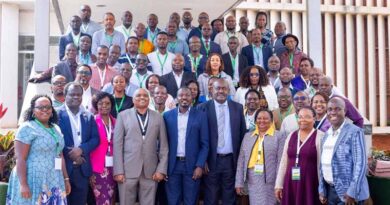
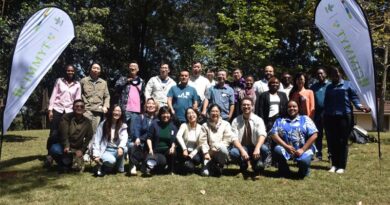
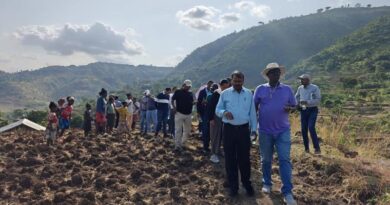
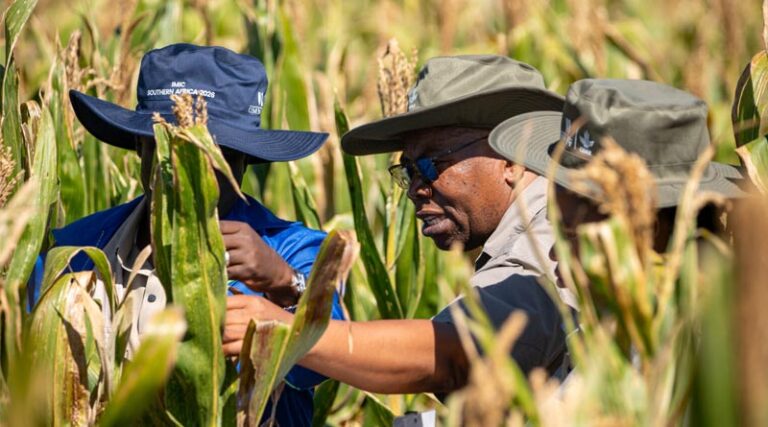
This year’s field engagement drew over 40 representatives from Zambia, Mozambique, Nigeria, Malawi, Zimbabwe, Kenya and Uganda, including both long-standing members and new entrants. The diversity of participation reflects one of IMIC’s greatest strengths. It brings together small and large seed companies, national agricultural research systems, and international research organizations. Each partner brings a different view of the market, farmer preferences and production challenges, creating a strong feedback loop
For breeders, the field day was not only a showcase of new genetic materials, but a space to observe, compare, question and select. Participants walked through the plots looking closely at maturity groups, plant architecture, cob placement, disease tolerance, grain quality, biomass, nutritional traits and market preferences. For Dalton Mawira of Growtrade, IMIC has become central to the company’s breeding program. “IMIC is now an indispensable part of our breeding work. We do not want to reinvent the wheel when strong germplasm from CIMMYT already exist. Through IMIC, we are able to identify germplasm that fits our needs, especially in early maturity groups, disease tolerance and traits that farmers notice, such as closed tips, good standability and stay green traits. Farmers are becoming more informed. They can tell when a hybrid has open tips, lodges or is susceptible to disease. Hence, as breeders, we must pay attention to that feedback.” His remarks show how farmer preferences are increasingly shaping breeding decisions.
Dean Muungani, an IITA product manager on grain crops, emphasized that selecting lines in the field requires both technical skill and an understanding of how materials will perform in hybrid combinations. “When we look at these materials, we are not only judging them as they stand. We are asking how they might perform when crossed with other lines. We look for traits that can strengthen future hybrids, from erect leaves that allow higher plant populations, lower cob placement, good cob size and shape, to strong pollen production and dark green plants. The value is in understanding which materials can contribute to better products for farmers.” The participation of IITA also highlighted how the IMIC model is inspiring collaboration among sister organizations and opening possibilities for similar approaches in West Africa.
This field-based approach allows breeders to move beyond data sheets and pictures and see how materials express themselves under real growing conditions. For Kabamba Mwansa of Afriseed, the ability to physically observe the materials is one of the consortium’s most important benefits. “For us, maturity is the first thing we look at because our markets cover different agroecological zones. In high rainfall areas, we need late-maturing materials, but with changing weather patterns, we also need early-maturity options to capture markets when the season shifts. Based on the field performance, we can assess the plant, the cob, the biomass and other traits that matter to farmers in different countries. That helps us make better decisions before taking products to the market.”
His reflections also point to the importance of market-specific breeding. Farmer preferences vary across countries. In some markets, biomass after harvest is important for livestock feed. In others, there is demand for improved nutritious maize varieties with better cob size, kernel size and grain characteristics. This feedback reinforces the importance of breeding not only for yield, but for real market needs.
Lubasi Sinyinda from the Zambia Agriculture Research Institute highlighted the importance of traits that farmers can easily see and understand. “One of the key traits I look at is the number of grain rows because farmers often associate more rows with a better harvest. For us, the value of IMIC is access to germplasm. That access helps us strengthen our breeding work and respond better to what farmers want.”
Co-creating solutions through IMIC-Africa
The discussions also brought out emerging priorities for future breeding efforts. Participants raised interest in yellow maize, noting its potential for stock feed and green mealie markets. In Zambia, where only a few yellow maize varieties are available, seed companies see an opportunity to expand product options. Disease pressure was another important theme. While high disease incidence can be a challenge, breeders also viewed it as an opportunity to identify resistant or tolerant materials. Participants noted that selecting under disease pressure helps ensure that materials do not fail when they reach farmers in high disease pressure environments.
Participants also raised concern about the emergence of a new maize disease, Goss’s Wilt, caused by the bacterium Clavibacter nebraskensis. First detected in South Africa, it spread to nearly all major maize-producing provinces by 2025. Although currently confined to South Africa, its rapid expansion has raised concern about possible movement into neighboring countries and eventually further north across Africa’s maize belt if monitoring and containment strategies are delayed. Participants emphasized that one of the most effective management strategies is the deployment of resistant maize germplasm and requested CIMMYT to accelerate the development and screening of resistant breeding materials. The growing alarm among public and private sector partners underscores the urgent need for multi-stakeholder collaboration, and forward-looking investments that respond to the emerging and evolving needs of IMIC partners.
Cross regional learning to connect science, business and farmers
The field engagement also opened space for learning beyond Africa. Experiences from Asia showed how strong market segmentation, hybrid adoption, irrigation, mechanization and digital seed innovations can support more efficient and transparent seed sector. Examples from Bangladesh and Nepal highlighted the importance of understanding market demand, identifying the key drivers of yellow hybrid maize adoption, improving seed traceability, strengthening linkages between seed supply and demand, and leveraging digital tools to reduce counterfeit seed. These lessons are relevant for Africa as seed systems become more complex and farmers demand more reliable products. IMIC’s role can therefore extend beyond germplasm access and field testing. It can also serve as a platform for business-to-business learning, regional exchange and serve as an innovation hub that strengthens the entire seed value chain.
By bringing seed companies together, IMIC creates opportunities for partnerships, market expansion and shared learning. It also positions CIMMYT as a trusted broker that capable of connecting partners, facilitating the exchange of innovations across regions, strengthening collaboration and accelerating the delivery of improved seed to farmers.
As climate pressure increases, the need for stronger breeding partnerships will only grow. No single institution can respond to the scale of the challenge alone. Farmers need seed that can withstand drought, resist diseases, perform under low fertility, meet household and market needs, and remain affordable and IMIC offers a practical model for getting there. As participants left the field, one message was clear that IMIC is more than a consortium. It is a meeting point for science, business and farmer needs, and a vital platform for shaping the future of maize in Africa.
Join Africa’s largest elite maize germplasm platform
Interested in joining IMIC-Africa to strengthen your breeding pipeline and product deployment strategy? Reach out at GMP-CIMMYT@cgiar.org and help shape the future of Africa’s maize agrifood systems.
Also Read: UPL Recognized as Top Innovator in AgriBusiness at Clarivate South Asia Innovation Awards 2026
Global Agriculture is an independent international media platform covering agri-business, policy, technology, and sustainability. For editorial collaborations, thought leadership, and strategic communications, write to pr@global-agriculture.com