28 September 2026, Norwich, United Kingdom: Scientists at the John Innes Centre in Norwich, UK, have engineered a class of plant immune receptors so that a single receptor can detect two different strains of blast fungus at once, a proof of concept result that points toward breeding cereal varieties with broader, more durable disease resistance. The research, led by group leader Professor Mark Banfield with first author Dr. Daniel Yu and collaborators at Kobe University in Japan, was published in the journal Science Advances, with the John Innes Centre publicizing the findings on September 23, 2026.
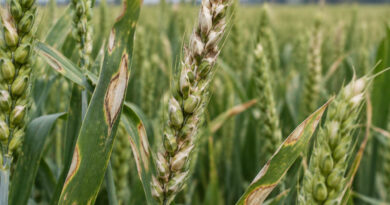
Blast fungus, known scientifically as Magnaporthe oryzae, is one of the most damaging cereal pathogens in the world. Different host adapted strains, or pathotypes, of the same fungal species cause rice blast, which has long threatened rice production across Asia, and wheat blast, a more recently emerged disease that devastated crops in Brazil in the 1980s before spreading to Bangladesh and Zambia and raising alarm about its potential to reach South Asia’s wheat belt. Because the fungus can infect wheat, barley and rice, and because it evolves quickly to overcome single resistance genes bred into a variety, researchers have long looked for resistance mechanisms that are harder for the pathogen to defeat.
Reading the Pathogen’s Chemical Signals
The John Innes team focused on a class of plant immune receptors called tandem kinase proteins. These receptors work by carrying a built in decoy domain, in this case one that mimics a heavy metal associated protein the fungus normally targets during infection, fused to the signaling machinery that alerts the plant’s immune system. When the fungus injects a small protein called an effector to disable the decoy domain, the receptor detects that interference and triggers a defense response, essentially catching the pathogen in the act of trying to disarm the plant.
Using structural biology techniques including X-ray crystallography, which reveals the atomic scale, three dimensional shape of a protein, the researchers mapped exactly how these receptor decoy domains bind to different fungal effector proteins. That detailed structural map let them identify which parts of the decoy domain could be altered without breaking its function, and they used that knowledge to bioengineer a modified receptor capable of binding two distinct effector proteins from different blast fungus pathotypes at the same time, rather than only one, as natural receptors typically do. The team demonstrated this dual specificity using wheat protoplasts, which are wheat cells with their rigid outer wall removed so that engineered genetic constructs can be introduced and tested quickly in a dish, as a proof of concept step before moving into whole plants.
From Engineered Cells to Resistant Crops
Dr. Yu and Professor Banfield described the result as evidence that these receptors are more programmable than previously understood, opening the door to deliberately stacking resistance capability rather than waiting for it to arise naturally through breeding and selection. The stated long term goal is to combine engineered tandem kinase receptors with other classes of resistance genes, known as NLR genes, which recognize different types of pathogen signals, into a single variety. A cereal plant carrying several independent, well characterized recognition systems at once would be significantly harder for the blast fungus to defeat through a single mutation than a variety relying on one resistance gene, which is how many resistant varieties have historically failed within a few growing seasons of release.
The research is still at an early stage. The dual specificity receptor has so far been proven to work in isolated plant cells in a laboratory dish, not in a growing wheat, barley or rice plant in a glasshouse or field, and the researchers themselves describe the next phase of work as translating the finding from protoplasts into whole plants. Turning this into a commercial variety would then require additional years of conventional breeding or gene editing work to move the trait into elite, locally adapted wheat, barley or rice lines, followed by the regulatory and field testing process that applies to any new disease resistance trait, which varies significantly by country.
Wheat blast is considered a significant emerging threat to South Asian wheat production, given its documented spread from South America into Bangladesh in 2016 and the genetic similarity between many South Asian wheat varieties and those that proved susceptible elsewhere. For Indian wheat breeders, seed companies and plant protection regulators, a resistance strategy built on stacking multiple independently engineered recognition systems, rather than relying on a single resistance gene that the fungus can eventually mutate around, would represent a meaningfully more durable long term defense if it can be validated in field grown plants. Any practical wheat blast resistance technology to emerge from this research line would also be relevant well beyond the UK and Japan, given that ICAR and CIMMYT breeding programs already track wheat blast as a priority disease for South Asian wheat improvement.
The John Innes Centre said its wheat gene editing and transformation platform will support the next round of experiments moving the engineered receptors into living plants.
Global Agriculture is an independent international media platform covering agri-business, policy, technology, and sustainability. For editorial collaborations, thought leadership, and strategic communications, write to pr@global-agriculture.com