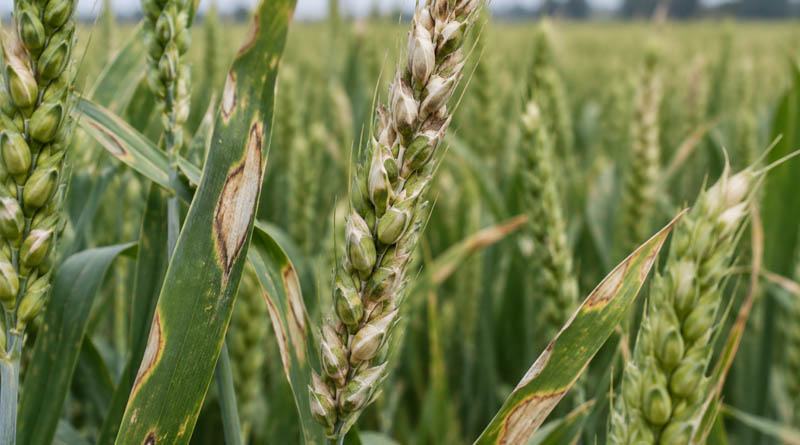
John Innes Centre Engineers Wheat Immune Receptors to Fight Blast Fungus on Multiple Fronts
28 September 2026, Norwich, United Kingdom: Scientists at the John Innes Centre in Norwich, UK, have engineered a class of plant
Read More
Get the latest Wheat Blast news, research, updates and developments covering this serious fungal disease of wheat, including disease outbreaks, surveillance, resistant varieties, diagnostics, fungicide research, biological control and breeding programmes. Wheat blast is caused by Magnaporthe oryzae pathotype Triticum (MoT) and is particularly associated with warm and humid wheat-growing environments. First identified in Brazil in 1985, it has since been reported in parts of South America, Bangladesh and Zambia, increasing concerns about its impact on wheat production and food security.
Coverage includes research on blast-resistant wheat cultivars, resistance genes and QTLs, disease diagnostics, pathogen surveillance, crop protection and integrated disease management. Recent research has identified new resistance sources, including the Rmg13 and Rmg14 genes, while studies continue to investigate the 2NS chromosomal translocation and additional resistance loci. Scientists are also developing faster diagnostic tools; a 2026 John Innes Centre-led system can identify the pathogen in infected material within about 90 minutes.
Find news and updates on wheat blast outbreaks, resistant wheat varieties, CIMMYT and national breeding programmes, genetic research, biological control, fungicide management and early-warning systems. Recent studies have evaluated Bacillus strains for biological control, while breeding programmes in Bangladesh and elsewhere are working to broaden the genetic base of resistance and develop varieties better suited to affected regions.
28 September 2026, Norwich, United Kingdom: Scientists at the John Innes Centre in Norwich, UK, have engineered a class of plant
Read More22 September 2026, England: Scientists at the John Innes Centre in Norwich, England, working with Ethiopia’s national agricultural research service, have developed
Read More