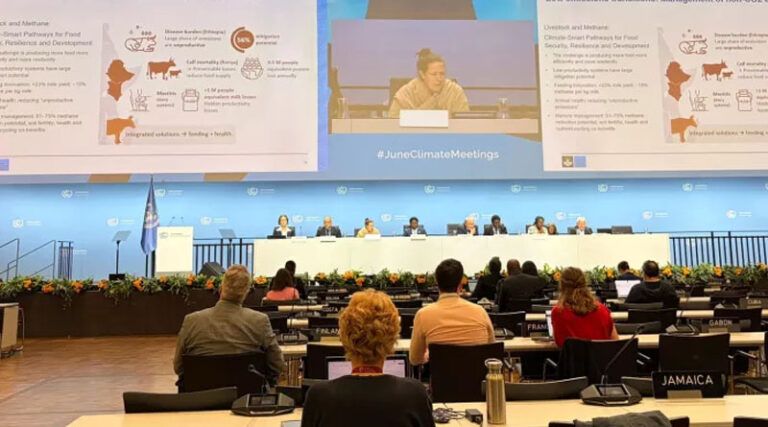
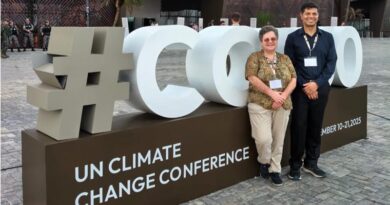
13 June 2026, Africa: At SB64 in Bonn, I joined the UNFCCC 18th Research Dialogue on behalf of CGIAR to speak on “Climate Resilient Food Systems, Agri-practices and Management of related non-CO₂ Emissions.”
Agriculture already has climate options. Across crops, livestock, and aquatic foods, we know many practices that can help farmers adapt to a changing climate, reduce emissions, or do both. The more ambitious task is contextualization – knowing what works where, for whom, and under what conditions.
Though it sounds simple, it is anything but.
A practice can look promising in one place and fail somewhere else. Lower emissions may come with new costs for farmers. Water savings may bring trade-offs that still need to be measured. And even when the science is sound, local adoption can stall if finance, markets, policy, or advisory services are missing.
Thus, climate action in agriculture cannot stop at the level of individual field practices. It has to reach the systems that determine whether those practices can spread. That is the shift CGIAR is trying to support.
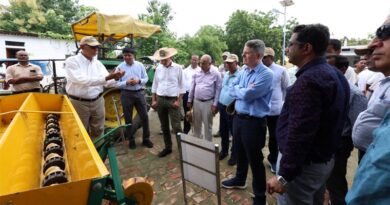
As a global agricultural innovation network working across food, land, and water systems in low- and middle-income countries, we are not only asking what farmers can do differently. We are asking how governments, researchers, finance providers, and communities can make sectoral change possible.
The evidence gaps are still large.
Countries need better ways to quantify how agricultural actions contribute to adaptation and mitigation. They need to understand the trade-offs and combined benefits across different agricultural production systems. They need more spatially explicit emissions data, because national emissions figures are not enough to target action. If the goal is to reduce non-CO₂ emissions from agriculture, countries need to know where the hotspots are and what can realistically be done there.
Measurement, reporting, and verification (MRV) is one of the less glamorous parts of climate action, but remains essential. Many African countries face real difficulty moving toward Tier 2 reporting in agriculture because local emissions factors are not available, especially for livestock. Without those factors, understanding the effects of climate actions remain less precise than they should be. Our work in Uganda on livestock MRV is one example of what this support can look like in practice.
The same principle applies to farming.
In Cambodia, rice-prawn integrated systems supported by WorldFish have delivered 11 to 14 times higher farmer profits compared to farming rice alone, while making more efficient use of water and land resources and reducing the need for chemicals. That is the kind of result that changes the adoption conversation. Farmers need practices that help them manage climate risk, but they also need those practices to make economic sense. If climate action improves income, it has a better chance of success beyond demonstration plots.
In livestock systems, methane is a central concern. But the pathway is not only about new technical fixes like feed additives being adopted in high income settings.
For lower income settings, improving animal health can reduce emissions intensity while supporting food security. Better hygiene can reduce nonclinical mastitis. Lower calf mortality can improve herd productivity, and improved animal feeding can help farmers produce more milk and meat with lower emissions per unit.
We are also looking at the feed itself. By screening forage genotypes, our researchers are identifying high-yielding options with anti-methanogenic compounds that can help reduce methane from animals.
In India, work on direct-seeded rice points to possible gains in water savings and methane reduction.
But there are trade-offs from these interventions, and those trade-offs need to be understood before any practice is treated as a universal answer.
This is what we mean by moving from “what works” to “what works where and for whom.”
Agricultural climate action has entered a new phase in which identifying promising practices is no longer enough. Countries need to know where those practices work, what conditions make them viable, and how they can be scaled through policy, finance, data, and implementation.
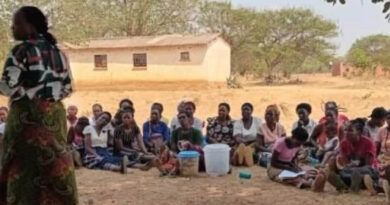
Inclusion is even more important than ever, because countries also need a clear view of how to support different groups of farmers to actually adopt these practices. Women and marginalized communities are often central to food systems, but they do not always have equal access to land, credit, information, or decision-making.
Those constraints shape whether climate action works. CGIAR is working to address these constraints with our national and local partners. Investing in this work is critical and remains just a fraction compared to the cost of inaction.
Author: Dr Laura Cramer, International Livestock Research Institute
Global Agriculture is an independent international media platform covering agri-business, policy, technology, and sustainability. For editorial collaborations, thought leadership, and strategic communications, write to pr@global-agriculture.com