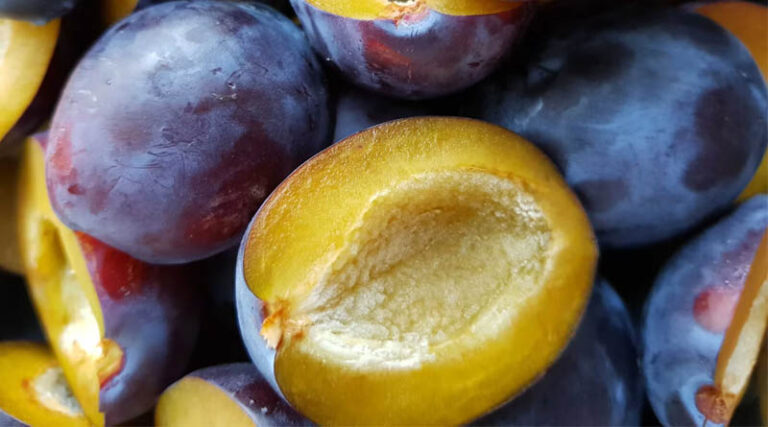
07 October 2026, West Virginia: The US Department of Agriculture is taking public comment on a request to approve a gene-edited plum variety built to flower early in its life and keep blooming through most of the year, a trait designed to cut years off how long it takes to breed new fruit tree varieties.
The agency’s Animal and Plant Health Inspection Service (APHIS) published the petition in the Federal Register on August 14, opening a 60-day comment window that closes on October 13. The petition was filed by USDA’s own Agricultural Research Service, through its Appalachian Fruit Research Station in Kearneysville, West Virginia, and covers two experimental lines of European plum (Prunus domestica) known as “34 plum” and “157 plum.”
The request asks APHIS for what is called a “determination of nonregulated status,” meaning the agency would treat these plum lines the same way it treats a conventionally bred variety, free of the special permits and field-trial restrictions that apply to a genetically engineered plant still under review. As part of that process, APHIS released a draft plant pest risk assessment concluding that the two gene-edited lines are unlikely to pose a greater pest risk than ordinary, unmodified plum trees. That finding, not a claim about the fruit’s taste or safety for eating, is the main technical basis for the deregulation request.
A tool for breeders, not a retail fruit
The filing itself does not name the specific gene or genetic construct used to create the early and continuous blooming trait, a level of detail APHIS does not require for this stage of review. But the purpose of the trait fits a well known problem in fruit tree breeding. Plum trees, like most tree fruit crops, normally take several years to reach reproductive maturity, and once mature they flower only once a year, for a short window in spring. That means a single breeding cycle, crossing two parent trees, growing the resulting seedling to flowering age, and evaluating its traits, can take 15 to 20 years from start to finish for a perennial fruit crop. A tree that flowers within months of planting, and keeps flowering repeatedly rather than just once a season, lets breeders complete several crossing cycles in the time it previously took to complete one.
USDA’s Appalachian Fruit Research Station has for years worked on this exact problem, developing what researchers there have called “rapid cycle breeding” techniques using genes that control the switch from a tree’s juvenile growth phase to its flowering phase. The station’s current petition appears to be the regulatory follow-through on that line of work, though the public filing does not confirm whether it uses the same specific technique described in the station’s earlier published research. In practice, a technology like this is typically used as a breeding tool rather than a trait destined for supermarket fruit. Breeders would use the fast-flowering trees as parent material to speed up crosses, and the resulting offspring varieties, once they carry the combination of traits breeders are actually after (disease resistance, fruit quality, winter hardiness), can in some cases be screened to exclude the engineered flowering gene altogether, or the trait can simply be bred out in later generations if it is not wanted in the final commercial variety.
Plum breeding programs, in the US and elsewhere, have historically been slower to adopt new disease-resistant or climate-adapted varieties than annual row crops like corn or wheat precisely because of this multi-year generation gap. A technology that shortens that gap does not change what traits end up in a finished variety, but it changes how quickly breeders can test and combine those traits.
If APHIS grants the nonregulated status after reviewing public comments, the plum lines themselves would not need special permits to be grown, moved, or imported within the United States. A separate review by the Food and Drug Administration would typically still be expected before any gene-edited fruit descended from this work could be sold for consumption, though no such review is mentioned in the current APHIS filing.
Global Agriculture is an independent international media platform covering agri-business, policy, technology, and sustainability. For editorial collaborations, thought leadership, and strategic communications, write to pr@global-agriculture.com