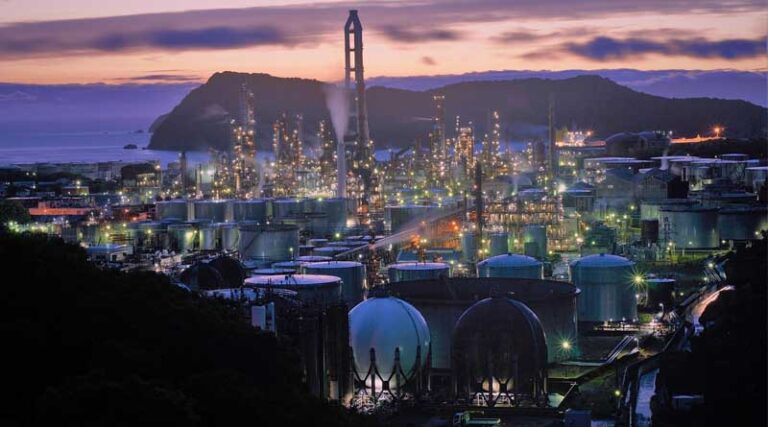
16 November 2026, Alexandria, EG: Egypt increased curtailments on natural gas supplied to domestic fertilizer producers on November 8, raising cuts from 20% to 33% as costly liquefied natural gas imports strain the country’s domestic gas balance. Abu Qir Fertilizers and Chemical Industries Company confirmed the deeper cutback, saying two of its three production plants are continuing to run at full capacity for now, though the company has not yet detailed how the restriction will affect total output or export volumes going forward.
The move adds Egypt, a major exporter of nitrogen fertilizers to Europe and emerging markets, to a widening list of supply constraints hitting the global fertilizer trade even as benchmark prices for some nutrients have fallen sharply this year. The International Fertilizer Development Center, in the latest edition of its Fertilizer Crisis Response Bulletin series, said the divergence between falling prices and persistent affordability problems for farmers is the central feature of the current market, cautioning that a falling price for one product does not mean supply risk has vanished or that farmers can suddenly afford fertilizer.
Falling prices do not mean farmers can afford to buy
According to World Bank data for October 2026 cited in the bulletin, urea prices on a free-on-board basis have fallen about 51% from their April peak, returning close to January levels. Potash prices, measured on a cost and freight basis, stood at 358 dollars per tonne in October, just below where the year began after easing from mid-year highs. Diammonium phosphate, however, moved in the opposite direction, reaching 803 dollars per tonne in October, roughly 30% above its January level and continuing to climb.
The center said the more meaningful measure for farmers is the fertilizer-to-crop price ratio, which captures how much grain a farmer must sell to afford a given quantity of fertilizer. The European Commission’s 2026 assessment found that fertilizer-to-cereal price ratios in the bloc have weakened to their lowest point since 2022, driven mainly by falling cereal prices rather than rising fertilizer costs, meaning farmers are effectively worse off even where fertilizer itself has become cheaper in absolute terms.
Supply-side pressures remain significant across several major producing and exporting countries. In Europe, AGF Nitrogen, one of the continent’s largest ammonia and fertilizer producers, said on November 4 that it was running its nitrogen production units at 80 to 85% of capacity, with one production line in France halted entirely and another operating only intermittently. The company linked the reductions to elevated natural gas costs and shipping constraints tied to the Strait of Hormuz, warning that weak demand and limited storage capacity could force further production cuts.
Russia, one of the world’s largest fertilizer exporters, extended its mineral fertilizer export quota system on November 6 for the period from December 1, 2026 through May 31, 2027. The new overall quota falls to approximately 18.8 million tonnes, down from about 20 million tonnes under the quota covering June through November 2026. Within that total, the nitrogen fertilizer quota drops to roughly 11.3 million tonnes from 12.3 million tonnes, while the quota for complex fertilizers holds steady at about 7.5 million tonnes. The quotas apply to fertilizer shipments bound for destinations outside the Eurasian Economic Union.
Analysts at the International Fertilizer Development Center also pointed to China, where phosphate exports have fallen to near zero in 2026, down from about 5.3 million tonnes in 2025, as tight domestic sulfur supplies and export controls keep more output inside the country. The center said countries that depend heavily on Chinese phosphate with few alternative suppliers face particular exposure to that shift, while buyers of nitrogen fertilizer sourced from Egypt or Russia face a different set of risks tied to the gas curtailments and export quotas now affecting those two countries directly.
Global Agriculture is an independent international media platform covering agri-business, policy, technology, and sustainability. For editorial collaborations, thought leadership, and strategic communications, write to pr@global-agriculture.com