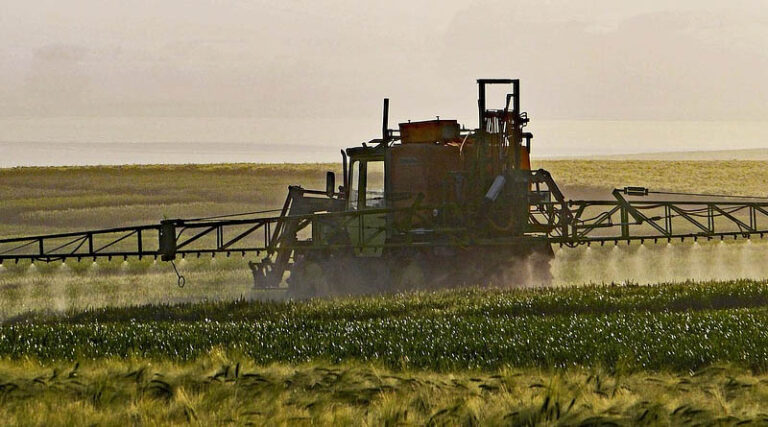
23 November 2026, Brasília, BR: Brazil’s National Confederation of Industry (CNI) has asked the country’s Supreme Federal Tribunal (STF) to stop labour courts from suspending or cancelling, on a nationwide basis, pesticide and pharmaceutical registrations issued by federal regulators. The industry body filed a direct action of unconstitutionality, numbered ADI 8046, with the court on November 16, arguing that labour judges lack the authority to override approvals granted by agencies such as Anvisa, Brazil’s health regulator, and the Ministry of Agriculture and Livestock.
The case was distributed to Justice Cristiano Zanin, who has since asked the office of the President and the National Congress for information before the matter proceeds further. No ruling on the merits has been issued, and the STF has not set a timetable for its review.
CNI’s petition follows a decision in September by the 7th Labour Court in Brasília that froze new glyphosate registrations for 90 days. Judge Gustavo Carvalho Chehab issued the order on September 4 in a civil public action brought by Brazil’s Labour Public Prosecutor’s Office, which had asked for a full, immediate ban on glyphosate, including cancellation of existing registrations. The judge declined that request, ruling instead that Anvisa’s glyphosate approval “enjoys a presumption of legality and truthfulness,” and noting the measure he was granting was narrower than what prosecutors sought.
What the freeze covers
The order, issued under case number 0000883-90.2026.5.10.0014, suspends new registrations and authorizations for the production, export, import, sale and use of glyphosate based herbicides, including identical copycat products, new use extensions and registrations granted by equivalence. It does not cancel registrations already on the books, and products already approved remain on sale. The judge described the measure as temporary, saying it could be reversed or expanded at any time. Anvisa, the environmental agency Ibama and the Labour Public Prosecutor’s Office were given 20 days to submit toxicology, environmental and health data, while the federal government was ordered to compile, through the Ministry of Agriculture and Livestock, a full list of currently registered glyphosate products.
Prosecutors had based their request in part on the International Agency for Research on Cancer’s 2015 classification of glyphosate as probably carcinogenic to humans. The judge found that evidence insufficient to justify an outright ban, pointing instead to Anvisa’s existing approval and to the fact that the government’s own deadline for re-evaluating the substance had already passed without the analysis being completed.
CNI’s constitutional challenge
In its STF filing, CNI does not dispute that labour courts can rule on matters of worker health, hygiene and safety. Its objection is that such rulings have produced effects reaching far beyond individual employment relationships, suspending approvals that apply to the entire national market. The confederation is asking the court to limit labour courts’ reach in cases like this one and to direct that disputes over registrations and licences issued by federal bodies be heard instead in the federal court system. The action challenges provisions of Complementary Law 75 of 1993, which governs Brazil’s federal prosecution service, along with constitutional and labour code provisions that define the jurisdiction of labour courts.
A related, older dispute over atrazine has followed a similar path through Brazil’s courts. A labour court initially said it lacked jurisdiction to hear a case brought by labour prosecutors over that herbicide, before the 10th Regional Labour Tribunal ruled that labour courts could in fact take up such matters, a precedent cited by critics of CNI’s current challenge.
The backdrop to both disputes is a 2023 law, formally Law 14,785, which set new deadlines for Brazilian regulators to reassess older pesticide active ingredients already on the market. The Ministry of Agriculture and Livestock recorded 912 pesticide and bio-input product registrations in 2025, including 323 technical grade products, and has said a significant share of those followed court orders tied to missed deadlines under that law.
The glyphosate freeze is due to run until early December, 90 days from the September 4 order, unless a court extends or lifts it before then. CNI’s challenge at the STF remains pending, with Zanin’s information requests to the Presidency and Congress still outstanding.
Global Agriculture is an independent international media platform covering agri-business, policy, technology, and sustainability. For editorial collaborations, thought leadership, and strategic communications, write to pr@global-agriculture.com