DR Congo Hunger to Hit Record 30.3 Million in Early 2027, UN Agencies Warn
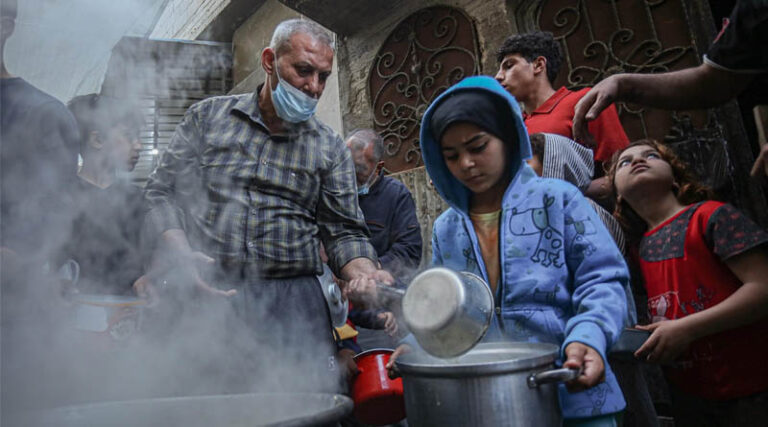
16 November 2026, Kinshasa, CD: A record 30.3 million people in the Democratic Republic of the Congo (DRC) are projected to face crisis-level hunger or worse between January and June 2027. Four UN agencies gave the warning jointly on 13 November 2026: the Food and Agriculture Organization (FAO), the World Food Programme (WFP), UNICEF and the World Health Organization (WHO). They blame armed conflict, repeated displacement, high food prices and overlapping disease outbreaks.
The figures come from the latest Integrated Food Security Phase Classification (IPC) analysis for the DRC, which covers September 2026 to June 2027. The IPC is the international scale for rating food insecurity in five phases. Phase 3 is “Crisis,” Phase 4 is “Emergency” and Phase 5 is “Catastrophe,” the famine level. The agencies note that their Phase 3-or-worse totals already include people in Phase 4, so the two should not be added together.
About 29 million people, nearly a quarter of the population, are already at Crisis or worse in the current period, September to December 2026. That includes 3.6 million in Emergency. The number in Emergency is projected to rise by almost 600,000, to 4.2 million, by early 2027. The 30.3 million projection compares with 26.5 million at Crisis or worse in the first half of 2026.
The east bears the heaviest burden
The crisis is deepest in the eastern provinces of North Kivu, South Kivu and Ituri. More than 11 million people there are projected to be at Crisis or worse between January and June 2027. Nine territories are projected to reach Emergency conditions: Djugu in Ituri; Lubero, Masisi and Oïcha in North Kivu; and Fizi, Kalehe, Mwenga, Shabunda and Walungu in South Kivu.
Large shares of the population are also at Crisis or worse in Tanganyika, Maniema, Kasaï, Haut-Lomami, Lomami, Kwango and Haut-Uele, the agencies said.
The agencies list several drivers:
- Conflict and repeated displacement have stripped families of their assets, cut them off from farmland and disrupted markets, which reduces both food production and income.
- Insecurity, logistical barriers and damaged infrastructure are disrupting trade and keeping food prices high.
- Climate hazards, together with limited access to land and farm inputs, are cutting harvests and farm incomes.
Disease is making things worse. The agencies describe Ebola as a severe and often fatal viral disease. They say it disrupts farming, restricts movement and pushes up household costs. Mpox and cholera are adding pressure on already fragile health systems. Acute malnutrition, together with poor access to health care, safe water and sanitation, compounds the crisis. The agencies stress that children under five face the greatest risk from acute malnutrition. According to the release, the IPC analysis also identifies crises in the Middle East, the Red Sea and Ukraine as adding to these pressures.
Seeds before the 2027 planting season
Each agency’s emergency chief set out a different side of the response.
- FAO: Rein Paulsen, Director of the FAO Office of Emergencies and Resilience, said families need practical support at scale, with seeds and tools delivered before planting starts in early 2027 so they can harvest by the middle of the year. In his words, “every agricultural season missed deepens hunger and increases dependence on humanitarian assistance.”
- WFP: Ross Smith, WFP Director of Emergency Preparedness and Response, said conflict is driving families from their homes and cutting them off from their fields. He described Ebola as a crisis layered on an existing one, and said WFP needs safe, sustained access and resources to deliver food at scale.
- UNICEF: Lucia Elmi, UNICEF Director of Emergency Operations, said hunger and malnutrition are not only about a lack of food. She said conflict, displacement and outbreaks such as Ebola increase the risks, especially where women and children cannot reach health care, safe water and sanitation.
- WHO: Dr Chikwe Ihekweazu, Executive Director of the WHO Health Emergencies Programme, said hunger and disease are together deepening the crisis. He said large Ebola and cholera outbreaks in the east make it urgent to reach people with life-saving services.
The four agencies called for urgent, coordinated financing and diplomatic action. They urged donors to provide timely, sustained funding, including ahead of critical planting seasons. They also called on all parties to protect civilians, including children, and vital services and infrastructure, and to allow safe, rapid and unimpeded humanitarian access.
Also Read: Crystal Crop Protection to Launch Rs 455 Crore IPO on November 18
Global Agriculture is an independent international media platform covering agri-business, policy, technology, and sustainability. For editorial collaborations, thought leadership, and strategic communications, write to pr@global-agriculture.com