16 November 2026, Göttingen, DE: A six-year field study across four research sites in Germany has found that the age of tree rows, rather than the practice of planting trees and crops together, is what determines whether interplanted crops lose yield. Researchers at the University of Göttingen’s Faculty of Forest Sciences and Forest Ecology report that spring-sown crops can lose between 10 and 35 percent of their yield once fast-growing poplar trees in the system reach five years of age or older, while crops sown in winter hold steady yields across the entire nine-year tree-age range the study covered.
The findings were published online on October 27, 2026, in the journal Agronomy for Sustainable Development, with Dr. Sarah Choe as first author and Professor Edzo Veldkamp of the University of Göttingen as senior author. The study gives farmers considering or already running agroforestry systems a concrete way to plan which crops to grow and when, rather than treating any yield loss from trees as a fixed cost of the practice.
How the trial was set up
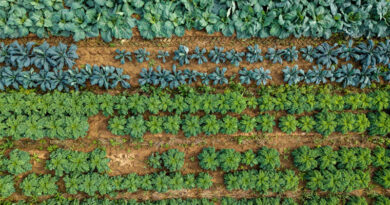
The team worked within temperate alley-cropping agroforestry, a farming system in which rows of trees are planted alongside open strips of arable land so the same field produces both wood and conventional crops. The trees in this trial were poplar, managed as short-rotation coppice, meaning they are cut down close to ground level every three to nine years and left to regrow from the stump rather than being replanted. This keeps the wood supply renewable without re-establishing the rows after every harvest.
Across the four sites, the scientists measured crop yield at several distances from the tree rows and compared the results to yields on open, treeless farmland growing the same crops under the same conditions. They repeated these measurements at different points in the poplar trees’ growth cycle, from one year after a coppice harvest up to nine years, and tracked both winter crops, sown in autumn and harvested the following summer, and spring crops, sown and harvested within a single growing season.
The results showed a clear split between the two crop types. Spring crops suffered the steepest losses as the poplar rows aged past the five-year mark, with the worst declines, in the 10 to 35 percent range, concentrated in the strips closest to the trees, within about four meters of the row. The researchers attribute this mainly to shading, since older, taller poplar blocks more sunlight from reaching the crop canopy during the growing season, along with competition for water and nutrients. Winter crops, by contrast, showed no statistically meaningful yield difference from open farmland at any tree age tested, suggesting they are largely shade-tolerant within this system, likely because their main growth period falls outside the poplar’s fullest leaf canopy season.
The study also tracked wood output from the coppice rotation itself. Timber and biomass yield from the poplar rows was roughly three times higher after the second coppice harvest compared with the first two harvests, meaning the tree component becomes substantially more productive as the root systems and stumps mature, even as the trees themselves are repeatedly cut back.
The practical takeaway the researchers point to is that total output from an alley-cropping field can be optimized by matching crop choice to where the poplar rows sit in their coppice cycle. In the first few years after a harvest, when trees are short and let in more light, farmers can grow spring crops without a meaningful yield penalty. As the trees mature past roughly five years, switching the rotation to winter crops avoids most of the shading-related losses the study documented, while the wood side of the system is simultaneously becoming more productive.
The research adds a specific, dated figure to a debate that has often relied on general assumptions that trees and crops competing for the same light and soil resources always comes at a cost to the crop. By separating that cost by crop type and by tree age, the Göttingen team’s data suggests that, managed correctly, alley-cropping can match or come close to matching the output of conventional open-field cropping, while also producing a wood harvest and the soil and wind-protection benefits associated with tree rows in farmland.
Global Agriculture is an independent international media platform covering agri-business, policy, technology, and sustainability. For editorial collaborations, thought leadership, and strategic communications, write to pr@global-agriculture.com