18 September 2026, Queensland, Australia: Scientists at the University of Queensland have shown that the genetic makeup of a mungbean crop can swing the yield of the wheat crop planted after it by close to a tonne per hectare, even when the wheat itself is genetically identical across every plot. The finding, from a team led by Dr. Millicent Smith and Professor Lee Hickey at the university’s Queensland Alliance for Agriculture and Food Innovation (QAAFI), was published in Nature Genetics and Plant Communications, with the university releasing a summary of the work on September 15 and 16, 2026.
Crop rotation, the practice of alternating different crops on the same land from one season to the next, is a long-established tool for managing soil fertility, pests and disease. But breeders have traditionally selected each crop in a rotation, such as mungbean or wheat, purely to maximize that crop’s own yield, without treating its effect on the following season’s crop as something that can itself be bred for. The QAAFI team set out to test whether that residual effect, which researchers call a genetic legacy effect and define as the influence a crop leaves behind on soil nutrients, structure, water availability and microbial communities, is itself under genetic control.
Testing legacy effects directly
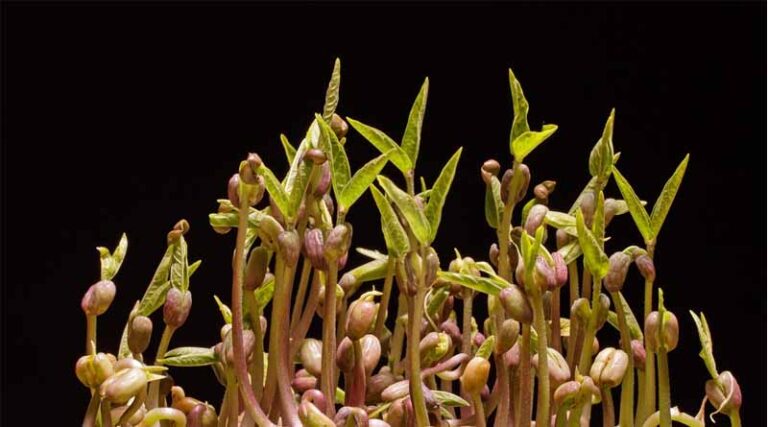
To isolate the legacy effect from other variables, the researchers grew more than 300 genetically diverse mungbean varieties side by side at a research station in southern Queensland, harvested them, and then planted a single uniform wheat variety across every one of those plots. Because the wheat was genetically identical everywhere, any difference in the wheat’s yield could only be explained by what the preceding mungbean crop had left behind. The results were striking: wheat yields varied by up to a tonne per hectare depending solely on which mungbean variety had grown there before it, with some mungbean genotypes lifting the following wheat crop’s yield by as much as 45%, while others cut it by roughly half. Using genetic mapping, the team identified specific regions of the mungbean genome associated with these swings, and ran simulations indicating it should be possible to breed mungbean varieties that perform well in their own right while also leaving a more favorable legacy for wheat, although some of the genome regions involved created a trade-off between a variety’s individual yield and its system-level benefit.
The practical logic behind the discovery is that a meaningful share of the fertilizer and other inputs applied to a cereal crop like wheat exists to compensate for whatever the previous crop failed to leave behind, whether that is depleted soil nitrogen, degraded soil structure or a diminished microbial community. If legumes such as mungbean can instead be bred deliberately for a positive legacy, cereal growers further down the rotation could potentially maintain yield with less fertilizer input, without any new machinery or chemistry involved. The QAAFI team said the same legacy-effect breeding logic is not specific to mungbean and wheat and should extend to other widely grown pairings, including canola-wheat and chickpea-barley rotations, work the group says is already under way.
Mungbean-wheat and other pulse-cereal rotations are staple cropping systems across large parts of Indian agriculture, particularly the Indo-Gangetic plains, where fertilizer cost is one of the largest recurring input expenses for smallholder farmers. Indian and other Asian pulse breeding programs and seed companies could apply the same legacy-trait screening method used at QAAFI, growing diverse pulse germplasm ahead of a uniform cereal check crop, to identify and eventually release pulse varieties bred specifically to benefit the wheat or rice crop that follows, offering a genetics-based route to lower fertilizer dependence that complements, rather than replaces, existing soil and nutrient management practices.
The work was supported by the Australian Research Council’s Training Centre in Predictive Breeding for Agricultural Futures and the University of Queensland’s International Research Training Group, Accelerating Crop Genetic Gain, and the team says it is now working to confirm whether the same genome regions driving legacy effects in mungbean have equivalents in other legume crops used in rotation systems worldwide.
Global Agriculture is an independent international media platform covering agri-business, policy, technology, and sustainability. For editorial collaborations, thought leadership, and strategic communications, write to pr@global-agriculture.com