FAO Showcases Advances In Locust Monitoring, Modelling And Management At Global Orthopterology Conference
25 March 2026, Rome: The Food and Agriculture Organization of the United Nations (FAO) presented its latest tools for locust monitoring and effective management at the 15th International Conference of Orthopterology, held in Argentina, and attended by the global orthopterist community.
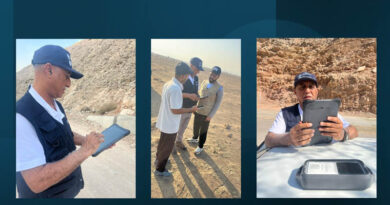
eLocust3K and eLocust4, part of the eLocust series, were among the tools presented at the congress. Together, the two tools allow adaptation to different countries and contexts, while ensuring the collection of similar types of data compatible with RAMSESv4 and the future RAMSESv5.
Organized by the International Orthopterists’ Society, this year’s edition showcased both new findings and improvements to existing tools.
FAO has been a consistent contributor to past editions of the conference, supporting key findings and methodological advancements relevant to locust research and management, while reinforcing its leadership in sustainable locust management.
Understanding factors for locust phase change and outbreak dynamics
The conference featured scientific topics spanning taxonomy, ecology, behaviour, physiology, conservation, and applied research, with a special focus on sustainable management of locust species and the role of Orthoptera in ecosystems. These discussions were designed to strengthen collaboration across sectors.
FAO’s Locust Forecasting Officer, Cyril Piou, presented a keynote lecture on “Modeling of gregarization risk and population dynamics of locusts” highlighting advances in understanding the mechanisms that drive locust phase change and outbreak dynamics. His presentation emphasized the importance of integrating ecological, behavioural, and environmental data into predictive frameworks to improve early warning systems.
In another presentation on “From Insight to Action: How to Advance Agent-based Models of Locusts from Understanding to Forecasting”, the FAO’s expert explored how modelling approaches for locusts and other Orthopteran pest populations can transition from theoretical frameworks to practical forecasting tools that support decision-making.
Data flow from field to forecasting in locust management
In the symposium “Technologies for Sustainable Locust Surveillance and Control,” FAO shared the collaborative process of sharing real-time data from the field to forecasting units and back. The presentation demonstrated how improved data pipelines can strengthen operational responses.
Participants from the two FAO Desert Locust Commissions – the Commission for Controlling the Desert Locust in the Central Region and the Commission for Controlling the Desert Locust in the Western Region – also made presentations.
Enhancing partnerships and strengthening collaboration
FAO is currently supporting South America countries through the project “TCP/RLA/4017 to strengthen plant health systems in South America” to combat the South American locust (Schistocerca cancellata), which has caused significant agricultural and livestock losses in Argentina and Paraguay since 2015. Initiated by early 2024 detections, the project supports coordinated surveillance, monitoring, and emergency response across the region to protect livelihoods.
Participation in ICO 2026 reinforced several priorities for FAO and its partners, including continued engagement with the ICO and its research community to advance knowledge on locust ecology, modelling and management, and to support the development of improved forecasting tools for desert locusts. It also highlighted the importance of further exploring modelling systems developed by other institutions with field experience to enhance FAO’s capacity to manage multiple locust species.
By sharing knowledge and experience on global platforms, FAO continues to build strong partnerships and advances more effective, sustainable solutions to mitigate the impact of locust outbreaks globally.
Held every three years, the International Conference of Orthopterology aims to foster collaboration and innovation. The congress brings together researchers, practitioners, and stakeholders to exchange knowledge and advance innovation in the study of Orthoptera and related disciplines.
Also Read: India Issues Draft Rules for Amendment to Its Insecticides Rules, 1971
Global Agriculture is an independent international media platform covering agri-business, policy, technology, and sustainability. For editorial collaborations, thought leadership, and strategic communications, write to pr@global-agriculture.com