Farmers Pay Now, We All Pay Later: The Real Cost of COP31’s Failings
By Helene Bohyn and Lars van Doremalen, Better Cotton Initiative
27 November 2026, US: The final hours of COP31 will be remembered as an historic night for all the wrong reasons. There is no prize for longest-running negotiations if there is precious little to show at the end of them. COP31’s failings on finance and fossil fuels will come at the highest possible price and it will be vulnerable sectors like agriculture that face the repercussions first.

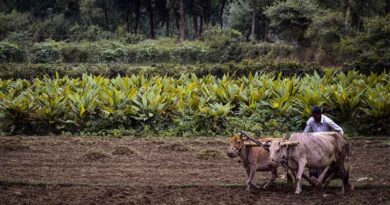
Ask a cotton farmer in Maharashtra what climate change looks like and they will not talk about temperature targets. They will talk about erratic monsoons and the debts that follows a failed harvest. Ask a farmer in the Pakistani Province of Sindh and they will take you back to 2022 and what it is like losing a whole season’s income as floodwaters submerged their fields for weeks. They will talk about debts that still need repaying, school fees that become harder to meet, and the uncertainty of planting again the following year. Ask a grower in West Texas, and they will describe multi-year drought and depleted aquifers. In Brazil’s Cerrado, it is heat and shifting rainfall under intense scrutiny over land use. In Mozambique, Tajikistan, and Türkiye the specifics differ, but the story is similar: climate change is already reshaping livelihoods, exposing farming families to risks they did little to create.
The cotton-growing communities facing the most severe climate impacts are generally not those that benefited most from the emissions that created the crisis. Too often, climate finance is framed as generosity from the Global North to the Global South. It is not. It is part of a long-overdue response to a shared commitment to tackle climate change and support risk mitigation in agricultural communities. The fundamental issue about addressing the effects of climate change is not about financing. It is about responsibility.
These are not scattered anecdotes. They reflect the reality facing cotton-growing regions across the world, from South Asia and Sub-Saharan Africa to Latin America and the United States. Across these regions, farmers are already adapting to climate impacts that are accelerating faster than the support available to them. The Better Cotton Initiative (BCI) network spans many of these regions, offering direct insights into how climate impacts are reshaping cotton livelihoods worldwide. Insights that can serve COP31’s Climate Implementation Bridge agenda to inform how climate resilient practices in cotton farming can be implemented.
Many of these adaptation measures fall within a broader shift towards regenerative agriculture: a holistic approach that aims not only to reduce harm, but to restore and strengthen natural systems. This includes improving soil health, increasing biodiversity, enhancing water efficiency, storing more carbon in soils and reducing greenhouse gas emissions. For cotton-growing communities, regenerative agriculture is not simply an environmental agenda. It is also an economic resilience strategy that can help farms remain productive in a more volatile climate.
Crucially, regenerative outcomes can only be sustained if farmers themselves are economically viable. Environmental progress and farmer livelihoods are inseparable.
Why climate finance is not reaching farmers
At COP29 in Baku, parties agreed a New Collective Quantified Goal of at least USD 300 billion a year by 2035, with a wider ambition to mobilise USD 1.3 trillion. Whatever one thinks of those headline numbers, the more damning figure is how little supports smallholder farmers: the Climate Policy Initiative estimated that small-scale agrifood systems received just 0.8 percent of tracked climate finance in 2019-2020. Their newer analysis shows that even agrifood systems as a whole received only 7.2 percent in 2021-2022.Adaptation finance overall remains a fraction of mitigation finance, and adaptation for agriculture a fraction of that. The plumbing is broken long before the money reaches a grower.
This is not simply neglect. Agriculture genuinely does not fit the instruments other sectors rely on. Returns are biological and weather-dependent, so they are variable and hard to underwrite. Time horizons are long: soil carbon, agroforestry, and irrigation infrastructure pay back over years, not quarters. The beneficiaries are often fragmented across millions of small holdings, which makes transaction costs high and standard project finance uneconomic. Furthermore, the collateral a lender wants often does not exist.
Climate finance has been comfortable funding a solar farm because it looks like every other solar farm. A hundred thousand farmers changing their rotations does not. Until the finance community accepts that agriculture is a high-risk, long-duration asset class needing purpose-built instruments — blended finance, first-loss guarantees, patient concessional capital, insurance layered underneath — the money will keep flowing to whatever is easiest to model.
Reaching farmers through existing infrastructures
The things climate finance clearly struggles with most in agriculture are reaching fragmented smallholders and doing so at acceptable cost. We can, however, add to that list, the lack of reliance on trusted delivery mechanisms capable of working with millions of dispersed producers that makes it so difficult for climate finance to reach agriculture. Yet, in many cotton-growing regions, farmer support systems already exist through producer organisations, extension services and sustainability programmes. These networks can help channel finance, technical assistance and measurement systems to farms at scale.
BCI is one example of such infrastructure, working through Programme Partners, local partners and field facilitators to support farmers across multiple producing countries. Through the Growth and Innovation Fund (GIF), it already aggregates contributions and channels them into field-level programmes and capacity building – creating at scale, in the cotton sector, the farmer delivery infrastructure that climate finance keeps failing to build.
The role farmers already play should be recognised and rewarded. Farmers are not only exposed to the transition; they can also contribute to climate solutions through practices that reduce emissions and can sequester carbon in soils. That contribution should be visible in producing countries’ Nationally Determined Contributions rather than treated as an afterthought, and rewardable through Article 6 where genuine, additional and measurable outcomes can be demonstrated. But any system must be rigorous and designed so that value reaches growers themselves, rather than being captured elsewhere in the supply chain.
What world leaders must push for
With the failings of COP31 behind us, we all must now look beyond the disappointing outcomes and compromises and ensure that the systems we do have work better and faster for farmers. Farmers are essential to tackling climate change, yet today mostly bear the brunt of its impacts rather than benefitting from transition funding. Three steps can get us there:
- First, treat finance to farmers as a matter of responsibility, not charity, and track how much adaptation finance reaches the farm gate.
- Second, build and capitalise instruments designed for agriculture’s realities, using existing farmer-facing systems, such as the Better Cotton Initiative and many others, as delivery channels that support long-term resilience combined with blended finance, guarantees and concessional capital that can absorb risk.
- Third, reward farmers for the climate and environmental benefits they generate, ensuring that the value created through NDC implementation or credible Article 6 mechanisms returns to those undertaking the work and bearing the risk.
Adaptation is not a future waiting to come, it is this season’s decision. Farmers in India and all over the world are not waiting until a global agreement is reached to take action themselves. They are switching varieties, changing planting dates, investing in drip irrigation and soil cover, and rebuilding the soil organic matter that buffers both drought and flood — precisely the practices BCI’s field-level programmes promote. Each is a real capital and risk decision, taken at the farm gate, often by a farmer with thin margins and no cushion for a bad year. Adaptation in agriculture cannot be deferred until finance arrives on comfortable terms. It is already happening, and it is being paid for disproportionately by the least resourced actors in the chain.
Also Read: Storms and Hail Threaten Brazil’s Planting Season as El Nino Strengthens
Global Agriculture is an independent international media platform covering agri-business, policy, technology, and sustainability. For editorial collaborations, thought leadership, and strategic communications, write to pr@global-agriculture.com