The company highlighted two R&D centres, microRNA-based plant technology, AI-assisted rice breeding and agricultural trade agreements exceeding US$800 million at the 9th China International Import Expo.
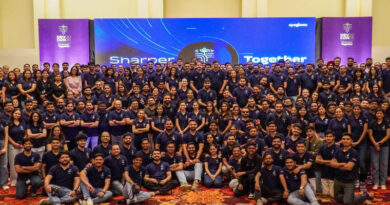
27 November 2026, China: Syngenta Group showcased developments across agricultural research, crop protection, seed technology and global agricultural trade at the 9th China International Import Expo (CIIE 2026), held earlier this month in Shanghai, China. The company’s presentation covered two R&D centres in China, advances in AI-assisted breeding, biological plant protection technologies and the international expansion of Chinese rice varieties.
Syngenta Group, a subsidiary of Sinochem, presented these developments under the theme “Breakthroughs for farmers, in every field”, highlighting technologies and business initiatives aimed at addressing agricultural productivity, crop protection and food security challenges.
Two R&D centres strengthen China’s role in global agricultural innovation
A key focus of Syngenta’s presentation was its two research facilities in China: the Crop Protection China Innovation Center in Jinshan, Shanghai, and the Global Rice Technology Innovation Center in Hefei, Anhui.
The Crop Protection China Innovation Center is intended to serve as a global R&D base for crop protection, focusing on major pests, diseases and weeds affecting important crops, including rice.
The Global Rice Technology Innovation Center will connect international and domestic industry resources to develop an integrated system covering research, production and sales. The centre will also support the international expansion of improved rice varieties and agricultural technologies.
Syngenta China President Su Fu said China’s diverse agricultural conditions, research capabilities and industry collaboration provide opportunities to develop technologies that can address challenges in Asia and other agricultural markets.
He added that the company’s two innovation centres aim to combine global technologies with local requirements and extend the benefits of research to farmers worldwide.
MicroRNA technology explores new approaches to crop productivity
Syngenta presented a technology concept based on plant-derived microRNAs, small biological molecules involved in regulating gene activity and plant development.
The technology uses naturally derived microRNAs as biological signals to guide plants towards important yield-related processes, including grain development and fruit formation. According to the company, the approach aims to improve crop productivity using small quantities of biological agents.
The technology reflects Syngenta’s research into biological solutions that could support more targeted plant growth regulation and reduced input requirements.
TYMIRIUM technology expands across major crops
Syngenta also highlighted the expansion of its patented active ingredient TYMIRIUM®, developed using structure-based drug design technology.
Since its introduction in China, the technology has expanded beyond wheat to crops including maize, rice, soybean, tomatoes, melons and garlic.
The technology targets soil-borne and root-related problems, including root-knot nematodes, stem base rot and Fusarium root rot.
Products based on TYMIRIUM technology include Kelai®, a nematicide used in vegetables such as cucumber and tomato; Wanlijia®, a seed treatment for wheat stem base rot; and Qianli®, a seed treatment targeting soybean Fusarium root rot.
In 2026, Qianli was applied across approximately 5 million mu (around 333,333 hectares) of soybean cultivation in Heilongjiang Province. Yield measurement data from 2024–2025 indicated an average reduction in crop losses of 26.7%, according to Syngenta.
The company also reported that Wanlijia and Qianli demonstrated control performance in maize and rice during the year.
AI-assisted breeding aims to shorten rice development cycles
AI-assisted breeding was another major focus, with Syngenta showcasing RiceNavi®, an intelligent molecular breeding navigation system developed by its subsidiary China Seed Group.
The platform uses AI to support the design of breeding programmes by analysing genes associated with multiple traits, including yield, grain quality, disease resistance and lodging resistance.
One of the varieties developed using this approach is Youxiang 66, a premium-quality rice variety. The RiceNavi platform analyses genetic traits and predicts crop characteristics, helping breeders identify suitable genetic combinations and potentially shorten the breeding cycle by three to five years.
By the end of 2025, RiceNavi had completed gene analysis for more than 500 rice varieties.
Alongside premium rice varieties, Syngenta highlighted several high-yielding hybrid rice varieties, including Quanliangyou 6019, Quanyou 607 and Chuanzhongyou 3607.
Its flagship hybrid rice variety, Quanyou 822, has ranked first in national hybrid rice planting area for two consecutive years, with cumulative cultivation exceeding 30 million mu (approximately 2 million hectares).
Chinese rice varieties expand into international markets
Syngenta is also expanding the international presence of Chinese rice varieties, particularly in markets participating in the Belt and Road Initiative.
The company presented results from several varieties introduced in overseas markets. DIAMOND152 recorded an average yield increase of approximately 15% over local varieties in Pakistan, while Win207 achieved an average increase of around 20% in Bangladesh. JACKPOT102 and SYN8 have also entered markets in the Philippines and Vietnam, respectively.
Through its subsidiary China Seed Group’s Quanyin High-Tech, Syngenta has sold rice varieties in more than 30 countries. The company’s international cooperation model is also expanding beyond seed sales to include localised breeding, production and agricultural technology services.
Focus on nutrition, grain quality and crop adaptability
Syngenta’s exhibition also featured crop varieties developed to address changing consumer demand for nutritional quality and functional food ingredients.
Among the varieties showcased was high-amylose maize with an amylose content exceeding 70%. The company highlighted its potential use in resistant-starch-based functional foods and biodegradable materials.
Two soybean varieties, Shengdou 3 and Kedou 35, were also presented. Shengdou 3 has a reported protein content of up to 48.64%, while Kedou 35 is among the first nationally approved salt-tolerant and high-yielding soybean varieties in China. It can achieve average yields exceeding 250 kg per mu under moderately saline-alkali soil conditions with salt content ranging from 3‰ to 5‰.
Other varieties included high-yielding wheat, premium rice, sweet corn, broccoli, tomatoes and bell peppers, reflecting breeding priorities around yield, taste, nutrition and crop resistance.
Digital agricultural services connect farm production with market demand
Syngenta also presented the role of Sinochem Agriculture’s MAP services in connecting agricultural production with consumer and processing industry requirements.
In Pinghu, Zhejiang Province, farms covering tens of thousands of acres and served by MAP have become part of the production base for Yihai Kerry’s Golden Dragon Fish 6-Step Fresh Rice.
The programme combines improved seed selection, soil testing, formula fertilisation, green pest management and digital monitoring of seedling development. The MAP Smart Agriculture App is also used to integrate digital tools into farm operations and help growers identify production risks.
The company said its MAP services are being expanded to support consistent grain quality and improved yields across larger cultivation areas.
Agricultural trade agreements exceed US$800 million
Beyond research and agricultural technology, Syngenta’s Agricultural Value Chain (AVC) business showcased its international sourcing and trading activities.
The business brings agricultural commodities from different production regions to China, including soybeans from Argentina, coffee from Brazil and Ethiopia, sesame from Sudan and macadamia nuts from South Africa.
Its operations include a barter-based trading model in which agricultural inputs are exchanged for agricultural commodities, connecting input supply with agricultural sourcing and trade.
During CIIE 2026, Syngenta’s Agricultural Value Chain team signed agreements with domestic and international grain trading companies with a combined value exceeding US$800 million.
Global Agriculture is an independent international media platform covering agri-business, policy, technology, and sustainability. For editorial collaborations, thought leadership, and strategic communications, write to pr@global-agriculture.com