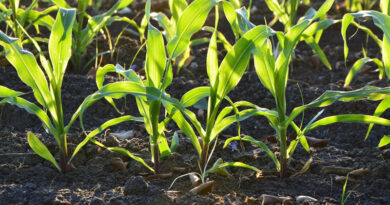
27 November 2026, Dongying, CN: Researchers at Ocean University of China and Shihezi University have found that combining crop waste biochar with the residue of a native salt tolerant plant builds significantly more stable carbon in degraded coastal farmland than either material does on its own, according to a study published in the journal Biochar. The journal’s editorial office, based at Shenyang Agricultural University, highlighted the findings in a release on November 25; the underlying paper was first published online on October 29.
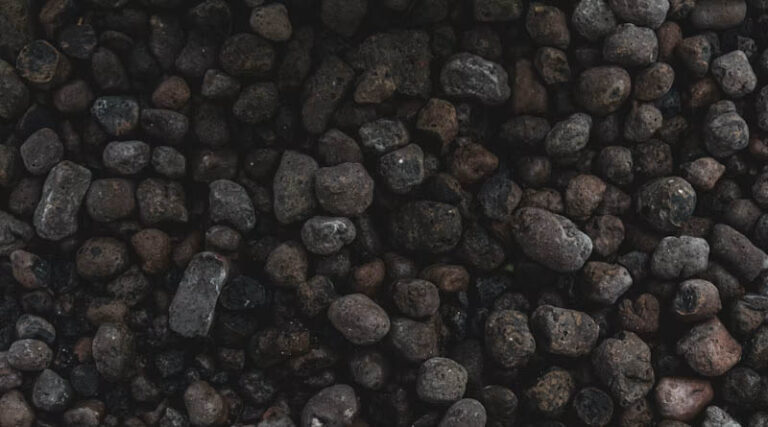
The study used soil collected from a salt affected field in the Yellow River Delta near Dongying, in China’s Shandong province, a low lying coastal region where seawater intrusion and poor drainage leave farmland too salty for many crops. The researchers combined this soil with litter from Suaeda salsa, a native plant that tolerates high salinity and is common along the Chinese coast, and with biochar made by heating corn straw to 450 degrees Celsius without oxygen, a process called pyrolysis that converts crop waste into a stable, carbon rich material increasingly used as a soil amendment.
Explaining the method
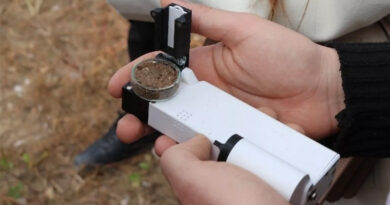
Over 370 days, the team incubated soil samples under four conditions: untreated soil, soil with biochar only, soil with plant litter only, and soil with both combined, at two different moisture levels meant to mimic normal and waterlogged coastal conditions. They tracked two main signals. The first was lignin phenols, chemical fragments left behind as plant material breaks down that serve as a tracer for how much plant derived carbon has entered the soil. The second was microbial necromass carbon, the carbon locked up in the remains of dead soil microbes after they consume organic matter. Because dead microbial biomass tends to persist in soil much longer than fresh plant material, a buildup of necromass carbon is considered a sign that carbon is being stored in a more durable form rather than quickly released back to the atmosphere.
Soil treated with both biochar and plant litter together accumulated 22 to 41 percent more lignin phenols, and up to 233 percent more bacterial necromass carbon, than soil treated with plant litter alone. More importantly, the combined treatment’s gain in total soil organic carbon exceeded the sum of what biochar and litter achieved separately by 23 percent, and its gain in recalcitrant organic carbon, the hard to decompose carbon fraction that persists in soil over long timescales, exceeded the sum of the individual treatments by 40 percent. In other words, the two materials reinforced each other’s effect on long term carbon storage rather than simply adding up. The researchers attribute this to biochar easing salt and sodium stress on soil microbes and improving nutrient availability, which let bacteria process the incoming plant litter more efficiently and convert more of it into stable necromass rather than releasing it as carbon dioxide. Notably, the plant litter actually broke down faster in the combined treatment than when applied alone, yet this faster decomposition did not translate into greater carbon loss, since more of the resulting carbon ended up locked in microbial remains and biochar rather than escaping the soil.
Corresponding author Xianxiang Luo said the work shows that “improving coastal salt affected soils is not only about restoring soil productivity but also about strengthening their capacity to retain carbon,” adding that the findings point to the importance of interactions between biochar, plant residues and soil microorganisms in building more stable carbon pools.
The approach relies on two low cost, locally available materials: crop straw that would otherwise be burned or discarded, and a salt tolerant plant that already grows on degraded coastal land. The researchers caution that their results come from laboratory microcosms rather than open fields, and that field trials are still needed to confirm how the combined treatment performs under real tidal cycles and seasonal weather before it could be recommended as a farming practice.
The study was funded by the National Natural Science Foundation of China, the Key Research and Development Program of Shandong Province, the Natural Science Foundation of Shandong Province, and the Shandong Province National Talents Supporting Program.
Global Agriculture is an independent international media platform covering agri-business, policy, technology, and sustainability. For editorial collaborations, thought leadership, and strategic communications, write to pr@global-agriculture.com