Powering E20 the Smart Way: Why the Next Phase of Ethanol Blending Should Lean on Maize and Crop Residues
Guest Author: A. Amarender Reddy, Joint Director, Policy Support Research, Indian Council of Agricultural Research, Raipur, India, email: amarender.reddy@icar.org.in
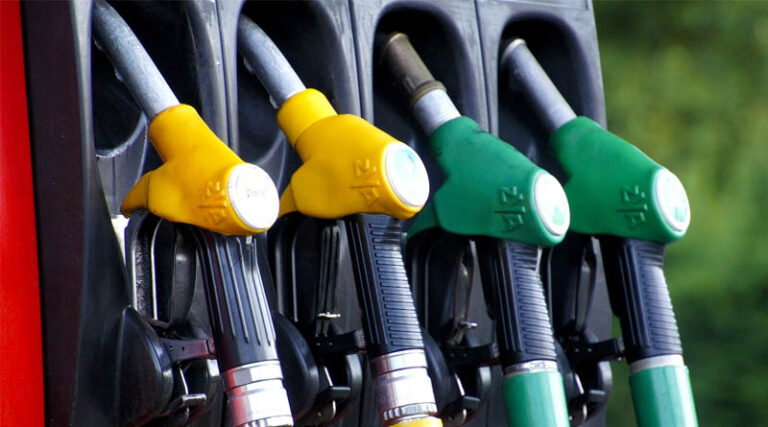
27 November 2026, New Delhi: The green E20 nozzle is now a familiar sight at petrol pumps across India. Reaching 20 per cent blending well ahead of the original timeline is a significant achievement. It has diversified the country’s energy sources, supported rural incomes and, according to the Ministry of Petroleum and Natural Gas, saved nearly ₹2 lakh crore in foreign exchange since 2014-15. As the programme matures, the useful question is no longer whether to blend, but how to source ethanol most efficiently.
A technical reality
Ethanol carries about 21 megajoules of energy per litre, against roughly 33 for petrol. Blending therefore lowers the energy content of each litre, by about 6-7 per cent for E20. The effect on mileage in practice depends on engine design, calibration and driving conditions. Vehicles built for higher blends adapt well, while older ones may notice a difference and need attention to certain rubber and fuel-system components. Clear guidance from manufacturers will help consumers make the transition comfortably.
The resource questions
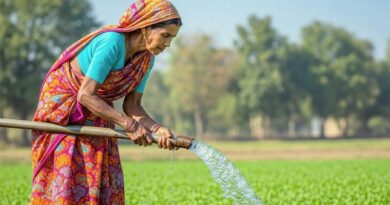
Where ethanol comes from matters as much as what it does in the engine. Sugarcane has been the backbone of the programme, supporting mills and farmers alike. But sugarcane is among our most water-intensive crops: the NITI Aayog roadmap for ethanol blending estimates that a litre of cane-based ethanol embodies roughly 3,000 litres of water, with actual use varying by region and irrigation practice. In states already facing groundwater stress, such as Maharashtra and Karnataka, this deserves careful attention as blending volumes grow.
Maize: a promising complement
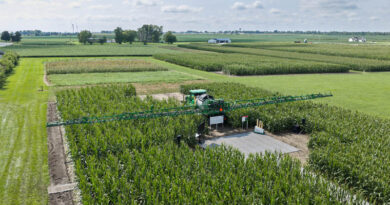
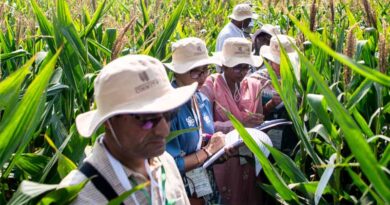
Maize is a natural partner. It is largely a rainfed kharif crop, needs considerably less irrigation than cane and fits well into diversified cropping systems. Its use for ethanol has grown rapidly, from about 8 lakh tonnes in 2022-23 to nearly 126 lakh tonnes in 2024-25, making maize the largest single feedstock for the programme. The challenge is to raise maize productivity so that fuel demand does not compete with poultry, livestock and food needs. Higher-yielding hybrids, better seed availability, improved agronomy and stronger post-harvest and market linkages can ensure that rising demand benefits farmers without straining feed supplies. ICAR institutes and state agricultural universities have a clear role to play.
Residues: turning waste into fuel
The most compelling opportunity lies in second-generation (2G) ethanol made from rice straw, wheat straw, cane trash and maize stover. India generates about 500 million tonnes of crop residue every year, and the Ministry of New and Renewable Energy estimates that 90-100 million tonnes of it is burned in the field, contributing to seasonal air pollution. Converting this biomass into fuel would add value to what is now a disposal problem, give farmers an additional income stream and ease pressure on food crops and water. India has begun commissioning 2G facilities, including Indian Oil’s plant at Panipat and BPCL’s at Bargarh, each processing rice straw at about 100 kilolitres per day. Scaling them up is a logical next step.
Practical hurdles remain: reliable collection and storage, transport costs, enzyme technology and the economics of biomass supply chains. These are solvable through research, pilot projects and sustained coordination among farmers, industry and government. Research institutions can help by mapping residue availability by region, improving conversion efficiency and developing crop varieties suited to both food and fuel needs.
A balanced pathway
None of this means moving away from sugarcane. A gradual, region-specific rebalancing would be wise: sugarcane where water is plentiful, maize in rainfed and semi-arid areas where productivity can be raised sustainably, and residues wherever biomass is available. Such a portfolio would keep the programme resilient to monsoon variability, protect food and feed security, and lower the water footprint of every litre blended.
India has shown that ambitious ethanol targets can be met. Building on that success with a broader and more sustainable feedstock base will help ensure that E20, and whatever blends follow, delivers lasting benefits for the farmer, the consumer and the environment.
[The views expressed in this article are solely those of the author and do not necessarily reflect the editorial position of Global Agriculture.]
Also Read: Storms and Hail Threaten Brazil’s Planting Season as El Nino Strengthens
Global Agriculture is an independent international media platform covering agri-business, policy, technology, and sustainability. For editorial collaborations, thought leadership, and strategic communications, write to pr@global-agriculture.com