India Must Prepare Agriculture for El Niño Risk: Federation of All India Farmer Associations
04 June 2026, New Delhi: The Federation of All India Farmer Associations (FAIFA) has released a report warning that climate resilience must become a priority for Indian agriculture as rising temperatures, erratic rainfall, soil degradation, water stress and the potential impact of El Niño increase risks to crop production and farmer livelihoods.
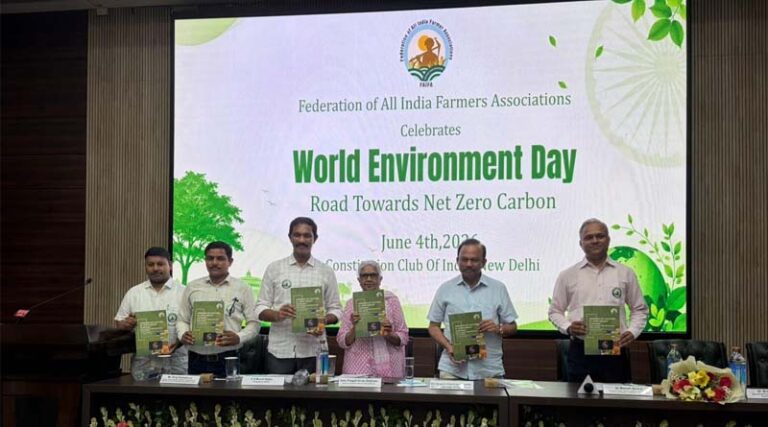
Released on World Environment Day, the report, Inspired by Nature: El Niño-Ready Farming for Climate Resilience and Our Future, highlights the growing vulnerability of Indian agriculture to climate variability and calls for greater preparedness, adaptation and risk management across farming systems.
According to the report, India experienced extreme weather events on 331 of 334 days between January and November 2025, affecting more than 17 million hectares of cropped area. The report also points to declining soil health, noting that 97% of tested soil samples were deficient in nitrogen while 85% lacked adequate organic carbon.
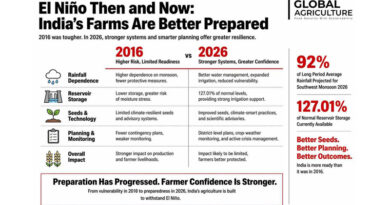
The report identifies El Niño as a key concern for Indian agriculture because of its historical association with weaker monsoons, moisture deficits and increased risks during the kharif season. FAIFA argues that agricultural planning should focus on anticipating climate-related disruptions rather than responding after they occur.
The study recommends measures including improved soil management, efficient water use, crop diversification, expansion of digital agriculture platforms, wider adoption of climate-resilient farming practices and stronger crop insurance systems. It also highlights the role of technologies such as artificial intelligence, satellite monitoring, precision irrigation, remote sensing and weather-based advisory services in helping farmers manage climate risks.
The report acknowledges several government initiatives aimed at strengthening agricultural resilience, including the Digital Agriculture Mission, AgriStack, Bharat-VISTAAR, the National Mission on Natural Farming, PM-KUSUM, the Pradhan Mantri Fasal Bima Yojana and the National Innovations in Climate Resilient Agriculture (NICRA) programme. It states that these programmes provide a foundation for climate adaptation and resource-efficient farming.
FAIFA President P.S. Murali Babu said the report’s findings indicate that resilience must become a central element of future agricultural development. He noted that combining traditional farming knowledge with scientific innovation, digital technologies and farmer-focused policies could help build farming systems that are better prepared for climate-related shocks.
The report also highlights traditional agricultural practices such as crop diversification, mixed farming, intercropping and community-based resource management as approaches that can support climate adaptation. It concludes that coordinated efforts among governments, research institutions, industry stakeholders and farming communities will be required to strengthen agricultural resilience and protect food security in the years ahead.
During the event, FAIFA also recognised farmers, agricultural innovators and farmer producer organisations working on climate-resilient and resource-efficient farming practices.
Also Read: India Approves Two Rice Varieties To Secure Yields In Direct-seeded Rice Farming
Global Agriculture is an independent international media platform covering agri-business, policy, technology, and sustainability. For editorial collaborations, thought leadership, and strategic communications, write to pr@global-agriculture.com