Need of the Hour: Guaranteed Swaminathan MSP and Comprehensive Debt Relief to Address Farmer Distress in India
By Jag Mohan Thaken, Political Analyst
28 March 2026, New Delhi: Despite the Indian government’s claims of “doubling farmers’ income,” why are farmers still being pushed toward suicide? Has the central government seriously reflected on this question?
The tragic suicide of two farmer brothers from Punjab on 23 March 2026, who jumped in front of a moving train, has left behind a devastated family—their wives, two young daughters aged 8 and 10, and elderly parents facing an uncertain future. This incident has also raised serious questions about government policies that claim to have significantly increased farmers’ incomes.
The All India Kisan Sabha (AIKS), in a press release issued on 26 March 2026, reported that the two brothers from Kotkapura had been under severe mental stress due to mounting agricultural debt, which had increased from ₹25 lakh to nearly ₹50 lakh. Despite continuous efforts, including cultivating crops like potatoes, they were unable to recover costs due to low market prices, which further aggravated their distress. Ultimately, out of sheer helplessness, they took this extreme step.
This incident is neither the first nor the last. According to the National Crime Records Bureau (NCRB), more than 10,000 farmers and agricultural workers die by suicide every year in India. The figures stand at 10,349 in 2018, 10,281 in 2019, 10,677 in 2020, 10,881 in 2021, 11,290 in 2022, and 10,786 in 2023.
Why are farmers driven to such drastic decisions?
A report by Chaudhary Charan Singh Haryana Agricultural University, cited by The Times of India (22 February 2024), indicates that small farming families (with approximately 2.7 acres of land) incur an annual debt of nearly ₹1.31 lakh due to high input costs and low returns. The study, conducted by agricultural economist Vinay Mahala in 2022–23, highlights the severe economic distress in Punjab and Haryana—states with some of the highest farm debt burdens in the country.
Farmer leader and RTI activist Dr. Balbir Singh states, “Agriculture has turned into a loss-making occupation, and government policies are pushing farmers out of farming instead of making it viable and farmer-friendly, thereby causing a debt trap and suicides.”
Commenting on the Union Budget on 4 February 2026, agricultural scientist and economist Vinay Mahala wrote that, for years, villages, farms, and farmers have existed only nominally in policies, while the ground reality remains extremely painful. He noted that rising input costs, declining returns, and growing dependence on debt are pushing farmers into deeper distress, with some even forced to sell their land.
AIKS alleges that farmer suicides have intensified over the past twelve years, with the total number of suicides by farmers, agricultural workers, and migrant workers exceeding 500,000 during this period.
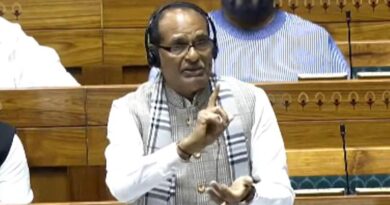
At the same time, a day after the suicide of the two Punjab farmers, Agriculture Minister Shivraj Singh Chouhan informed the Lok Sabha that farmers’ incomes had doubled, citing increased production and various policy measures, including Minimum Support Price (MSP). On the same day, Finance Minister Nirmala Sitharaman stated in Parliament that there was no proposal under consideration for a complete farm loan waiver. These statements have been interpreted by farmer organisations as reflecting a lack of sensitivity toward current ground realities.
The government has repeatedly highlighted MSP as a key support mechanism. However, AIKS argues that MSP is not being implemented as per the Swaminathan Commission’s recommendation of C2+50% (1.5 times the cost of production). According to available data, the prices received by farmers for crops like paddy are often significantly lower than the declared MSP. Moreover, less than 15% of total production is procured at MSP, leaving the majority of farmers dependent on market fluctuations.
AIKS further points out that real MSP growth has slowed for several crops in recent years. Out of 16 crops studied, nine have shown a significant decline in MSP growth between 2014–15 and 2025–26. With rising production costs and stagnant returns, farmers’ losses have effectively increased rather than their incomes.
Farmer unions argue that the government’s refusal to consider loan waivers—last implemented in 2008—demonstrates insensitivity toward rural distress. They have demanded adequate compensation for affected families and systemic reforms rather than rhetorical claims.
Taking a strong stance, Bhartiya Kisan Union Ekta Dakounda described the suicide of the two brothers as a result of policy failures, even terming it a “murder by policy.” The organisation emphasised that increasing debt, crop losses, and lack of remunerative pricing are direct consequences of the current agricultural model.
In a statement issued on 26 March 2026, the union reiterated its demand for a legal guarantee of MSP for all crops at C2+50%, along with assured procurement. It also highlighted that farmers continue to sell produce below cost, leading to a cycle of debt and distress.
Raising the issue in the Lok Sabha on 18 March 2026, Punjab Congress president and MP Amarinder Singh Raja Warring called for a legal MSP guarantee, as previously promised to farmers. He also advocated for debt relief measures for small and marginal farmers, questioning why large corporate loans could be waived while farmers continue to struggle.
He further criticised schemes like the ₹6,000 annual assistance to farmers, stating that the amount is insufficient even for basic needs such as fodder for livestock.
The key question remains: will the central government reassess its agricultural policies based on ground realities and provide meaningful relief—such as guaranteed MSP and debt restructuring—or continue to rely on claims of “doubled income” that many farmers say do not reflect their lived experiences?
Global Agriculture is an independent international media platform covering agri-business, policy, technology, and sustainability. For editorial collaborations, thought leadership, and strategic communications, write to pr@global-agriculture.com