Colour, Shape, And Inspiration: Cabbage Reinvented
27 May 2026, Netherlands: Members of the brassica family are known for their versatility and nutritional value. With the #embracebrassicas campaign, we’re adding ‘element of surprise’ to that list. “This world-class crop deserves a place in the spotlight. Together with our chain managers and partners, we will inspire consumers with innovations such as rosé cabbage,” says Christian Spangenberg, Crop Co-ordinator at Rijk Zwaan.
Christian, who has been the linking pin between the company’s breeders and the market for 26 years, is a big cabbage fan: “I absolutely love early, tunnel-grown white cabbages, which is a segment we as a vegetable breeding company are strong in. My favourite way to enjoy them is in a salad, with oil and vinegar. For me, that’s the taste of spring. Brassicas have a deliciously fresh flavour and an appealing bite.”
Head cabbage that connects cultures
Besides being served in salads, white cabbage, red cabbage, savoy cabbage and pointed cabbage can also be boiled, stuffed, grilled or fermented. Each part of the world has its own specialities: coleslaw in the USA, kimchi or dumplings in Asia, cabbage rolls in Southern/Eastern Europe and the Middle East, sauerkraut or slow-cooked red cabbage in Western Europe, and ‘curtido’ in Latin America.
“Cabbages are eaten worldwide in all seasons. In warmer regions, it’s possible to grow them year round. In Europe and North America, they are stored regionally to ensure year-round availability,” Christian explains. “We want to offer cabbage growers across the globe the varieties that meet their specific market and climate requirements.” From kimchi to coleslaw, head cabbage inspires kitchens around the world.
Strong in every climate
Looking ahead to the future, the climate will be the biggest challenge for growers, according to Christian. “Fluctuating temperatures, longer periods of drought and extreme rainfall – they all have a negative effect on the growth of cabbages, which sometimes spend up to five months out in the field. Such changeable weather will often lead to lower yield and quality.”
Therefore, robustness is an increasingly important consideration when searching for new varieties. “Our breeders select varieties that develop a strong root system and can cope better with fluctuating weather conditions,” states the crop co-ordinator. Bred to perform under changing conditions, from heat to heavy rain.
Stronger cabbage, fewer thrips
Another important trait in brassica varieties is their resistance to pests and diseases. “Thrips is a troublesome issue in almost all production regions, damaging crops and impacting on yields, especially in cabbages that are grown for storage purposes. That’s why we’ve developed thrips-tolerant varieties, such as our white cabbage Dulcima RZ. These varieties reduce not only crop damage, but also the labour costs associated with cleaning the cabbages,” Christian explains. Cabbage bred to stand strong against thrips helps growers save time, effort and yield.
The comeback of cabbage
Christian and the global brassica team are not just focused on developing robust, resilient varieties that are optimally aligned with market demands. They also want to inspire customers with innovations. “Cabbage is so much more than a trusty vegetable, but that’s not always acknowledged in the value chain. That’s why I’m happy the #embracebrassicas campaign has some surprises for customers and consumers – with new colours, unusual shapes and interesting product-market combinations.” Fresh colours and shapes turn a classic into a trend again.
Rosé cabbage, the new colour of freshness
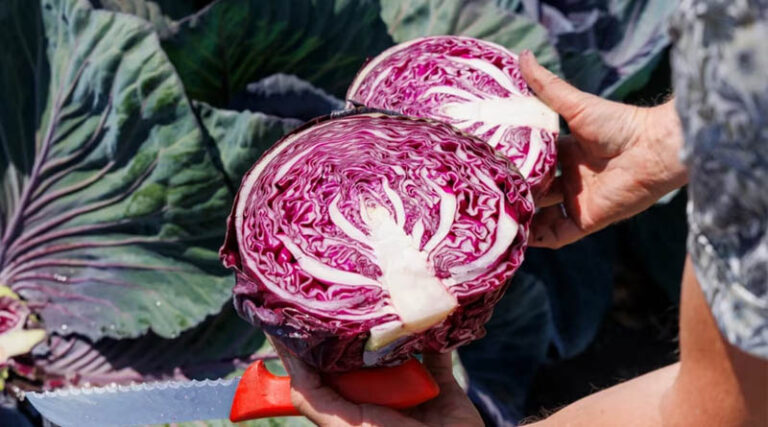
One innovative example is rosé cabbage, which catches the eye with its beautiful colour. “This new cabbage brings together the best of red and white cabbage,” says Christian enthusiastically. “It has the delicious crispness and long shelf life of white cabbage, while its brilliant shades of rosé make it the perfect upgrade for all salad mixes. But unlike red cabbage, rosé cabbage doesn’t ‘bleed’ when chopped or served. That makes it ideal for restaurants who want to give their customers something new, or as an ingredient in attractive, crunchy salads in the convenience category.”
The rosé cabbage can be seen at the Demo Days, which Rijk Zwaan organises every year. “We’re happy to offer foodservice companies larger product samples so that they can experiment within their existing cabbage line or develop new creations,” Christian states. A crisp beauty that keeps its colour, made for modern salads and chefs.
Flatter, faster, fresher
Another innovation is a flatter white cabbage, such as the variety Manouk RZ. The shape is tailored to both existing and new consumer preferences. “The head is less compact and the leaves are thinner, so they are easier to use for cabbage rolls. That’s a traditional way of using cabbages in Middle Eastern and also Eastern European countries,” comments Christian.
Additionally, because the leaves are less tightly packed, the cabbage is easy to ferment as a whole head. “Fermentation is a classic technique that has really taken off as a food trend in recent years, partly thanks to its popularity among chefs and foodies.” A flatter white cabbage with thinner leaves, perfect for wraps, rolls and fermentation.
Creating new markets through new cabbage concepts
As a final example of the company’s innovative activities, Christian mentions exploring new combinations of products and markets. “We launched pointed cabbage in Chile, and the retailers there are enthusiastic about this new shape. And in urban areas in China, we find that supermarkets are choosing smaller-sized cabbages, both because they require less shelf space and because they respond to the needs of smaller households.” From compact cabbages for urban shoppers to new varieties designed for diverse cuisines.
#embracebrassicas: innovation together.
Having mentioned retailers, foodservice companies, chefs and foodies, Chistian has made it clear that Rijk Zwaan isn’t shaking up the cabbage market on its own. “Our chain managers have close relationships with value chain partners around the world, including for fruiting vegetables and lettuce. Thanks to their network, we can get customers on board with our ambitions and drive innovation together. The whole team is ready for #embracebrassicas.”
Also Read: China’s Fertilizer Trade Sees Strong Export Growth in Jan–April 2026, Potash Imports Remain Critical
Global Agriculture is an independent international media platform covering agri-business, policy, technology, and sustainability. For editorial collaborations, thought leadership, and strategic communications, write to pr@global-agriculture.com