A Healthy Environment Is Like A ‘Jigsaw Puzzle’
15 July 2026, Zambia: For Humphrey Mweene, a regional sales agronomist from Zambia, the biggest takeaway was realizing that a healthy environment works like a jigsaw puzzle; fixing land degradation helps absorb climate carbon, which in turn improves rangelands regeneration and crop productivity, providing food for humans, livestock and wildlife and at the same time helps fight climate change.
“This module helped me see how addressing climate change, protecting wildlife, and managing land, all work together. I intend to apply the knowledge gained to support government climate planning in my home country,” explains Humphrey.
When Kenya’s Abi Nepha, a Livestock Officer from the State Department of Livestock Development (SDLD), joined the regional training on climate governance, she expected to deepen her technical understanding of international environmental agreements. Instead, she came away with a new way of thinking.
“It helped me identify overlapping goals between climate action, biodiversity protection and land management and improved my ability to propose efficient, resource-saving policies across all three climate conventions.”
Nepha and Humprey were part of thirty-five technical experts drawn from Kenya, Nigeria and Zambia who participated in a week-long training in May 2026, on Rio 3 and Climate Governance, which was Module 3 of the LiveSys CAPDEV programme. The module sought to help national Technical Working Groups in the three countries to bridge the divide between climate action, biodiversity conservation and land restoration. It was designed to strengthen the knowledge and implementation of the three global climate agreements aimed at tackling the ‘triple planetary crises’ of climate change, biodiversity loss, and land degradation. Also known as ‘Rio Conventions,’ the agreements were established during the 1992 Earth Summit in Rio de Janeiro, to coordinate and ensure that a solution for one crisis does not accidentally harm another. Rather than viewing each convention separately, the trainees were encouraged to identify practical opportunities for integration within their own institutions and national contexts.
The training was delivered by the African Group of Negotiators Experts Support (AGNES) in collaboration with partners including Kenya’s Ministry of Agriculture and Livestock Development, the African Union Inter-African Bureau for Animal Resources (AU-IBAR), International Livestock Research Institute (ILRI) /CGIAR, Alliance Bioversity International and CIAT, and GIZ.
The need for this training has never been greater. Across Africa, countries have made considerable progress in developing climate, biodiversity and land restoration strategies through Nationally Determined Contributions (NDCs), National Adaptation Plans, National Biodiversity Strategies and Action Plans, and Land Degradation Neutrality targets. Yet these processes often evolve independently, managed by different institutions with separate reporting systems and financing mechanisms. The result is fragmented action against challenges that are fundamentally interconnected.
Seeing rangelands differently
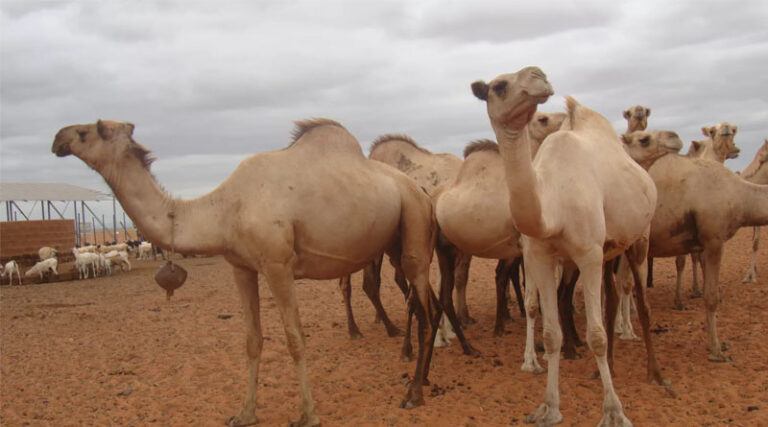
Rangelands, covering half of the earth’s surface, was one of the key topics of the training, and one of the strongest messages from the training was that rangelands deserve far greater recognition in national and global environmental agendas. The module encouraged participants to look beyond the misconceptions about rangelands (as degraded, underutilized landscapes with limited economic value) and recognize rangelands for what they truly are: dynamic ecosystems that sustain millions of people, support livestock production, conserve biodiversity, store carbon and strengthen resilience to climate change. Impacts of sustainably managed rangelands was one of the clearest examples of where the objectives of the three Rio Conventions naturally converge. Participants explored these connections through expert presentations and interactive discussions that examined governance structures, planning processes, financing opportunities, reporting mechanisms and socially inclusive approaches to environmental management
From learning to leadership
The impact of the program became evident as participants reflected on what they would do differently after the training. A comparison of pre- and post-training assessments showed substantial improvements in participants’ understanding of integrated planning, financing, reporting, and governance under the Rio Conventions. Nearly two-thirds described the improvement in their knowledge as transformational, while almost one-quarter reported significant gains. More importantly, participants demonstrated a clear commitment to putting that knowledge into practice.
Many said they would use what they had learned to strengthen livestock policies, integrate climate change into development planning, improve reporting and accountability, mobilize resources for climate-resilient projects and build the capacity of colleagues within their own institutions. These reflections capture the module’s broader achievement. Rather than simply transferring technical knowledge, it equipped policymakers, researchers and practitioners with a more integrated way of approaching environmental governance.
As climate change accelerates, biodiversity declines and land degradation intensify across many parts of Africa, the ability to coordinate action across sectors will become increasingly important. By helping national experts connect policies that have too often operated in parallel, the training is laying the groundwork for stronger institutions, more effective investments and more resilient systems. Ultimately, it is demonstrating that meaningful progress on climate, biodiversity and restoration begins not with separate conventions, but with connected thinking.
Also Read: Crystal Crop Protection Launches Six New Products for Kharif 2026
Global Agriculture is an independent international media platform covering agri-business, policy, technology, and sustainability. For editorial collaborations, thought leadership, and strategic communications, write to pr@global-agriculture.com