09 June 2026, US: CGIAR Centers have pioneered cryopreservation to conserve crops that cannot be stored as seed – crops worth over US$100 billion in annual global production. An investment of US$25-30 million would make it possible to scale this approach globally.
Five of humanity’s most important crops – banana, potato, sweet potato, cassava and yam – are clonal and therefore cannot be conserved as seed.
The diversity of these crops is generally conserved either in the field, leaving them vulnerable to climate extremes or conflict, or as small plantlets in test tubes in a lab (in vitro), which is expensive.
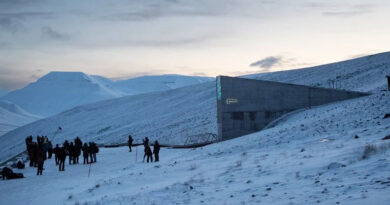
Samples cannot be backed up in the Svalbard Global Seed Vault.
To address these gaps, CGIAR Centers (CIP, IITA, and Alliance of Bioversity International and CIAT) have been developing cryopreservation as a secure and cost-effective means of ensuring this precious diversity is available to future generations.
When stored in liquid nitrogen at -196 degrees Celsius, shoot tips, including the meristems, can remain viable for decades, if not centuries. Cryopreservation also avoids the need for continuous propagation; material can be regrown into complete plants in around two months after thawing.
Compared to in vitro conservation, this approach involves significant upfront costs, but these are recovered in around five years. For potato, annual maintenance costs drop from US$120 per accession (unique sample) to $7 per accession.
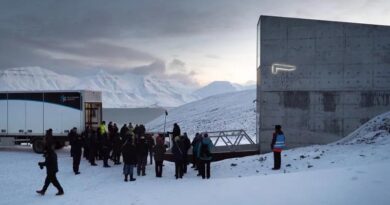
The new Cryo Vault in Lima, opened by CIP with funding from German International Cooperation (GIZ), contains enough tanks to store CIP’s collection of around 15,000 unique samples and 70,000 samples from national genebanks across Latin America.
In November 2025, during the Crop Diversity Day co-organized by the Crop Trust and CIP, Ecuador’s Instituto Nacional de Investigaciones Agropecuarias (INIAP) made the first deposit by a national institution of fifteen groundnut and four potato accessions. Since then, INIAP has taken the opportunity to add additional accessions, bringing the total to 34.
This is a huge achievement on the part of Ecuador’s agricultural research system, requiring them to align complex logistical, staffing and technical procedures.
Preparing samples for storage in cryo tanks requires dedicated protocols for each crop, many of which have not yet been developed, highly skilled technicians and time.
Capacity building from CIP played a major role. Since 2022 the Latin America Cryopreservation Network has been working closely with Ecuador and thirteen other countries on developing and implementing cryopreservation techniques.
Peru’s national plant health institute (SENASA) were also an essential partner, not least in setting out the regulations under which cryopreserved material can be imported and stored.
Thirty-four accessions may not sound like much, but this is the first time in Latin America that cryopreserved crop diversity has been backed up in an international facility. And it is just the start; agreements are already in place for deposits from Brazil, Chile, Colombia, Peru and from another CGIAR center, ICRISAT.
CGIAR is now working with partners to scale this work and aims to raise US$25-30 million over five years for a global cryopreservation initiative covering not only crops, but tree species as well.
This would make it possible to open cryo hubs in other regions – such as Africa and Asia – but, equally importantly, to help national partners to build the capacity and expertise needed to characterize, clean and cryopreserve their clonal collections.
The opening of the Cryo Vault and Ecuador’s deposit shows what is possible. We have the science, the proven model and the global partnerships to scale cryopreservation across the world.
In challenging moments such as pandemics, civil unrest and conflict, cryopreservation emerges as the best and only efficient way to ensure that the crop diversity to fight food insecurity is well preserved and available to those who need it.
By investing in cryo facilities – and the related technical, legal and phytosanitary measures – we have an opportunity to protect the agricultural heritage left to us by farmers and breeders over thousands of years.
The window for action is closing fast. We must not miss it.
Today is an historic and very happy day for the INIAP genebank as we deposit the first samples in the Cryo Vault. We will keep adding safety duplicates, including of crops like Andean tubers. It’s challenging, but we have a responsibility to avoid genetic erosion in our region.
Global Agriculture is an independent international media platform covering agri-business, policy, technology, and sustainability. For editorial collaborations, thought leadership, and strategic communications, write to pr@global-agriculture.com