Empowering Fisheries Actors at the Municipality Level in Timor-Leste
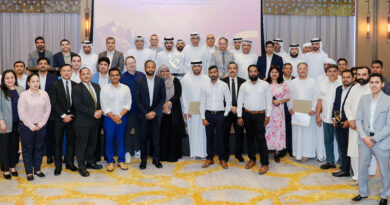
07 July 2026, Baucau: WorldFish Timor-Leste, through the Island Food System area of work, recently facilitated two parallel activities at the municipality level: a capacity building workshop on research tools for government fisheries staff, and a fish handling training with local fish traders. The workshop brought together 23 C-MAPA officers Coordinators of Municipality Support for Fisheries and Aquaculture from Baucau, Bobonaro and Lautem municipalities (18 men and 5 women), while the training, co-facilitated with national staff of the Directorate General of Fisheries, Aquaculture and Aquatic Resources Management (DG-PAGRA), reached 36 fish traders in those same municipalities (30 men and 6 women).
These activities build on findings from a recent Situation Analysis of Timor-Leste’s School Meal Program (SMP) in these three municipalities, which identified demand-side barriers and opportunities for integrating aquatic foods into school meals to improve dietary diversity and strengthen island food systems underscoring why building both government capacity and fish trader’s practices, in these locations, matters.
From Research to Practice: Introducing Tools to Government Fisheries Staff
The capacity building workshop had a dual purpose: to introduce participants to research tools and methodologies, and to present back findings from two recently finished projects Innovating fish-based livelihoods in the community economies of Timor-Leste and Solomon Islands and A nutrition-sensitive approach to fisheries management and development in Timor-Leste and Nusa Tenggara Timur Province, Indonesia, funded by the Australian Centre for International Agricultural Research (ACIAR). For many C-MAPA officers, this was their first exposure to the research dimensions of fisheries management opening new conversations about how evidence-based approaches can strengthen their day-to-day work.
A central goal of the workshop was to gauge C-MAPA officers’ interest in research methods, with the aim of integrating them as active participants in future participatory action research and capacity building programs. WorldFish Timor-Leste presented the methodologies and findings of the two ACIAR projects in an accessible way, including a hands-on introduction to KoboToolbox — a digital data collection platform that improves data quality, reduces manual errors, and enables timely access to information for better decision-making. This opened a dialogue about how municipal fisheries officers could apply similar tools in their own work, and play a more formal role in data collection, monitoring, and local fisheries research going forward.
“The KoboToolbox application is really new for me, so I appreciated being guided step by step on how to start. As municipal staff, we’re always looking forward to training opportunities like this to strengthen our capacity,” says Cosme C. Soares, C-MAPA officer, Baucau.
This approach reflects a broader ambition within the Island Food System area of work: to build local research capacity not just at the national level, but also at the municipal frontline, where policy meets implementation, and among the officers who interact daily with fishing communities, value chains and markets.
Giving Back: Fish Handling Training as Recognition and Investment
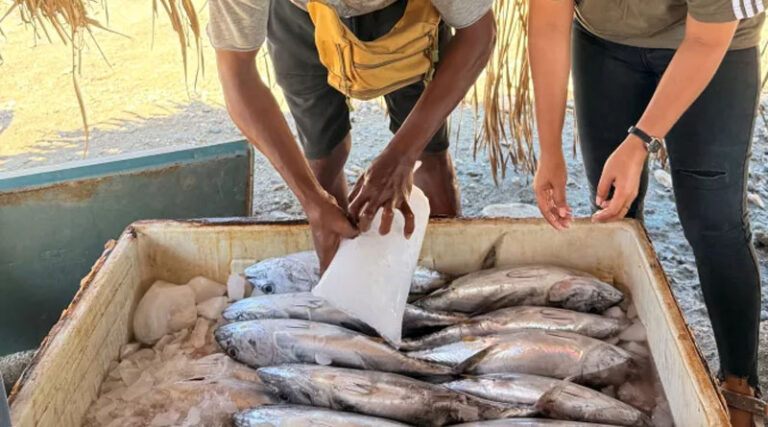
Alongside the research workshop, a parallel activity delivered a practical fish handling training to fish traders in the three municipalities, based on the SPC/WorldFish handling sheets, adapted locally to the Timor-Leste context.
This training was offered as a way of giving back. Two years earlier, WorldFish Timor-Leste carried out fish trader surveys in Baucau and Lautem municipalities, with the participation of local fish traders and support from our C-MAPA colleagues. The fish handling training delivered in 2026 responded to what those traders said they needed back in 2024 — a practical return for the part they played in the research.
The one-day training covered key post-harvest practices, including the importance of maintaining the cold chain — keeping fish cool and fresh from landing or pond, through transport, to market and consumer, a chain that must never be broken — alongside the effective use of ice and cold storage, identifying signs of freshness and spoilage, and how to freeze, thaw, and maintain frozen fish quality safely.
For many participants, the training filled gaps they had long felt in their daily work. “Before, I just used whatever ice I could find — I didn’t know it mattered how I packed it. Now, I understand why my fish was spoiling faster than my neighbor’s,” said Margarida R. Horacio, a woman fish trader from Raumoko, Lautem.
Jose da Costa Pereira — known as Pai Je – a fish trader from Batugede, Bobonaro — found the most value in the hands-on cold chain practice: “I really liked the practical part on cold chains — learning the steps to layer ice, seawater, and fish properly in a cool box.”
Dalia Emrenciana Da Costa Ximenes-Post-Harvest & Training staff at DG-PAGRA who helped facilitate the training, reflected on its broader value: “This practical demonstration of fish handling through ice chilling in cool boxes is exactly what our traders need to maintain product freshness and quality — strengthening the partnership between government and communities.”
These skills directly address the quality and safety challenges traders face daily, and can translate into reduced spoilage, greater consumer trust, and improved livelihoods.
Building Bridges Between Research and Fisheries Actors
These workshops and trainings reflect the commitment of the Island Food System program to embedding research within sub-national governance structures, rather than alongside them. By engaging C-MAPA officers as both learners and potential future research collaborators, WorldFish Timor-Leste is laying the groundwork for a more integrated model of fisheries management, one where municipal government staff are active contributors to the knowledge base that shapes policy — not just recipients of it.
Looking ahead, WorldFish Timor-Leste will build on the momentum of both activities. For C-MAPA officers, the team will assess the interest expressed during the workshop to determine how best to involve them in the new ACIAR-funded project, Strengthening Fisheries for Nutrition (SF4N), while the fish handling training continues to model how research programs can give back to the communities that make their work possible — elevating fish traders’ capacity to supply safe, quality aquatic food to the School Meals Program, central to SF4N’s broader goal of improved nutrition outcomes for children across Timor-Leste.
Also Read: Crystal Crop Protection and Corteva Sign Collaboration Agreement
Global Agriculture is an independent international media platform covering agri-business, policy, technology, and sustainability. For editorial collaborations, thought leadership, and strategic communications, write to pr@global-agriculture.com