Maharashtra Moves Early to Tackle Threat of El Niño-Driven Monsoon Disruptions
03 June 2026, Maharashtra: With forecasts indicating a high probability of below-normal monsoon rainfall during Kharif 2026, farmers across Maharashtra may face increased risks in crop establishment, moisture stress and reduced yields – particularly in rainfed regions already vulnerable to climate variability.
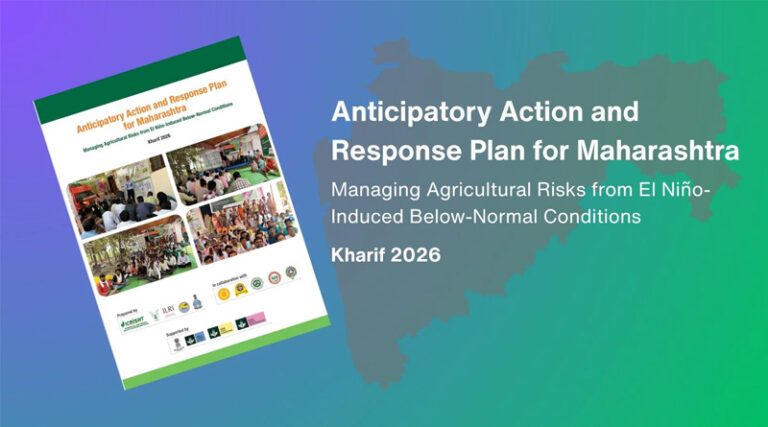
To support farmers ahead of the sowing season, ICRISAT and partners released a new anticipatory action and response plan recommending climate-resilient crops, water-saving practices and district-level contingency measures to reduce climate-related risks.
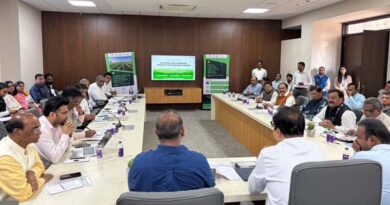
The ‘Anticipatory Action and Response Plan for Maharashtra’ was released on 19 May 2026 during a technical consultation-cum-stakeholders’ workshop held at the Indian Institute of Tropical Meteorology, Pune, India.
The consultation brought together experts and officials from the Indian Institute of Tropical Meteorology (IITM), India Meteorological Department (IMD), Indian Council of Agricultural Research – Central Research Institute for Dryland Agriculture (ICAR–CRIDA), International Livestock Research Institute (ILRI), State Agricultural Universities (SAUs) of Maharashtra, All India Coordinated Research Project on Agrometeorology (AICRPAM) centers, Project on Climate Resilient Agriculture (PoCRA) 2.0, the Agriculture Department and other stakeholders.
“Climate risks are becoming increasingly complex for smallholder farmers, and the need is to move from reactive responses to anticipatory action,” said Dr Himanshu Pathak, Director General of ICRISAT.
“This plan demonstrates how climate science, AI-enabled advisory systems and institutional partnerships can be brought together to support timely and location-specific decision-making for farmers and extension systems,” said Dr Pathak.
The plan is a rapid response to the emerging challenges posed by the strong El Niño. It provides block-level risk assessments across Maharashtra and recommends prioritizing resilient and short-duration cropping systems over high-input and water-intensive crops, particularly in drought-prone regions.
Millets such as jowar and bajra, along with pulses including tur, gram, moong and crops for fodder were, identified as among the most reliable crops under projected below-normal rainfall conditions.
The plan also emphasizes practical risk-reduction measures including seed priming, mulching, micro-irrigation, rain guns for protective irrigation, fodder banks and climate-informed sowing advisories.
Identifying 181 highly vulnerable blocks across Maharashtra based on analysis of previous El Niño-linked drought years, the plan notes that production losses during such years are driven largely by declines in cultivated area and poor crop establishment due to erratic rainfall patterns.
“The value of climate information lies in their effective use by decision-makers and communities,” said Dr Suryachandra Rao, Director, IITM.
“By linking seasonal outlooks and weather information with agricultural preparedness planning, this initiative supports the delivery of the right information, at the right time and at the local level,” said Dr Rao.
Dr Shalander Kumar, Principal Scientist at ICRISAT, explained that the plan developed through the project ‘AI-powered Context-Specific Agromet Advisory Services for Climate-Resilient Agriculture at Scale,’ aims to strengthen climate-informed agricultural decision-making using the Intelligent Systems Advisory Tool (iSAT).
The platform integrates seasonal forecasts, weather data and context-specific agricultural knowledge to generate localized advisories for farmers and extension systems.
Dr Anupam Hazra, Scientist-G and Associate Mission Director of the Monsoon Mission, IITM, emphasized that in addition to crop planning, the report highlights the importance of strengthening fodder security, livestock preparedness, crop insurance and institutional coordination to reduce the impacts of climate shocks across farming systems.
The report recommends strengthening collaboration among Agromet Field Units, Krishi Vigyan Kendras (KVKs), district agriculture departments, Farmer-Producer Organizations and local institutions to improve last-mile dissemination of advisories and enable timely field-level action during the upcoming Kharif season.
Also Read: India Approves Two Rice Varieties To Secure Yields In Direct-seeded Rice Farming
Global Agriculture is an independent international media platform covering agri-business, policy, technology, and sustainability. For editorial collaborations, thought leadership, and strategic communications, write to pr@global-agriculture.com