Global Urea Disruptions Will Force Farmers to Rethink Crop Choices
21 March 2026, London: As the global fertiliser crisis deepens amid ongoing disruptions in the Hormuz region, its implications are now converging with one of the most critical phases of the agricultural calendar across continents. With urea supply chains under strain and no coordinated global advisory framework in place, farmers from South Asia to North America are being pushed into making independent decisions at a time when precision and planning are essential.
A Supply Shock Driven by Timing, Not Just Availability
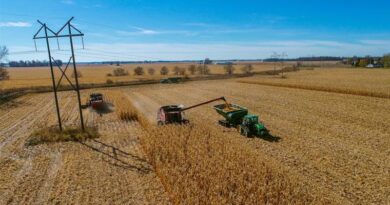
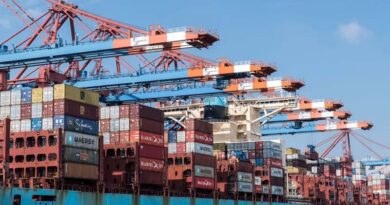
The current disruption is not merely about supply shortages, it is about timing. Global fertiliser flows, particularly nitrogen-based inputs like urea, have been impacted by shipping bottlenecks linked to rising insurance risks in key maritime routes. Even in a best-case scenario where geopolitical tensions ease immediately, commercial shipping cannot resume at scale overnight. Insurance systems require sustained periods of stability before restoring coverage, delaying the movement of fertilisers by weeks, if not months.This delay is critical because agriculture operates on biological timelines that cannot be shifted. Across regions, nitrogen application windows are already underway or fast approaching. In the United States, corn requires nitrogen by mid-April. In South Asia, kharif crop preparation begins in May. In Australia, the window for winter crop fertilisation opens in June. These are fixed agronomic windows, and missing them means yield losses that cannot be recovered later in the season.
Absence of Coordinated Guidance Leaves Farmers Exposed
Despite the scale of the disruption, there is little evidence of coordinated global or even national-level advisories addressing fertiliser availability risks. Farmers, who typically depend on extension systems and policy signals to guide crop planning, are facing a vacuum of actionable information.This absence of direction is particularly significant in a season where input availability is uncertain. Without clarity on fertiliser supply, farmers risk committing to crops that are highly dependent on nitrogen inputs, only to face shortages at critical growth stages. The consequences of such mismatches are not marginal, they directly affect plant development, grain formation, and ultimately, farm incomes.
Crop Choices Begin to Shift Under Input Constraints
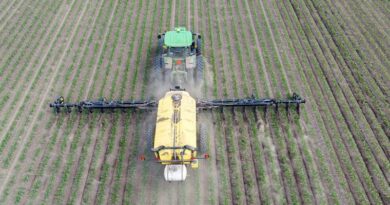
In this environment, input availability is emerging as a decisive factor in crop selection. High nitrogen-demanding crops such as corn, paddy (rice), and cotton typically require between 100 to 150 kilograms of nitrogen per hectare, translating into substantial urea dependence. These crops are particularly sensitive to early-stage nitrogen application, and any delay can significantly reduce yield potential.By contrast, soybean offers a structurally different agronomic profile. As a leguminous crop, it has the ability to fix atmospheric nitrogen through symbiotic bacteria in its root system, reducing its reliance on external nitrogen inputs. Its fertiliser requirement is comparatively low, often limited to a small starter dose at sowing.Under conditions where urea availability is uncertain, soybean is increasingly being viewed as a lower-risk alternative. While it may not always match the market returns of other crops in all regions, its reduced dependence on fertiliser inputs provides a level of resilience that is becoming critical in the current context.
Urea Requirement for Major Crops (Global Reference)
CropTotal Nitrogen Requirement (kg/ha)Urea Equivalent (kg/ha)Application TimingCorn (Maize)120–150 kg N260–325 kg ureaSplit in 3 doses – at sowing, knee-high stage, before tasselingPaddy (Rice)100–150 kg N220–330 kg ureaSplit in 3 doses – after transplanting, tillering, panicle initiationSoybean20–30 kg N45–65 kg ureaBasal dose at sowing (crop fixes most nitrogen itself)Cotton100–150 kg N220–330 kg ureaSplit in 2–3 doses – after sowing, square formation, flowering
A Structural Mismatch with Global Consequences
What is unfolding is not a temporary disruption but a structural mismatch between two systems that operate on entirely different timelines. The recovery of global shipping and insurance frameworks follows a measured, risk-averse process that unfolds over months. Agriculture, by contrast, is governed by biological imperatives that demand action within narrow windows of time.This mismatch means that even a rapid geopolitical resolution cannot fully prevent disruptions to the 2026 planting season. Fertiliser that arrives late cannot compensate for missed application windows, and the resulting yield impacts are effectively locked in.As a result, farmers across regions are being compelled to adapt in real time, often without institutional support. The decisions they make in the coming weeks, particularly around crop selection and input use will not only shape their individual outcomes but also influence global food supply, price dynamics, and trade flows in the months ahead.In a season defined by uncertainty, the ability to align crop choices with input availability may prove to be the most critical factor in navigating risk.
Also Read: India Issues Draft Rules for Amendment to Its Insecticides Rules, 1971
Global Agriculture is an independent international media platform covering agri-business, policy, technology, and sustainability. For editorial collaborations, thought leadership, and strategic communications, write to pr@global-agriculture.com