TERI Honours Excellence in Sustainable Water Management at the 5th Water Sustainability Awards 2026
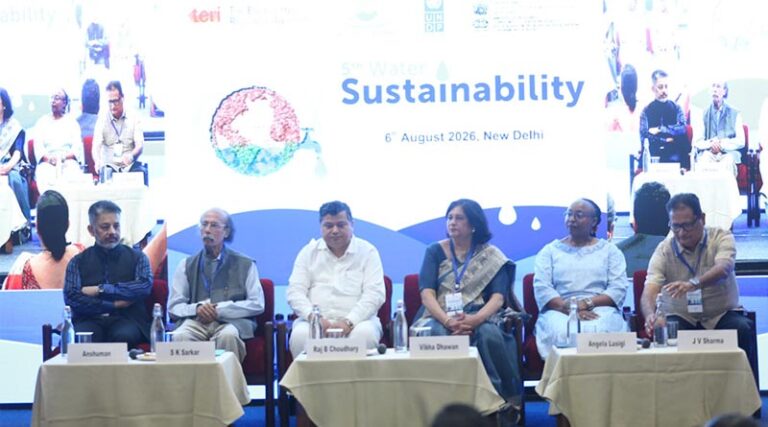
07 August 2026, New Delhi: The Energy and Resources Institute (TERI) honoured outstanding organizations and institutions driving innovation in sustainable water management at the 5th Water Sustainability Awards 2026, held on 6 August at the India Habitat Centre, New Delhi. The event brought together policymakers, industry leaders, researchers, development practitioners, and civil society representatives to celebrate excellence in water stewardship and deliberate on pathways towards an equitable and water-secure future.
The awards recognized exemplary initiatives in water conservation, water-use efficiency, wastewater treatment and reuse, groundwater recharge, pollution control, watershed management, and climate-resilient water solutions. Through the initiative, TERI reaffirmed its commitment to promoting scalable best practices, encouraging cross-sectoral collaboration, and advancing sustainable water management in support of India’s development priorities and the Sustainable Development Goals.
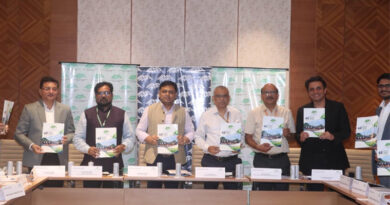
The event was inaugurated by Shri Raj Bhushan Choudhary, Hon’ble Minister of State for Jal Shakti, Government of India, who also presented the awards and felicitated organizations, industries, institutions, urban local bodies, communities, and members of the distinguished jury. The ceremony also witnessed the release of the compendium, Water Sustainability Awards: Recognized Initiatives 2025–26, documenting the year’s award-winning initiatives and best practices.
The hon’ble minister Shri Choudhary said, “The success of India’s water movement lies in Jan Bhagidari. When governments, communities, industries, and citizens come together, every drop conserved becomes a step towards a water-secure India. Water is not merely a natural resource—it is the foundation of our health, food security, livelihoods, economic growth, and environmental sustainability. Securing India’s water future is a shared national responsibility. As we move towards Viksit Bharat 2047, every household that harvests rainwater, every farmer who adopts efficient irrigation, every industry that reuses water, and every citizen who values every drop contributes to building a water-secure and climate-resilient India.”
This year’s awards recognized outstanding contributions across multiple categories of sustainable water management. Honours were conferred upon organizations and individuals demonstrating excellence in water access, wastewater treatment and safe reuse, industrial and agricultural water-use efficiency, participatory water management, restoration of community water structures, water cooperation, and innovation in water technology. Among the winners were Gramodaya Samajik Sansthan, Shree Cement Limited (Beawar), Delhi International Airport Limited, NTPC North Karanpura, Lauritz Knudsen Electrical and Automation, DHAN Vayalagam (Tank) Foundation, ABIS Foods and Proteins Private Limited, Shriram Institute for Industrial Research, Power Grid Corporation of India Limited, and Arghyam, alongside several runners-up and appreciation awardees recognized for their exemplary initiatives. The Water Champion (Individual) award was presented to Shri Laxman of Gram Vikas Navyuvak Mandal Laporiya (GVNML) for his outstanding contribution to community-led water conservation and stewardship.
Delivering the special address, Dr Vibha Dhawan, Director General, TERI, foregrounded the need for science-based policies, innovation, and collaborative action to address India’s emerging water challenges and build long-term resilience. Dr Dhawan noted, “The true value of water cannot be measured only in economic terms. Every sector—agriculture, industry, and urban development—must recognize water as a precious national asset and use it responsibly. With a growing population and increasing water demand, we can no longer follow a ‘use and dispose’ approach. Every drop of treated wastewater is a valuable resource that must be recycled and reused. Every drop saved today is an investment in tomorrow.”
The ceremony featured a keynote address by Dr Angela Lusigi, Resident Representative, United Nations Development Programme (UNDP), who highlighted the importance of strengthening partnerships, accelerating innovation, and adopting inclusive approaches to sustainable water management in the context of climate resilience and the Sustainable Development Goals. Dr Lusigi said, “Water is the common thread that connects all the Sustainable Development Goals. Whether it is health, food, energy, climate action, or economic growth, every SDG is directly or indirectly linked to water. The increasing frequency of floods, droughts, and climate extremes reminds us that water security is no longer a future concern—it is an urgent national priority. Strong institutions, sound policies, and evidence-based decision-making are the cornerstones of sustainable water governance and long-term water security. The partnership between the Ministry of Jal Shakti, TERI, and UNDP exemplifies the value of collaborative engagement among government, research institutions, and development partners in advancing innovative, inclusive, and scalable solutions for achieving water security in India.”
Earlier, Dr SK Sarkar, Senior Advisor, TERI & Former Secretary, DoPT & MoJS, welcomed the gathering and highlighted the growing significance of recognizing institutions and communities that are demonstrating leadership in sustainable water management.
The programme commenced with opening remarks by Dr JV Sharma, Senior Director, Land Resources, TERI. Mr Anshuman, Director, Water Resources, TERI, presented an overview of the Water Sustainability Awards and their role in encouraging innovation and responsible water stewardship across sectors and emphasized, “The Water Sustainability Awards honour the visionaries and institutions whose exemplary efforts in water conservation and stewardship are setting new benchmarks and inspiring action across the nation. Empowering women is one of the most effective pathways to achieving water security. When women lead, communities become more resilient, resources are managed more sustainably, and development becomes more inclusive. For generations, women have carried the responsibility of managing water. It is now our responsibility to ensure they also carry equal authority in shaping water policies and governance.”
Following the awards ceremony, TERI convened a high-level panel discussion on ‘Gender and Water Security: Bridging Gaps for an Equitable Future.’ The session opened with a keynote address by Shri Bharat Lal, Former Secretary General, NHRC; Former Director General, National Centre for Good Governance (NCGG); Former Secretary, Lokpal of India; and Founder Mission Director, Jal Jeevan Mission, who discussed the need for inclusive and participatory approaches to strengthening water security. Shri Lal highlighted, “Every woman must have a voice in decisions that shape our water future. Meaningful participation of women—from households to policymaking—is fundamental to inclusive and effective water governance. Gender equality and water security are inseparable. Advancing women’s leadership in water management accelerates progress towards SDG 6, SDG 5, SDG 2, and the broader vision of sustainable and inclusive development. The impacts of climate change, water scarcity, floods, and droughts are felt most acutely by women and vulnerable communities. Gender-responsive water management is therefore not only a matter of equity but also of climate resilience and sustainable development.”
Moderated by Ms Anupama Madhok, Director & Editor, Water Digest, the discussion brought together a distinguished panel comprising Mrs Nigam Agarwal, Director (Environment), Government of NCT of Delhi; Ms Noa Amsalem, Water Attaché, Embassy of Israel in India; Dr Swati Singh, Adaptation Analyst, Action for Climate and Environment, United Nations Development Programme (UNDP); Ms Anjali Makhija, Trustee & Chief Executive Officer, Sehgal Foundation; and Dr Ranjana Ray Chaudhuri, Associate Professor & Head, Department of Regional Water Studies, Department of Natural and Applied Sciences, TERI School of Advanced Studies (TERI SAS). The panelists examined the intersections of gender, water security, and climate resilience, emphasizing the need to strengthen women’s leadership, promote gender-responsive water governance, and foster inclusive institutional frameworks to build resilient and sustainable water management systems. The event concluded with a renewed call for collective action to accelerate sustainable water management, foster knowledge exchange, and scale innovative practices that can contribute to securing India’s water future.
Also Read: Syngenta Appoints Eladio Robles as India Managing Director
Global Agriculture is an independent international media platform covering agri-business, policy, technology, and sustainability. For editorial collaborations, thought leadership, and strategic communications, write to pr@global-agriculture.com