Microalgae to Aquafeed: Transforming the Future for India’s Fisheries
Guest Author: Amritpreet Kaur Minhas and Shovon Mandal, Sustainable Agriculture Division, The Energy and Resources Institute (TERI), India
06 August 2026, New Delhi: India has emerged as one of the world’s leading aquaculture producers, ranking second in global fish production and contributing significantly to shrimp exports. Government initiatives such as the Pradhan Mantri Matsya Sampada Yojana (PMMSY), increased investments in fisheries infrastructure, and rising export opportunities have accelerated the growth of the Indian aquaculture sector.
The global aquafeed market is projected to exceed US$100 billion by the early 2030s, driven by increasing fish production, technological innovations, and the growing demand for feed ingredients. However, even with this notable advancement in aquaculture, there remains an enormous challenge that poses serious threats to profitability, namely the increasing price and availability of feed ingredients. The cost of feed accounts for about 50-70 % of the entire cost of operation. Traditionally, fishmeal and fish oil have served as the primary protein and lipid sources in aquafeed because of their excellent nutritional quality. However, overfishing, fluctuating marine fish catches, rising international prices, and increasing environmental concerns have made these ingredients expensive and less sustainable.
The industry has turned to plant-based protein sources, such as soybean meal, which has become one of the most popular options in recent decades due to its low cost, accessibility, and high content of protein. However, soybean production faces problems of replacing food with animal feed, price volatility, and insufficient land and environmental sustainability. Thus, the search for promising alternatives has begun, and many scientists and companies have turned to a new source of food and energy – microalgae.
Algae: Beyond Animal Feed
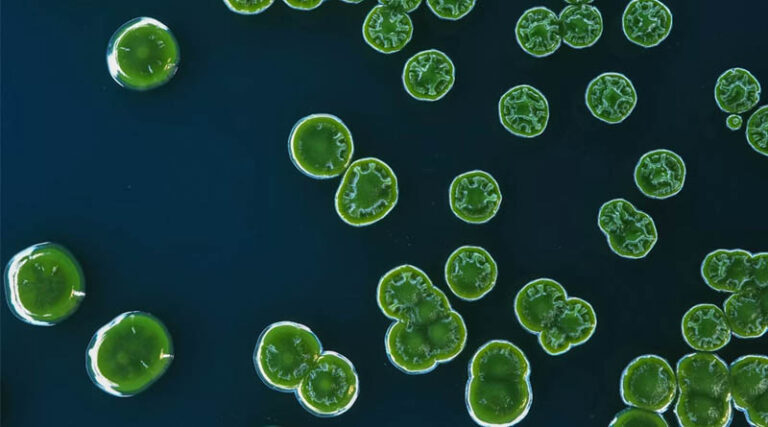
Moreover, the algae-based aquafeed market is growing rapidly both within the current country and at the global levels due to the demand for sustainable feed ingredients. Microalgae are currently seen as one of the most promising alternative feed ingredients because they contain high quantities of proteins, amino acids, essential omega-3 fatty acids, carotenoids, vitamins, minerals, and other bioactive metabolites. For instance, microalgae are rich in various polysaccharides (sulfated polysaccharides, β-glucans), carotenoids, phycocyanin, and polyphenols that can be used as immunostimulants. Unlike conventional feed ingredients, algae can be produced on non-arable land using saline water, CO2, and wastewater, thereby reducing pressure on marine ecosystems and eliminating the need to catch wild fish for feed production.
Although the production of algae requires a more significant share of expensive raw materials, the use of innovative technologies allows for getting high yields of biomass with unique properties. For example, Corbion and Veramaris have already managed to produce omega-3 oils from algae for aquafeed applications for the salmon industry. This technology has significantly reduced the reliance on wild fisheries, providing an alternative source of high-quality feed without harming the fish and disrupting the feed quality. At the same time, the use of Spirulina, Chlorella, and Schizochytrium by the majority of prominent feed producers, including ADM, Reed Mariculture, DSM, and Fluval, allows improving fish growth rate and feed performance, enhancing pigmentation, and promoting the immunity and disease resistance of farmed fish. However, the Indian algal aquafeed market is still in its infancy and needs more attention and investment to develop and take advantage of the possibilities offered by this promising technology.
Fermentation: Making Algae Work Harder
There’s a catch, though. Some algae have a tough cell wall, making it difficult for animals to digest and absorb the nutrients. Researchers have discovered a way to use enzymes and fermentation to make it easier for animals to eat. After fermentation, the cell wall of algae is broken down by enzymes. This releases protein, pigment, fat, and other nutrients in fish meal and oil, improving the overall nutrition and utilization rate of the feed.
The price of protein-rich feedstuffs such as soybean meal is about US$400–600 per tonne whereas fish meal costs between US$1,500 and $ 2,200 per tonne. Recent techno-economic studies have shown that through large scale production processes involving the use of open ponds, waste nutrients, CO₂ emissions from industries, and biorefinery approaches, it will be possible to reduce the cost of production to less than US$1,500-2,500 per tonne. The development of innovative technologies for photobioreactors, high-throughput photobioreactors, precision fermentation, cell factories, AI-based high-throughput technologies, energy-efficient downstream processing, and novel feed processing technologies will lead to a further reduction in the cost of producing algae by 30-50 P. This will make the use of algae in fish feed possible. Innovative companies like BarAlgae are disrupting the market by developing algae-based feed with the help of AI-driven microalgae aqua feed production systems.
Take-home message
Although there is no doubt about the ability to create algal biomass for aquaculture feed and its nutritional benefits, the path to actualizing this potential at the industrial scale requires a concerted effort from all stakeholders. The transition to algae-based will be enabled by innovations at the upstream, midstream, and downstream levels of the value chain, along with the necessary policy interventions. This mission-critical activity with high strategic significance to the country’s sustainable aquatic food security and economic growth needs to be given due priority and impetus. It fits well within the larger framework of missions such as India’s Blue Economy Mission, Atmanirbhar Bharat, and climate-resilient agricultural development.
With continued research, appropriate policy incentives, and collaborations among researchers, government agencies, universities, industries, and communities, biotechnology in places like the North East Himalayas can become a hot bed for innovation while reducing the region’s reliance on imported fish meal and creating jobs in the process.
Also Read: FMC to Launch New Herbicide Keenali for Paddy Weed Control in India
Global Agriculture is an independent international media platform covering agri-business, policy, technology, and sustainability. For editorial collaborations, thought leadership, and strategic communications, write to pr@global-agriculture.com