From Breeder Seed to Farmers’ Fields: ICARDA and FAO Restore Syria’s Seed Systems
06 August 2026, Syria: Improved seed is laying the groundwork for Syria’s agricultural recovery. Across the country, ICARDA and FAO are restoring national seed systems by strengthening seed production, supporting farmers and advancing climate-resilient crop varieties from research into large-scale multiplication.
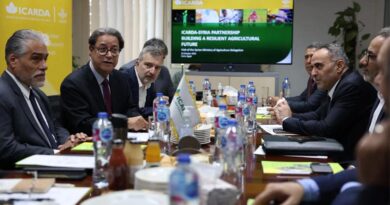
Funded by the UK Foreign, Commonwealth & Development Office (FCDO), the initiative is implemented by ICARDA and the Food and Agriculture Organization of the United Nations (FAO), in partnership with Syria’s Ministry of Agriculture, GCSAR and GOSM to restore every stage of Syria’s seed value chain from research and seed multiplication to farmer adoption.
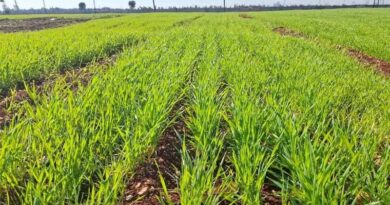
Throughout the 2026 growing season, multiplication plots established across Aleppo, Hama and Homs entered a critical phase as researchers, technicians and farmers worked together to evaluate improved wheat, barley, chickpea and lentil varieties under local conditions.
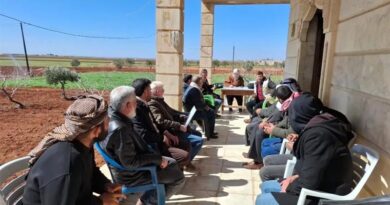
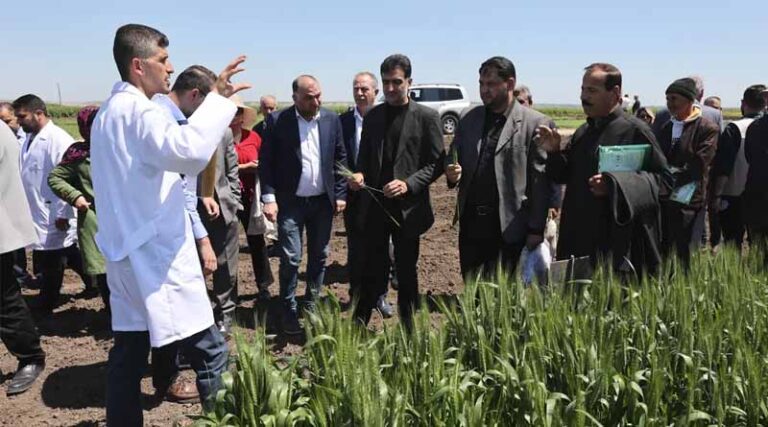
To help translate research into practice, ICARDA and FAO organized a series of eight field days that brought together more than 240 farmers, researchers, seed technicians and government representatives. Participants observed improved crop varieties throughout the production cycle while learning good agricultural practices for quality seed production, including land preparation, planting techniques, seed rates, varietal purity, disease management and post-harvest handling.
The demonstrations also created opportunities for farmers and researchers to exchange knowledge on climate-resilient and locally adapted crop varieties capable of strengthening agricultural productivity under increasingly challenging growing conditions.
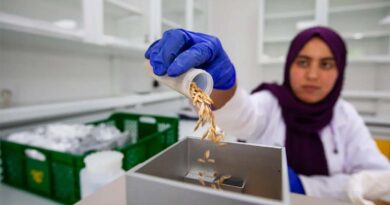
The initiative has now reached another major milestone with the start of the 2026 harvest at ICARDA’s Tel Hadya Research Station. Building on the 1,625 kilograms of breeder and pre-basic seed secured in late 2025, researchers are harvesting early-generation seed while collecting critical data on crop performance, yield and quality to determine which varieties will advance to larger-scale multiplication.
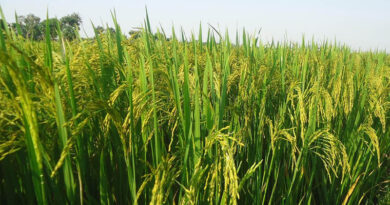
Preliminary harvest results highlight the resilience of improved Syrian crop varieties. Working alongside 49 seed growers across three governorates, the initiative recorded promising wheat yields despite a challenging growing season. Several multiplication sites produced durum wheat yields exceeding 6 tons per hectare, while bread wheat reached up to 7.5 tons per hectare, demonstrating the strong performance of locally adapted, climate-smart varieties under Syrian conditions.
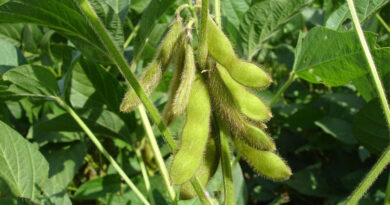
The project also recorded encouraging results in chickpea production at ICARDA’s Aleppo research fields. While chickpea crops struggled in several parts of the country due to erratic weather, disease pressure and declining seed quality, integrated crop management and climate-resilient varieties enabled successful production at ICARDA sites, illustrating how improved genetics combined with good agronomic practices can help farmers adapt to increasingly variable climatic conditions.
As these improved varieties progress from breeder seed to certified seed production, ICARDA and FAO are helping restore a reliable national seed supply system that will enable Syrian farmers to access high-quality seed, strengthen food production and support the country’s long-term agricultural recovery.
Also Read: FMC to Launch New Herbicide Keenali for Paddy Weed Control in India
Global Agriculture is an independent international media platform covering agri-business, policy, technology, and sustainability. For editorial collaborations, thought leadership, and strategic communications, write to pr@global-agriculture.com