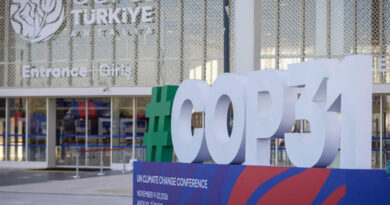
10 November 2026, Antalya: The Food and Agriculture Organization of the United Nations warned as COP31 opened in Antalya, Turkiye, on November 9 that extreme heat worsened by a developing El Nino is making food production increasingly difficult worldwide. Kaveh Zahedi, head of FAO’s climate division, urged governments to step up investment in food security and climate-resilient agriculture as the conference, which runs through November 20, got underway.
COP31, hosted by Turkiye, has put agriculture and food systems high on its agenda. On the conference’s opening day, Turkiye’s Ministry of Agriculture and Forestry and the International Fund for Agricultural Development launched a joint report examining how 2026 price volatility is compounding with climate impacts on food systems. The World Meteorological Organization, UNESCO’s Intergovernmental Oceanographic Commission, FAO, the World Food Programme and several other UN bodies are scheduled to hold a session on November 10 titled “Reading the Climate Signal: El Nino, Extreme Events and the Science Behind the Headlines,” describing a potentially strong El Nino now developing. A follow-up session on November 11, organized by FAO, the Intergovernmental Panel on Climate Change, the WMO, the WFP and the International Fund for Agricultural Development, will focus on scaling climate finance for agrifood systems facing extreme heat and El Nino-related shocks.
Turquoise Nexus Initiative launches under Turkiye’s COP31 presidency
Turkiye’s COP31 presidency is using the conference to launch the Turquoise Nexus Initiative, a country-led programme under FAO’s Food and Agriculture for Sustainable Transformation Partnership, at a ministerial roundtable on November 10. The initiative rests on three pillars: policy coherence and implementation support, knowledge generation and technical exchange, and investment readiness and finance alignment. FAO notes that agriculture accounts for 70 percent of global freshwater withdrawals, underscoring the water-food-climate links the initiative is meant to address. The programme was first proposed at the Bonn climate talks in June and aims to secure country commitments for implementation starting in 2027.
The warnings delivered at COP31’s opening build on an FAO-IPCC expert meeting held in Rome in early June, which brought together nearly 100 scientists from 46 countries to identify research priorities ahead of the IPCC’s Seventh Assessment Report. That meeting concluded that food security depends on widespread and systemic adaptation across agrifood systems and on holding global warming well below 2 degrees Celsius, and called for an integrated approach that addresses fragmented policies and gaps in climate finance for agriculture rather than treating heat, water and food security as separate problems.
Global Agriculture is an independent international media platform covering agri-business, policy, technology, and sustainability. For editorial collaborations, thought leadership, and strategic communications, write to pr@global-agriculture.com