What A Stronger El Niño Could Mean For Food Systems
27 June 2026, New Delhi: El Niño is back, and this one could become very strong.
A new GEOGLAM Crop Monitor special report (PDF), prepared with contributions from CGIAR Climate Action and other partners, finds that El Niño conditions are now present and likely to continue into March 2027. By November to January when it is expected to peak, the event has a 63 percent chance of reaching very strong intensity – a super El Nino as some feared.
That does not mean global crop failure is imminent. But it does mean governments, funders and food-system actors have a clearer window to prepare.
The first lesson from the report is that El Niño El Niño should not be read as a single global food shock. At the global level, past El Niño events have tended to push rice yields about 1 to 1.5 percent below trend, while soybean yields have often risen by about 1.5 to 2 percent. A crop like maize often looks stable globally because losses in one region are offset by gains elsewhere. But for farmers and governments in the affected regions, that balance offers little comfort.
Another important question is where the pressure will be felt first, and whether those places have the capacity to respond in time. The report identifies Southern Africa, Central America, India and Australia as regions where crop-yield risks deserve closer attention.
Understanding the timing of the event is equally important. In Southern Africa, the main maize season is expected to coincide with the projected El Niño peak. That makes the forecast a practical food-security concern, especially in countries such as Malawi, Mozambique where maize is central to diets, markets and rural incomes.
It’s good to note that no two El Niño events are identical. Their effects depend on the strength of the event, the timing, ocean conditions and other climate patterns. But history gives decision-makers enough information to act before the worst impacts become visible.
This is where CGIAR Climate Action’s work is urgent.
The GEOGLAM report is a rapid scientific response, but the capacity behind it was not built rapidly. It draws on years of investment in agricultural data, crop distribution mapping and subnational production records. Through IFPRI and CGIAR Climate Action, tools such as the Spatial Production Allocation Model and HarvestStat helped deliver detailed agricultural evidence into a wider climate-monitoring effort.
This evidence is incredibly valuable because it moves the conversation beyond rainfall alone. Climate monitoring can indicate where conditions may change, but agricultural intelligence helps show what that change means for food systems: which crops are most exposed, where production is concentrated, and which farming systems have the least room to absorb another shock.
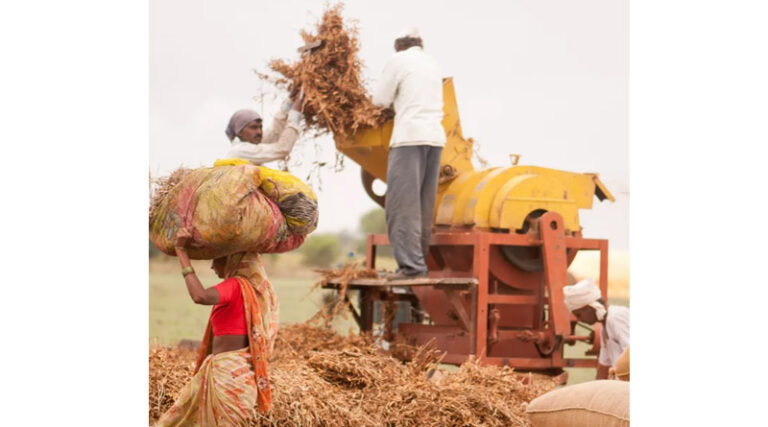
The smallholder lens is critical here. A bad season does not mean the same thing for every farmer. Larger producers may have irrigation, savings, insurance, market access and advisory support but many smallholder farmers do not. For them, an El Niño-linked drought, delayed rains or flood, can escalate quickly into a food-security and livelihood crisis.
The policy response should therefore go beyond monitoring. Forecasts are most useful when they lead to earlier action: closer tracking of crops and weather, timely extension advice for farmers, support positioned before the shock deepens, and climate finance that is linked to risk management rather than crisis response.
That includes instruments such as risk-contingent credit, insurance, social protection and targeted adaptation finance, which are central research areas in CGIAR Climate Action. These are part of preparedness and should not be handled like add-ons after a crisis.
A stronger El Niño gives the world a warning. The test we face now is whether food-system actors use that warning early enough, and precisely enough, to protect the farmers and regions who have the most to lose.
This work draws on research by IFPRI and CGIAR Climate Action. We would like to thank all funders who supported this research through their contributions to the CGIAR Trust Fund (https://www.cgiar.org/funders/).
Also Read: EU Mandates Digital Labels for Plant Protection Products from 2028
Global Agriculture is an independent international media platform covering agri-business, policy, technology, and sustainability. For editorial collaborations, thought leadership, and strategic communications, write to pr@global-agriculture.com