NOAA Warns of Record-Strength El Nino Threatening South America’s New Planting Season
14 September 2026, Mato Grosso, Brazil: The US government’s Climate Prediction Center issued an ENSO diagnostic discussion on September 10 warning of a greater than 90 percent chance that a very strong El Nino event will develop through the Northern Hemisphere fall and winter of 2026-27, with a 75 percent chance the event will exceed the strength of any El Nino recorded since 1950. The forecast lands just as Brazil and Argentina begin planting their new soybean and corn crop, raising the stakes for a season that will help determine global grain supply through much of next year.
According to the advisory, sea surface temperature anomalies in the eastern equatorial Pacific already exceed 3.0 degrees Celsius above normal, with subsurface ocean temperatures at depth running more than 10 degrees Celsius above average, a sign that the event still has room to strengthen. NOAA expects El Nino to keep intensifying through the final months of 2026, with peak conditions likely in the October to December window, a critical stretch for South American crop establishment.
Diverging Risks for Brazil and Argentina
The impact of a strong El Nino is not uniform across South America’s grain belt, and forecasters are flagging sharply different risk profiles for the two main producing countries this season.
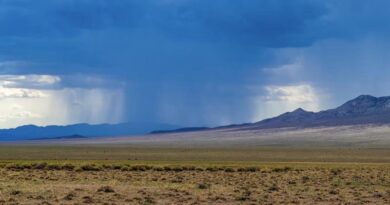
In Argentina, conditions have turned cool and dry ahead of planting, with an active pattern of cold fronts expected to bring only intermittent rainfall. Forecasters note that frost and freeze risk associated with these cooler fronts could push early planting intentions into late September or October, a delay that, while within the normal range for the region, adds a layer of uncertainty to how much area gets planted on schedule.
Southern Brazil is expected to benefit from El Nino’s typical rainfall pattern, and heavy winter rains have already built up soil moisture substantially, meaning dryness is unlikely to be a concern there through at least the middle of 2027. The tradeoff is an increased risk of flooding from slow-moving frontal systems later in the season.
The bigger concern is central Brazil, particularly the major producing state of Mato Grosso and neighboring northeastern growing areas. El Nino years typically reduce rainfall over the Amazon basin that feeds moisture into this region, and forecasters are watching for the kind of prolonged dry stretches, combined with temperatures exceeding 40 degrees Celsius, that can stress crops during critical growth stages. Analysts point to the 2023-2024 El Nino season, when yields fell across large parts of Brazil for both soybeans and corn despite improved conditions in the south, as the closest recent comparison, though this year’s event is forecast to be considerably stronger.
What This Means for Global Supply and Input Demand
A weaker or more variable Brazilian harvest, layered on top of an already tight US corn and soybean balance sheet following USDA’s September WASDE report, would leave global grain markets with less of a buffer heading into 2027. Conversely, a strong outcome in Argentina and southern Brazil could partially offset weakness in central Brazil, meaning the ultimate market impact will depend heavily on how the season unfolds region by region over the next several months rather than on the national headline number alone.
Also Read: UPL Expands Nature-Based Agriculture Portfolio with Investment in Japan’s PhytoChrome
Global Agriculture is an independent international media platform covering agri-business, policy, technology, and sustainability. For editorial collaborations, thought leadership, and strategic communications, write to pr@global-agriculture.com