22 June 2026, Mexico: International climate projections estimate up to an 80% probability that El Niño-Southern Oscillation (ENSO) conditions will develop over the coming months, with potential impacts on rainfall, water availability, and agricultural production across parts of Mexico and Central America. In territories highly dependent on rainfed agriculture, these conditions could particularly affect staple grain production and increase the vulnerability of farming communities.
In response, representatives from regional institutions, research centers, governments, and the private sector gathered this week in Mexico to strengthen coordinated mechanisms for preparedness, anticipatory action, and early response to the possible effects of ENSO on agriculture and food security in Central America and Mexico.
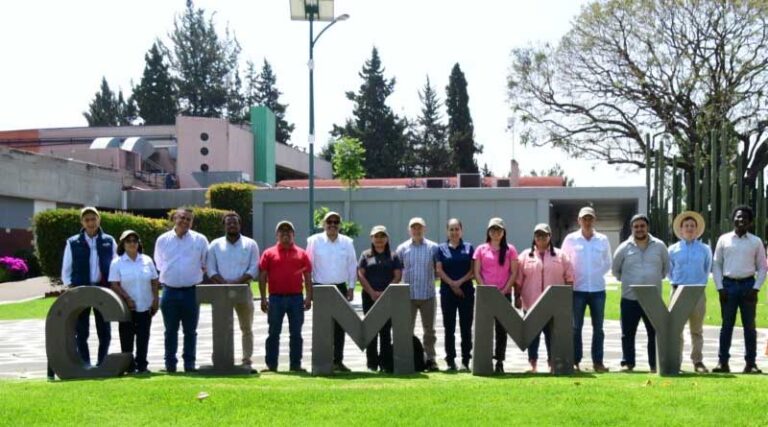
The meeting was organized collaboratively between the Regional Evaluation and Learning Council of ASA2 (CREA) — an initiative linked to Catholic Relief Services’ (CRS) Agua y Suelo para la Agricultura (ASA) program — and regional partners. Held in Texcoco, State of Mexico, it brought together specialists and representatives from institutions including CIMMYT, the Executive Secretariat of the Central American Agricultural Council (SECAC), the Alliance of Bioversity International and CIAT, DISAGRO, and El Salvador’s National Center for Agricultural and Forestry Technology (CENTA), to develop a regional agenda focused on strengthening early warning systems, agroclimatic monitoring, and practical recommendations for highly vulnerable agricultural territories.
The meeting was structured around five strategic areas: water and soil; production and seeds; information and communication; institutional coordination; and financing and leveraging.
A key component of the workshop was the design of a regional mechanism to monitor and analyze the likelihood of ENSO occurrence and its potential impacts on critical areas of the Central American Dry Corridor, particularly regarding agricultural production, water availability, and food security. The proposal aims to generate timely analysis, identify priority territories, and facilitate more informed decision-making by governments, agribusinesses, the private sector, and technical institutions across different impact scenarios.
Discussions prioritized strategic crops for regional food security — including maize, beans, rice, wheat, sorghum, and livestock forages — given their importance for food supply and the productive stability of thousands of rural communities in Central America.
On the water and soil front, discussions focused on practices to conserve moisture, reduce land degradation, and lower the productive vulnerability of the most exposed territories. On production and seeds, institutions worked on access to adapted varieties, adjustments to agricultural calendars, and agronomic recommendations to reduce production risks during upcoming growing seasons, including rapid identification of available materials and access mechanisms for farmers.
A significant part of the agenda was devoted to strengthening agroclimatic information systems built on well-established regional experiences, such as the Agroclimatic Technical Roundtables, which have successfully integrated climate data, territorial analysis, and practical recommendations for farmers and local authorities. Participating institutions agreed on the importance of strengthening coordination with these spaces in countries where they already operate, leveraging their experience in generating alerts and disseminating locally adapted recommendations.
Participants also worked to identify practices and solutions that, based on scientific evidence and accumulated experience from previous climate events, have demonstrated the best results for building agricultural resilience in the region. These include regenerative agriculture practices such as crop residue management and vegetation cover conservation to retain soil moisture, the use of adapted seeds and resilient varieties, and drought-resistant production alternatives including crop diversification and legume cultivation.
Discussions also covered fertilization strategies tailored to climate risk and efficient nutrient management to reduce economic losses under conditions of erratic rainfall and production uncertainty. Post-harvest solutions were also addressed, aimed at ensuring proper grain storage conditions, reducing losses, and protecting seed supplies and food reserves during periods of increased pressure on food systems.
The meeting also included the development of communication strategies to translate technical recommendations into clear, practical information for farming communities, governments, agribusinesses, the private sector, and other key actors in the agrifood sector. The goal is to strengthen response capacity through territorial guidance tools and dissemination mechanisms that enable earlier action in the face of potential impact scenarios.
Institutional coordination and regional financing were also addressed. Participating institutions discussed coordination and leveraging mechanisms to guide public action, focus programs, and mobilize resources to strengthen regional preparedness and response capacities.
The meeting also made visible existing regional capacities in research, agroclimatic monitoring, seed systems, regenerative agriculture, agronomic management, post-harvest storage, territorial analysis, and technical capacity building — developed by institutions and partners currently working across Central America and Mexico to strengthen agricultural resilience and food security in rural communities.
The CREA discussions are also connected to regional efforts to consolidate an Agroinnovation Cluster for Central America — conceived as a platform linking science, agricultural extension systems, value chains, financing, and public and private actors. The initiative seeks to strengthen regional capacities to accelerate the adoption of science-based solutions, build agricultural resilience, and contribute to the food security of the most vulnerable communities in the region.
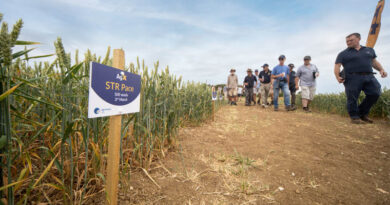
From CIMMYT’s facilities, participating institutions agreed that strengthening regional preparedness, territorial coordination, and anticipatory action mechanisms will be key to reducing production risks, protecting food security, and supporting smallholder farmers in the face of growing climate variability.
Global Agriculture is an independent international media platform covering agri-business, policy, technology, and sustainability. For editorial collaborations, thought leadership, and strategic communications, write to pr@global-agriculture.com