Science in Service: America’s Agricultural Legacy │ What Iowa, Mexico, and Maize Can Teach Us About America at 250
08 July 2026, US: As the United States marks 250 years of independence, Americans are reflecting on the ideas and institutions that have shaped the nation. Representative democracy, entrepreneurship, and innovation naturally come to mind. Less often recognized is another enduring American tradition: applying science in service of the public good.
One of the most important expressions of that tradition is ensuring people have enough to eat.
Long before the United States existed, Indigenous peoples across the Americas transformed agriculture through thousands of years of observation, experimentation, and innovation. Maize, first domesticated in Mexico, became one of humanity’s most important harvests, sustaining civilizations across the hemisphere and, eventually, around the world. Today, corn remains one of America’s defining crops, a reminder of that enduring legacy. In many ways, the story of American agricultural science begins there.
Two hundred and fifty years ago, nearly every American depended directly on agriculture for a living, and almost everyone lived a little closer to hunger than Americans do today. Food, trade, and farming lay at the heart of many of the young republic’s defining debates. Taxation on a daily staple helped spark the Boston Tea Party. The Whiskey Rebellion reflected the frustrations of grain farmers whose harvests were suddenly burdened by federal taxation.
America’s founders approached agriculture from different perspectives, but reached remarkably similar conclusions. Benjamin Franklin declared that “the great business of our commonwealth is agriculture.” George Washington hoped to be remembered as “the first farmer of America.” While John Adams helped found a nation, Abigail Adams managed the family’s farm through years of war and political upheaval, demonstrating that American agriculture has always depended on women’s leadership as well as men’s. Thomas Jefferson celebrated farmers as the moral heart of the republic. And although Alexander Hamilton envisioned a future of commerce and industry, he rejected the notion that economic growth and agriculture were in competition. “The idea of an opposition between those two interests,” he wrote in 1791, “is the common error of the early periods of every country.” America’s founders disagreed about many things. On this, they largely agreed: the nation’s prosperity began in the field.
That tradition continued to evolve. Universities carried science into rural America. Liberty Hyde Bailey (seriously, that was his name) helped pioneer agricultural extension, bringing new knowledge directly to farming communities. Seaman Knapp developed demonstration farms that let farmers test new ideas in their own fields rather than simply hearing lectures about them. George Washington Carver showed that scientific discovery achieved its greatest purpose when it restored exhausted soils and improved farmers’ lives. Through crop rotation, legumes, and soil conservation, he demonstrated that productivity and stewardship could advance together.
In 1877, one of the strongest El Niño events on record disrupted weather around the world. While the United States escaped the catastrophic famines experienced elsewhere, the episode illustrated an enduring truth: agriculture has always been vulnerable to forces beyond national borders. Climate, markets, and politics have long shaped what farmers can grow and what families can afford to eat. We’re about to learn this lesson again today with a new, potentially historic El Niño.
By the middle of the twentieth century, the importance of instability beyond American borders had clearly become part of the story of food security. The Second World War underscored that agricultural production was every bit as strategic as industrial production. While factories became famous as President Franklin Roosevelt’s “Arsenal of Democracy,” American farms quietly became its pantry. Feeding allies, rebuilding devastated economies, and preventing postwar hunger became essential to securing a lasting peace through the Marshall Plan.
Another act quietly opened offstage from the theater of war in December 1940. Roosevelt sent Vice President-elect Henry Wallace to represent the United States at the inauguration of Mexico’s new president, Manuel Ávila Camacho. Wallace chose to travel overland from Texas, seeing the Mexican countryside through the eyes of an Iowa farmer, plant geneticist, and former Secretary of Agriculture — surely the only plant geneticist ever to hold such high political office.
That perspective changed everything.
Wallace saw not only a strategically important neighbor, but also exhausted soils, struggling farmers, and enormous unrealized agricultural potential. Working with Mexico’s visionary Secretary of Agriculture, Marte R. Gómez, and the Rockefeller Foundation, he helped launch the Mexican Agricultural Program in 1943.
The U.S.-Mexico partnership reflected a conviction deeply rooted in the American scientific tradition: science should not be squirreled away in laboratories or confined behind national borders. It should be unleashed to solve real problems for real people.
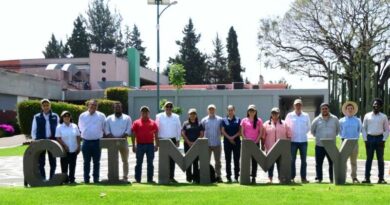
More than two decades later, in 1966, that partnership evolved into the International Maize and Wheat Improvement Center, CIMMYT. What began as a bilateral initiative became one of the world’s first truly international agricultural research centers, dedicated to sharing scientific advances as global public goods.
In 1970, one of CIMMYT’s founders, the American scientist Norman Borlaug — another Iowan, so there must be something in the soil there — received the Nobel Peace Prize for demonstrating that better seeds, better agronomy, and better science could dramatically increase food production and avert famine. The award came just four years after CIMMYT’s establishment as an international research center, symbolizing the arrival of a new model of agricultural innovation grounded in science, partnership, and a shared commitment to humanity.
Today, the challenge has changed. The Green Revolution proved that science could transform food production on a global scale. The next chapter is about doing so sustainably. Agriculture must produce enough food while restoring the natural systems on which farming itself depends and adapting to an increasingly uncertain climate. Productivity remains essential, but resilience has become equally important.
An important step toward this goal started once again in the laboratory. Barbara McClintock, another American Nobel laureate, revealed the remarkable complexity of the maize genome, opening new frontiers in genetics whose influence continues to shape crop improvement today. Those discoveries now underpin the advanced breeding and genomic tools that researchers at CIMMYT and around the world use to develop crops more resilient to drought, heat, disease, and other emerging threats.
Americans continue to contribute leadership to the institution Henry Wallace helped inspire and Norman Borlaug helped define. Ashish Saxena advances global maize research. Kevin Pixley leads innovation in dryland crops. Laura Jean Lewis stewards one of the world’s most important collections of crop genetic resources. Stephen Gudz is shaping more sustainable agrifood systems for the future. AJ Poncin is building the partnerships, systems, and organizational capacity that allow innovation to move from laboratories and field trials into real-world impact. Together with colleagues from more than 50 nations, they demonstrate that scientific discovery, institutional leadership, and international collaboration all have a role to play in building more resilient food systems – and that pooling the world’s talent can make an organization capable of more than any one nation can do alone.
As the United States marks its 250th anniversary, perhaps its greatest agricultural legacy is not any single invention, institution, or scientific breakthrough. It is a simple conviction: the most powerful ideas are the ones that improve people’s lives. From the Indigenous innovators who first domesticated maize, to the founders who saw agriculture as the bedrock of the republic, to George Washington Carver restoring depleted soils, Henry Wallace driving across rural Mexico, Norman Borlaug’s wheat fields, and today’s scientists, leaders, and partners working across continents through CIMMYT, that conviction has endured.
The tools have changed. The mission endures: applying science in service of the public good so that every generation inherits a more secure, more resilient, and better-fed world than the one before it.
Also Read: Crystal Crop Protection and Corteva Sign Collaboration Agreement
Global Agriculture is an independent international media platform covering agri-business, policy, technology, and sustainability. For editorial collaborations, thought leadership, and strategic communications, write to pr@global-agriculture.com