22 May 2026, Morocco: From a genebank near Aleppo to the frozen vaults of Svalbard, ICARDA’s seed journey traces four decades of safeguarding crop diversity through conflict, climate pressures, and displacement, turning local conservation efforts into a global resource for food security and agricultural resilience.
Few stories reflect the spirit of the International Day for Biological Diversity 2026, themed “Acting Locally for Global Impact,” more vividly than ICARDA’s seeds journey from the drylands of Syria to the −18°C vaults of Svalbard, recently nominated for the Nobel Peace Prize, with CGIAR, and ICARDA partners NordGen, the Food and Agriculture Organization of the United Nations (FAO), and the Crop Trust.
Over decades, ICARDA scientists have built “a living archive of the Fertile Crescent” that includes barley shaped by centuries of drought, lentils adapted to harsh soils, and multiple other ancient wild crop relatives carrying traits that modern agriculture will desperately need in the future.
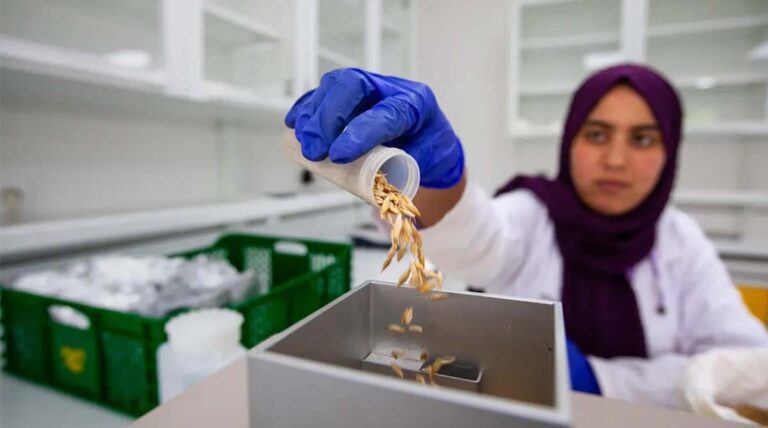
ICARDA’s first genebank was established in 1985 at its headquarters in Tel Hadya, near Aleppo, Syria. Over time, the collection grew into the largest and most unique repository of dryland crop diversity in the world, holding more than 150,000 seed samples from regions where agriculture first emerged thousands of years ago, such as the Fertile Crescent, the Nile Valley, and the Abyssinian Highlands.
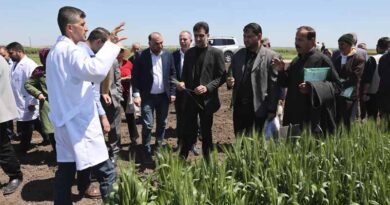
More than a repository, the collection became a critical resource for scientists searching for traits that could help our food crops survive drought, heat, disease, and changing climates. To accelerate that search, ICARDA scientists, together with academic partners, developed the Focused Identification of Germplasm Strategy (FIGS), a scientifically proven approach that uses algorithms, geographic data, and agro-climatic information to identify useful genetic traits within genebank collections more rapidly and precisely than traditional trial-and-error methods.
By linking plant characteristics to the environments where seed samples were originally collected, FIGS helps breeders pinpoint crop varieties with high potential to tolerate drought, extreme temperatures, pests, and disease. The approach has since been further strengthened by integrating digital sequencing data and advanced genomic tools.
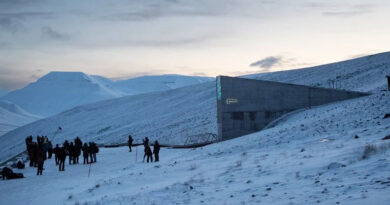
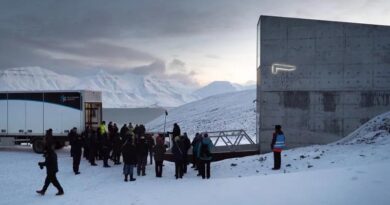
In 2007, ICARDA began preparing its most valuable genetic resources for secure backup storage at the then-newly established Svalbard Global Seed Vault in Norway. Built deep inside a mountain on the Arctic Archipelago of Svalbard, the vault was designed as humanity’s ultimate insurance policy for crop diversity.
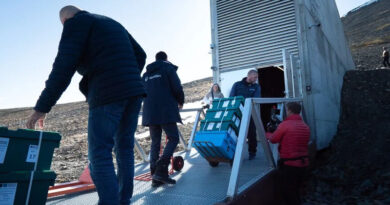
When the Seed Vault officially opened in 2008, ICARDA was among the very first organizations to deposit seeds there. Between 2008 and 2014, ICARDA had already sent 116,476 seed samples for long-term conservation; more than 80 percent of the collection originally held in Syria.
At the time, few could have imagined how quickly that precaution would become essential.
When conflict erupted in Syria in 2011, the future of ICARDA’s genetic resources collection was suddenly under threat. Amid uncertainty, ICARDA scientists and genebank technicians accelerated efforts to safeguard the collection. They prepared and shipped thousands more seed samples to Svalbard, and, in an extraordinary gesture of international cooperation, NordGen repeatedly opened the vault specifically to receive ICARDA’s emergency shipments. By the height of the crisis, 83 percent of ICARDA’s pre-conflict collection had been secured inside the Seed Vault.
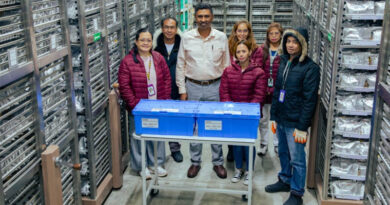
In 2015, at an unprecedented moment that demonstrated the Svalbard Global Seed Vault’s purpose in real time, ICARDA became the first institution in history to withdraw seeds from the vault. The seeds retrieved from the Arctic were regenerated in ICARDA’s research stations and secured in its newly established genebanks in Lebanon and Morocco, allowing the collection to live on after displacement and continue serving farmers, researchers, and crop breeders globally.
“Biodiversity conservation cannot wait for stability or perfect conditions,” said Dr. Zakaria Kehel, Research Team Leader – Genetic Resources, Conservation, Characterization, and Use (GRS), ICARDA. “Safeguarding genetic resources is ultimately about safeguarding humanity’s capacity to adapt and endure.”
The recovery did not stop there. In 2017, ICARDA returned to Svalbard to deposit 15,420 seed samples for long-term conservation. The regenerated collections in Lebanon and Morocco continued expanding, protecting crop varieties that later proved vital as droughts intensified, water grew scarcer, and farming systems came under mounting pressure from climate change.
In June 2025, ICARDA strengthened this global safety net once again by depositing 2,707 additional seed samples, including faba bean, grasspea, vetch, pea, and wild lentil relatives, into the Svalbard Global Seed Vault.
In 2022, ICARDA’s seeds became part of another remarkable journey when Lebanese endurance athlete Michael Haddad carried symbolic “packets of hope” on a grueling journey from Lebanon to Svalbard. Paralyzed from the chest down after a childhood accident, Haddad walked five kilometers across the icy Arctic landscape using an exoskeleton.
Inside those packets were seeds of wheat, barley, lentils, chickpeas, and forage crops originating from one of the world’s most climate-vulnerable regions. Haddad described the journey as a call to protect vulnerable agrobiodiversity and stand together against climate change and food insecurity.
Today, the significance of the Svalbard Global Seed Vault extends far beyond a frozen storage facility in the Arctic. Often described as the world’s ultimate backup for crop diversity, the vault represents a global commitment to food security, scientific cooperation, and peace.
For ICARDA, the genebank has always represented far more than seed conservation. It is a long-term investment in genetic diversity that future generations may depend on to feed growing populations, withstand climate shocks, and navigate an increasingly uncertain food and nutritional security landscape.
Protecting biodiversity starts in fields, markets, villages, research stations, and the hands of people who understand the value of preserving what may otherwise disappear.
Sometimes, actions that start in a small research station outside Aleppo can echo all the way to the Arctic – and back again to the world.
Global Agriculture is an independent international media platform covering agri-business, policy, technology, and sustainability. For editorial collaborations, thought leadership, and strategic communications, write