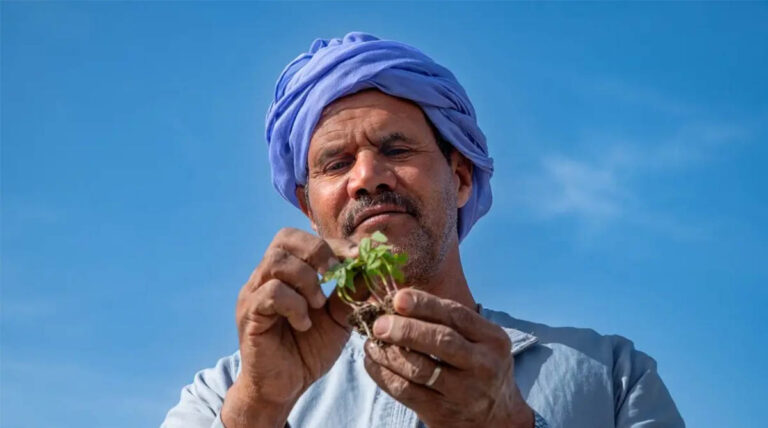
22 May 2026, New Delhi: A new global meta-analysis featuring ICARDA’s Dr. Boubaker Dhehibi, Principal Natural Resources Economist, has shed light on one of the most urgent questions facing agriculture today: how can farmers living amid conflict, instability, and climate stress adopt the technologies needed to survive and thrive?
The study analyzed more than 42,000 scientific records and reviewed 112 studies across fragile and conflict-affected countries.
The findings reveal both promising pathways and alarming gaps in the adoption of climate-smart agriculture in some of the world’s most vulnerable regions.
Agriculture on the Frontlines of Climate and Conflict
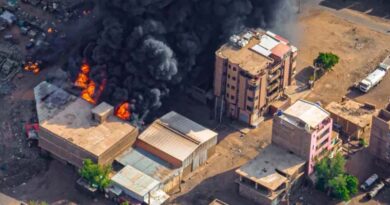
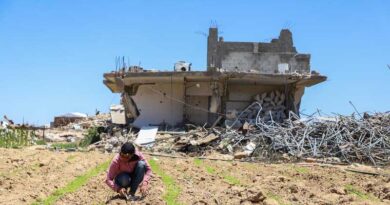
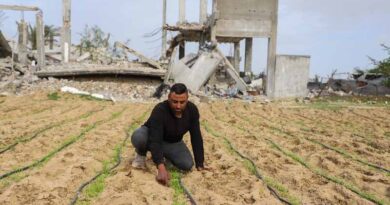
Fragile and conflict-affected settings face a double burden. Farmers are not only grappling with rising temperatures, droughts, and land degradation, but also with compounding crises, including extreme vulnerability to climate shocks, insecurity, weak institutions, fragile governance, disrupted markets, and limited public services. These overlapping pressures threaten food systems and livelihoods across drylands and vulnerable regions globally.
The research focused specifically on climate-smart agricultural technologies and practices, ranging from improved seeds and fertilizers to erosion management, irrigation, mechanization, and agricultural insurance. Researchers grouped these innovations into five main categories:
Soil fertility improvement
Erosion management
Mechanization
Agricultural inputs
Risk reduction technologies such as insurance
Despite the growing urgency of climate adaptation, adoption rates remain relatively low. Across all technologies analyzed, the average adoption rate was just under 39%.
One of the clearest messages from the study is that farmers are far more likely to adopt climate-smart practices when they have access to training, extension services, information, and institutional support.
The analysis found that the strongest predictors of adoption included:
Access to training
Availability of information
Extension services
Social networks and social capital
Subsidies and financial support
Previous experience using technologies
In many fragile contexts, knowledge can be just as important as access to inputs themselves. Farmers who understood how technologies worked, trusted them, or had seen them used successfully before were significantly more likely to adopt them.
The findings also showed that wealthier households — or those with more livestock, land, or income — tended to adopt technologies more readily, highlighting how poverty and fragility create a vicious cycle that continues to constrain and paralyze adaptation efforts.
A Major Gap in Risk Reduction Technologies
One of the study’s most striking findings was the severe lack of research and uptake of risk-reduction tools such as agricultural insurance and risk-contingent credit. These technologies accounted for only a tiny fraction of the studies reviewed.
The researchers noted that insurance products remain difficult for many smallholder farmers to access and understand, particularly in fragile and low-income settings. Low literacy, affordability constraints, and weak delivery systems all contribute to limited adoption.
Yet these tools could play a critical role in helping farmers cope with climate shocks and conflict-related risks. The authors call for more research, innovation, and financial and policy support to improve access to trusted and affordable risk management solutions.
Uneven Research Coverage
The study also exposed major imbalances in global research efforts. More than 80% of the studies reviewed came from just two countries: Ethiopia and Nigeria.
Meanwhile, many climate-vulnerable countries, particularly Small Island States facing rising sea levels and intensifying climate impacts, had little to no representation in the literature. The authors describe this as a growing pattern of “research deserts and oases,” where some countries receive significant research attention while others remain largely overlooked.
The researchers argue that future funding and research efforts must focus more deliberately on underrepresented fragile regions.
Why This Matters
For organizations working in drylands and fragile environments, the findings reinforce that scaling climate-smart agriculture is not only about the technologies themselves but also about the systems surrounding farmers.
Extension services, trusted information, local institutions, training opportunities, and access to finance all shape whether innovations succeed or fail. Especially in fragile contexts, strengthening these enabling systems is essential for building resilience and ensuring that poverty reduction and climate resilience are achieved simultaneously.
The study also highlights the importance of investing in solutions tailored to vulnerable communities facing climate stress, conflict, and economic instability simultaneously.
Global Agriculture is an independent international media platform covering agri-business, policy, technology, and sustainability. For editorial collaborations, thought leadership, and strategic communications, write