Transboundary Plant Pests and Diseases
07 August 2026, Rome: Plant health surveillance is most effective when it helps decision-makers move quickly from evidence to action. As climate change and trade continue to increase the movement and impact of plant pests, countries need surveillance systems that can detect risks early, generate reliable data and trigger timely responses.
In many regions, agriculture is closely linked to food security, livelihoods, trade and biodiversity. Transboundary plant pests and diseases can threaten crops that sustain communities and economies. For national plant protection organizations, laboratories, extension services, and regional partners, timely surveillance is therefore not optional. It is a core function of modern plant health systems.
In this article, Maged Elkahky, an agricultural officer in the plant health cluster at the Food and Agriculture Organization of the United Nations (FAO), reflects on how countries can strengthen pest surveillance and early warning systems. His work focuses on the management of transboundary plant pests and diseases, including surveillance systems, integrated pest management, digital tools and plant health emergency preparedness.
Turning field observations into useful evidence
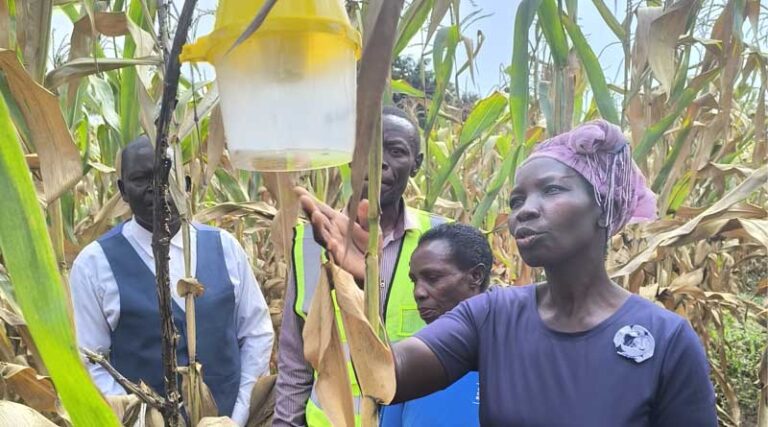
The starting point is simple: what happens in the field must not remain in the field. Observations made by farmers, extension agents, field scouts and diagnostic teams need to become structured information that can support analysis, mapping, forecasting and early warning.
Surveillance, as defined in phytosanitary terminology, is an official process that collects and records data on pest presence or absence through surveys, monitoring or other procedures. A survey is an official procedure carried out over a defined period to determine pest population characteristics or identify which species are present in an area. These definitions are important because surveillance is not informal reporting. It is a systematic, documented and official process that supports preparedness, response and accountability.
Building a reliable information pathway
The plant pest monitoring process begins with data generated through field scouting, trap reading, sample collection and diagnostic laboratory results. These data then move through collection, submission, validation, archiving and storage before they can be used for mapping, analysis and forecasting.
A suspicious symptom on a plant, a trap catch, a collected sample or a laboratory result only becomes useful for early warning when it is captured in a reliable system, validated, stored and interpreted. The strength of surveillance therefore depends not only on field presence, but also on the quality of the entire information pathway.
Using digital tools to support country systems
Technology can significantly improve the speed, traceability and consistency of pest monitoring. FAO-supported examples include eLocust3 for Desert Locust, SusaHamra for Red Palm Weevil, FAMEWS v3 for Fall Armyworm, and geographic information system platforms used for locust data collection and management in Caucasus and Central Asia.
These systems show how digital tools can support field reporting, data management and platform-based monitoring across different pest systems. However, technology should not be seen as a substitute for field expertise. Its real value lies in helping countries organize observations, reduce delays, improve traceability and convert scattered reports into actionable information.
Learning from connected early warning systems
The Desert Locust global early warning system provides a useful example of connected surveillance. Field teams collect survey and control data using tools such as eLocust3 tablets, GPS devices, smartphones and related applications. The data are transmitted through digital platforms and imported into national geographic information systems for validation and analysis.
Validated information is then shared with FAO’s Desert Locust Information Service for global analysis, early warning and dissemination through the Locust Hub. This sequence illustrates a critical principle: early warning depends on both national ownership and regional or global information sharing.
Keeping monitoring connected to action
Effective monitoring and early warning require a clear institutional purpose. Monitoring should guide decisions on where to survey, when to intensify field operations, when to alert stakeholders, and when to activate preparedness or response measures.
Strong institutional leadership, shared accountability and adequate resources are essential. Surveillance systems should be continuous and resilient, not activated only during outbreaks. If monitoring begins after a pest has already spread widely, the opportunity for prevention, containment or lower-cost intervention may already be limited.
Designing programmes, not only platforms
Country ownership is another key lesson. Monitoring tools should respond to country demand and be developed with early engagement from national partners. The most successful systems are managed at national level, with sufficient ownership, authority and operational control.
Practical challenges remain, including high operational costs and limited incentives for field monitoring. A digital form may be inexpensive, but surveillance still requires trained people, transport, equipment, sampling capacity, laboratory links, data officers and sustained coordination.
For this reason, countries should focus on developing national monitoring programmes, not only digital tools. A programme brings together governance, protocols, surveillance infrastructure, diagnostic capacity, data systems, capacity building, outreach, operations, and regular monitoring and evaluation. This broader perspective is essential because surveillance data must be connected to laboratories, field logistics, contingency planning and response operations.
Adapting systems to operational realities
Standardization is important, but flexibility is equally necessary. Programmes should be dynamic, regularly reviewed and adapted to national conditions. One-size-fits-all approaches rarely work, especially where countries differ in infrastructure, pest priorities, language, internet coverage, laboratory capacity and available resources.
The experience of developing a system to support delimiting surveys for Fusarium oxysporum f. sp. cubense tropical race 4 illustrates this reality. Countries may need systems that are flexible, multilingual and user-friendly, with offline functionality, photo capture, record validation, links to diagnostic laboratories, traceability and national control. Such requirements show that surveillance systems must be designed around real operational needs, not around technology alone.
Five priorities for stronger pest surveillance
- Strengthen national surveillance programmes with clear governance, protocols and sustainable financing.
- Invest in field teams, laboratories, data management and geographic information system capacity.
- Use digital tools to improve speed, quality and traceability while ensuring country ownership.
- Link surveillance outputs to decision support, including mapping, analysis, forecasting and early warning.
- Promote regional knowledge exchange so countries can learn from tested approaches and shared challenges.
In the Near East and North Africa region and beyond, the future of pest surveillance lies in connecting people, data and decisions. A field observation becomes powerful only when it is reported, validated, interpreted and used. Early warning is not a single product or platform. It is the result of an organized system that links field scouting, diagnostics, data management, analysis, forecasting, communication and response. Strengthening this chain is one of the most practical ways to reduce pest impacts, protect livelihoods and support more resilient plant health systems.
Also Read: Syngenta Appoints Eladio Robles as India Managing Director
Global Agriculture is an independent international media platform covering agri-business, policy, technology, and sustainability. For editorial collaborations, thought leadership, and strategic communications, write to pr@global-agriculture.com