Beyond the Gene Bank: India’s Agrobiodiversity Strategy Must Shift from Conservation to Utilisation
A Amarender Reddy, Joint Director, ICAR-National Institute of Biotic Stress Management (ICAR-NIBSM), Raipur, email: amarender.reddy@icar.org.in
06 August 2026, New Delhi: For a country whose food security, nutritional well-being and rural livelihoods depend fundamentally on agriculture, the quiet work of conserving genetic resources rarely attracts public attention. Yet these biological assets—preserved in gene banks and research institutions—constitute one of India’s most valuable strategic resources. As climate change intensifies, new pests and diseases emerge, and pressure mounts to produce more food with fewer natural resources, the question is no longer whether genetic resources should be conserved, but how effectively they can be utilised.
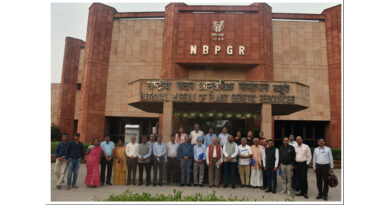
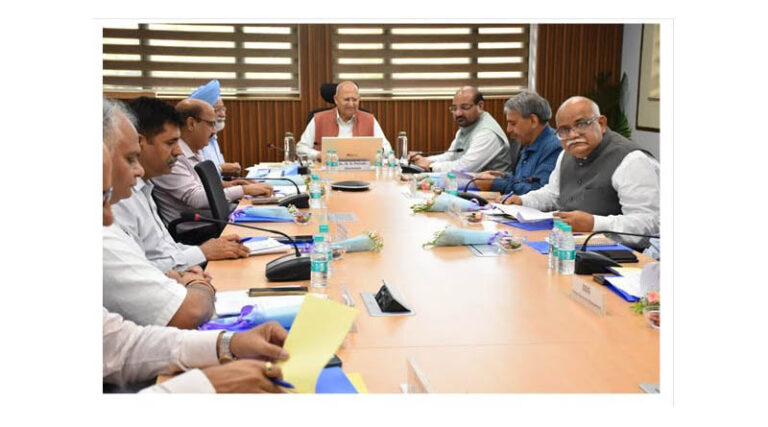
This strategic shift formed the central theme of the inaugural meeting of the newly reconstituted National Advisory Board on Management of Genetic Resources (NABMGR), held on July 29, 2026, at the ICAR–National Bureau of Plant Genetic Resources (ICAR-NBPGR), New Delhi. Chaired by Padma Bhushan Dr. R.S. Paroda, with Dr. M.L. Jat, Secretary, Department of Agricultural Research and Education (DARE) and Director General, ICAR, serving as Co-Chair, the meeting brought together scientists, policymakers and institutional leaders to chart a roadmap for the integrated management of India’s plant, animal, fish, microbial and insect genetic resources in support of Viksit Bharat and climate-resilient agriculture.
India possesses one of the world’s richest repositories of agricultural biodiversity. Conserved across national gene banks are hundreds of thousands of accessions of crop plants, indigenous livestock breeds, aquatic genetic resources, beneficial microorganisms and insect collections. These repositories safeguard the country’s biological heritage and provide insurance against future agricultural challenges. However, the Board recognised that conservation alone is no longer sufficient. Gene banks must evolve from passive repositories into active engines of agricultural innovation.
From Conservation to Pre-breeding
Over the past five decades, India’s crop improvement programmes have delivered remarkable gains in productivity through high-yielding varieties. However, these achievements have also narrowed the genetic base of many cultivated crops. Genetic uniformity has increased vulnerability to heat stress, erratic rainfall, emerging pests and evolving diseases.
The Board therefore called for significantly strengthening pre-breeding programmes, which bridge the gap between conserved genetic diversity and modern crop breeding. Wild relatives, traditional landraces and underutilised germplasm preserved in gene banks possess valuable traits for drought tolerance, heat resistance, pest and disease resilience, nutrient-use efficiency and enhanced nutritional quality. Incorporating these traits into mainstream breeding programmes can substantially expand the genetic diversity available to breeders and accelerate the development of climate-resilient crop varieties.
The message was clear: the success of India’s genetic resource programme should be measured not merely by the size of its collections but by the extent to which these collections contribute to improved varieties and resilient farming systems.
Managing All Genetic Resources Under One Strategic Framework
A notable feature of the discussions was the emphasis on integrating all forms of agricultural genetic resources rather than treating them in isolation. The Board advocated stronger coordination among ICAR’s national bureaus responsible for plant, animal, fish, microbial and insect genetic resources, recognising that sustainable agriculture increasingly depends on interactions among crops, livestock, soil microbiomes and beneficial insects.
Such convergence would facilitate integrated research, improve resource sharing and create multidisciplinary solutions for climate adaptation, sustainable intensification and ecosystem resilience.
International Collaboration with Safeguards
The Board also recognised that strengthening India’s genetic resource base requires carefully managed international collaboration. Strategic partnerships with countries in Central and Southeast Asia could expand access to valuable germplasm, including improved cotton lines, horticultural crops such as avocado, rambutan and mangosteen, and resilient livestock breeds suited to changing climatic conditions.
At the same time, members stressed that international exchange must remain fully consistent with India’s biodiversity laws, ensuring transparent access, equitable benefit-sharing and protection of national biological resources.
Bridging Gaps in Legal Protection
An important policy issue emerging from the deliberations concerns the unequal legal treatment of different categories of genetic resources.
India’s Protection of Plant Varieties and Farmers’ Rights Act (PPV&FRA) provides an internationally recognised framework that balances plant breeders’ rights with farmers’ contributions to conserving plant genetic diversity. Comparable legal mechanisms, however, remain largely absent for indigenous livestock, poultry and aquatic genetic resources.
This gap reduces incentives for pastoralists, livestock keepers and traditional breeding communities to conserve native breeds that often possess valuable adaptive traits, including tolerance to heat, drought and endemic diseases. Extending appropriate legal protection to animal and fisheries genetic resources could strengthen both conservation and sustainable utilisation while recognising the role of rural communities.
Genetics Meets Digital Agriculture
The meeting also reflected how agricultural innovation is increasingly becoming data-driven. Dr. M.L. Jat emphasised that the true value of genetic resources can only be realised when combined with detailed information on soils, climate and agro-ecological conditions.
Precision agriculture, geospatial technologies, digital soil mapping and artificial intelligence now make it possible to match crop varieties, livestock breeds and beneficial microorganisms to location-specific production environments. Such integration can improve productivity while enhancing resilience under diverse agro-climatic conditions and reducing production risks.
Priorities for the Coming Decade
The Advisory Board outlined an ambitious agenda for strengthening India’s genetic resource management system over the coming years. Key priorities include expanding systematic exploration and collection missions during 2026–2031 to conserve biodiversity from ecologically vulnerable and underexplored regions before it is irreversibly lost.
The Board also emphasised closer coordination with the National Biodiversity Authority to ensure that Access and Benefit Sharing (ABS) provisions under the Biological Diversity Act facilitate both biodiversity conservation and legitimate scientific research.
Another major priority is accelerating the establishment of the National Safety Genebank, with the objective of making it operational during ICAR’s centenary celebrations in 2028–29. The facility would serve as India’s long-term backup repository, strengthening national preparedness against natural disasters and other unforeseen risks.
A New Vision for Agrobiodiversity
The inaugural meeting of NABMGR signals an important evolution in India’s approach to agrobiodiversity. Conservation will always remain indispensable, but preserving biological resources in secure storage cannot by itself address the challenges of climate change, evolving pests and diseases, nutritional security and sustainable agricultural growth.
The future lies in coupling conservation with utilisation. Strengthening pre-breeding programmes, integrating genetics with digital agriculture, promoting responsible international collaboration, developing supportive legal frameworks for all genetic resources and fostering greater institutional convergence can transform India’s vast biological collections into drivers of innovation.
As India prepares to celebrate the centenary of ICAR, the true measure of success will not be the number of accessions preserved in gene banks, but how effectively these invaluable genetic resources are translated into improved crop varieties, resilient livestock, sustainable farming systems and better livelihoods for millions of farmers. In the coming decades, India’s competitive advantage will depend not merely on conserving its agrobiodiversity, but on putting it to work.
Also Read: FMC to Launch New Herbicide Keenali for Paddy Weed Control in India
Global Agriculture is an independent international media platform covering agri-business, policy, technology, and sustainability. For editorial collaborations, thought leadership, and strategic communications, write to pr@global-agriculture.com