09 June 2026, Bangladesh: In 2025, 40 private livestock service providers in central Mali directly trained 2,577 small ruminant farmers, 44 percent of them women, across 87 villages in 13 municipalities. In Bangladesh, G3 rohu seed produced during the 2025 spawning season reached an estimated 295,655 farming households, approximately 1.48 million people. Both outcomes were sustained by private actors who had adopted the innovations and continued delivering them on their own terms.
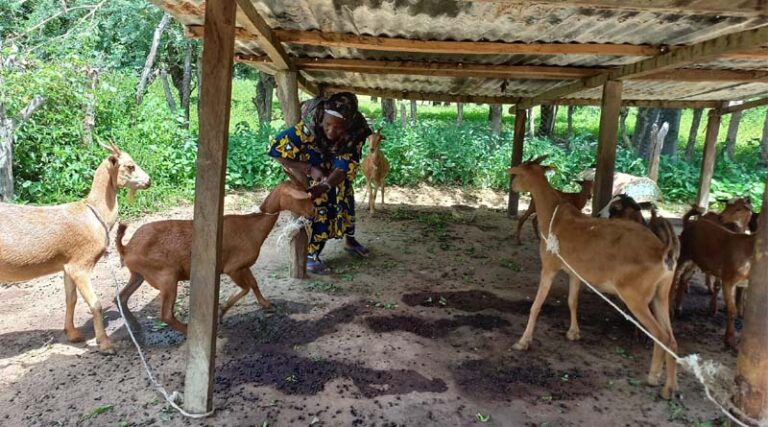
For years, Aoua Danioko’s work looked the same every season. She was the veterinary sector chief in Sikasso, in central Mali, and farmers called her for one thing: vaccines. She traveled to villages, administered vaccines, and went home.
Small ruminant farmers in the area were losing animals to disease each winter. Peste des Petits Ruminants swept through herds. Nutrition was poorly managed. Breeding was unplanned. The vaccination visits did not reach far enough, and the knowledge they carried stopped at the needle.
The Program changed what Danioko could offer. Working with the International Livestock Research Institute (ILRI), the International Centre for Agricultural Research in the Dry Areas (ICARDA), the Alliance of Bioversity International and CIAT and the Institute of Rural Economy in Mali, the Program built the capacity of 40 private livestock service providers, referred to as livestock champions, to deliver an integrated herd management package. That meant animal health advice, feed management, vaccination scheduling and reproductive guidance, woven into the services farmers already paid for.
“I am now called upon by development NGOs to strengthen the capacities of their beneficiaries, as well as by individuals for advice on managing small ruminant farming,” Danioko said. “I now train female livestock farmers across the Sikasso region.”
She has clients the vaccination rounds never reached before. In 2025, the 40 champions directly trained 2,577 farmers, 1,442 men and 1,135 women, across 87 villages in 13 municipalities in central Mali.
The fish that took 13 years
Amit Joarder farms fish in a pond in southern Bangladesh. He is one of millions of rohu farmers in a country where the species accounts for 440,000 tonnes of annual production and a wholesale market value approaching US$1 billion. For most of those farmers, the fish they were growing had been quietly showing lower performance for decades. Successive generations of unmanaged hatchery breeding had eroded the genetics without farmers knowing it.
WorldFish started addressing that in 2012. The Carp Genetic Improvement Program applied pedigree-based selection across successive generations of rohu, selecting for harvest weight. By the third generation (G3 rohu), the difference was measurable on real farms. Trials across 120 smallholder ponds in Khulna and Barguna districts showed G3 rohu growing 32.6 percent faster in weight gain than commercial local strains, with rohu yield per hectare 48.3 percent higher and farmer net margins 24.8 percent better. Other species in the polyculture ponds were unaffected.
When Joarder grew G3 rohu, the decision was straightforward. “I can either harvest earlier or grow them for the same time and get bigger, more valuable fish,” he said. “Either way, I earn more from my pond.”
Commercial dissemination through partner hatcheries began in 2022. By the 2025 spawning season, 36 hatcheries had sold 8,022 kilograms of G3 rohu spawns and 12 million fry. An estimated 295,655 farming households received G3 rohu seeds from that season, with adoption running from mid-2025 into mid-2026. Of those households, 41,533 were new to G3 rohu in 2025.
“Farmers who grew G3 rohu saw real differences in their ponds and in their income,” said Hazrat Ali, scientist at WorldFish. “These results confirm that selective breeding works in the field.”
A fifth generation of rohu is now under trial with expected growth gains above 50 percent, and improved catla and silver carp strains will reach hatcheries in 2026-27.
What spread the innovations
Hatcheries produced G3 seed because farmers bought it and returned the following season. Aoua Danioko trains farmers because development organizations now pay her to. The Program built the technical foundation in both cases. The private actors decided to keep going.
Global Agriculture is an independent international media platform covering agri-business, policy, technology, and sustainability. For editorial collaborations, thought leadership, and strategic communications, write to pr@global-agriculture.com