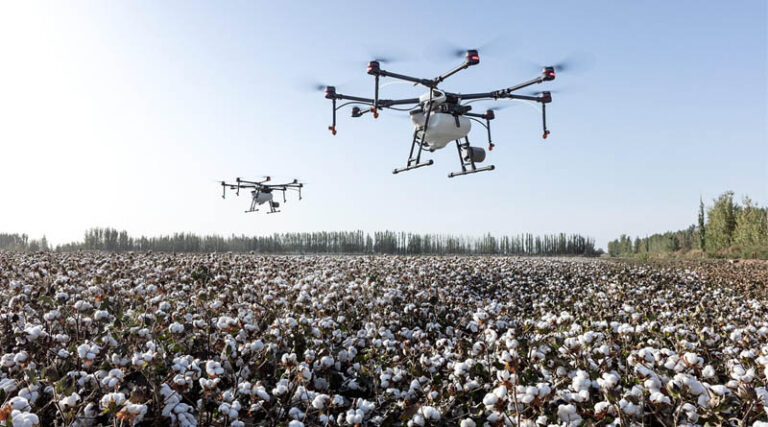
Where Will AgTech Investment Flow Next? Five Growth Themes Emerging in 2026
By Global Desk
08 June 2026, London: As agriculture faces mounting pressure from climate volatility, supply chain disruptions and rising production costs, investors are increasingly focusing on technologies that improve resilience, efficiency and profitability across the food system.
The global agtech sector entered 2026 with a different set of priorities than it had just a few years ago. While investor enthusiasm previously centred on broad digital agriculture concepts and futuristic farming technologies, capital is now moving toward solutions that address immediate challenges facing farmers, agribusinesses and food supply chains.
The shift is already visible in investment patterns. According to AgFunder’s Global AgriFoodTech Investment Report 2026, global agrifoodtech funding reached US$16.2 billion in 2025. While overall investment remained largely flat compared with the previous year, investors increasingly directed capital towards companies with proven science, measurable outcomes and clear pathways to revenue generation. The report also highlighted growing interest in upstream agricultural technologies, deep-tech solutions and climate-focused innovations.
Against this backdrop, five investment themes are emerging as potential drivers of growth across the global agtech ecosystem.
1. Biologicals and Nutrient Efficiency Technologies Move Into the Mainstream
The fertilizer supply shock triggered by disruptions in the Middle East has reinforced concerns about the agricultural sector’s dependence on a relatively small number of fertilizer-producing regions.
According to the World Bank’s April 2026 Commodity Markets Outlook, fertilizer prices are projected to rise by 31% during 2026, driven largely by a projected 60% increase in urea prices. The World Bank’s fertilizer price index rose more than 12% during the first quarter of 2026, reaching its highest level since 2022 as disruptions linked to the Strait of Hormuz tightened global supplies.
The implications extend far beyond short-term input costs. For investors, the disruption has highlighted a structural opportunity within biological crop nutrition and nutrient-efficiency technologies.
Biostimulants, biofertilisers, microbial products and soil health solutions are increasingly being viewed not only as sustainability tools but also as strategies for reducing exposure to volatile fertilizer markets. Companies developing technologies that improve nutrient uptake, reduce fertilizer losses or provide alternative nutrient sources are attracting greater attention from both venture investors and strategic agribusinesses.
The opportunity extends beyond biological inputs themselves. Soil analytics platforms, microbial discovery companies, fermentation technologies and precision nutrient management systems are emerging as complementary areas of investment.
2. Artificial Intelligence Is Entering Agriculture’s Commercial Phase
Artificial intelligence has been one of the most discussed technologies in agriculture over the past decade, but 2026 is increasingly being viewed as a turning point for commercial adoption.
Rather than replacing farmers, the current generation of AI tools is helping improve decisions related to irrigation, fertilizer management, crop protection and harvest planning. The emphasis has shifted from data collection to measurable outcomes.
Investor interest remains strong. AgFunder’s latest industry analysis indicates that capital is increasingly flowing toward technologies that help farmers reduce costs, optimize inputs and improve operational efficiency. AI-powered crop monitoring systems, disease prediction platforms, autonomous machinery and precision spraying technologies are among the segments attracting growing attention.
The market opportunity is significant. Industry estimates suggest the global AI in agriculture market is expected to grow at double-digit rates through the remainder of the decade, supported by increasing adoption of precision agriculture, satellite-based monitoring and farm automation technologies.
Labour shortages are providing an additional catalyst. Autonomous tractors, robotic harvesters and machine-vision systems are becoming increasingly attractive in regions where labour availability and wage inflation are affecting farm profitability.
For investors, the next phase of growth is likely to favour technologies that deliver measurable economic returns rather than purely experimental applications.
3. Climate Adaptation Technologies Become a Strategic Investment Category
Climate change is increasingly influencing agricultural investment decisions.
Across major farming regions, producers are dealing with prolonged droughts, erratic rainfall patterns, heat stress and evolving pest pressures. These challenges are creating demand for technologies that improve resilience while maintaining productivity.
The investment case is becoming stronger as climate risks become more visible. AgFunder’s latest funding analysis shows continued investor interest in climate-focused agricultural technologies, particularly those linked to resource efficiency, biological solutions and resilient production systems.
Key areas attracting capital include drought-tolerant crop genetics, biological crop protection products, precision irrigation technologies, water-use-efficiency systems and climate-risk analytics platforms.
Unlike some sustainability-focused investments that depend heavily on policy incentives, climate adaptation technologies address operational challenges that farmers are already facing today.
This distinction is increasingly important for investors. Technologies that help producers manage water scarcity, heat stress or production volatility often offer clearer pathways to adoption than solutions that rely solely on future regulatory frameworks.
As climate variability intensifies, adaptation technologies are expected to remain one of the most resilient categories within agtech investment.
4. Supply Chain Technologies Gain Importance in a More Fragmented World
Recent geopolitical disruptions have exposed vulnerabilities within highly centralized agricultural supply chains.
The World Bank forecasts that overall commodity prices will rise by 16% during 2026, driven by higher energy, fertilizer and raw material costs. Agricultural markets have become increasingly sensitive to disruptions affecting trade routes, logistics networks and critical input supplies.
The fertilizer crisis has provided a clear example of how quickly geopolitical events can affect farm economics thousands of kilometres away. Similar concerns are encouraging governments, food companies and agribusinesses to strengthen regional production systems and diversify sourcing strategies.
This shift is creating opportunities for technologies that improve supply chain visibility, inventory management, logistics efficiency and traceability.
Investors are increasingly evaluating companies operating in post-harvest technologies, agricultural logistics platforms, procurement systems, storage infrastructure and controlled-environment agriculture. Technologies that improve resilience across food supply chains are benefiting from growing interest as countries place greater emphasis on food security and domestic production capacity.
Supply chain resilience is gradually emerging as a standalone investment category rather than simply an operational consideration.
5. Farm Data Infrastructure Is Becoming Agriculture’s Digital Backbone
Perhaps the most significant long-term opportunity in agtech lies in the growing importance of agricultural data.
What was once considered farm recordkeeping is increasingly becoming a strategic business asset. Digital farm records are now influencing access to agricultural finance, insurance products, sustainability programmes, carbon markets and premium supply chains.
Food companies, financial institutions and regulators are demanding greater transparency regarding production practices and environmental outcomes. As a result, demand is growing for farm management software, traceability platforms, compliance systems and digital monitoring tools.
The value of these platforms extends beyond individual farms. Agricultural data is becoming the connective layer linking growers, input suppliers, processors, exporters, retailers and lenders.
Many investors now view farm data infrastructure as a foundational technology category because it supports multiple revenue streams across finance, insurance, sustainability reporting, carbon programmes and supply chain management.
As agriculture becomes increasingly data-driven, companies capable of converting fragmented information into actionable intelligence are expected to play an increasingly important role across the value chain.
What Technologies Are Most Likely to See Farmer Adoption?
While innovation continues across the sector, adoption ultimately depends on economics.
Technologies that reduce production costs, improve resource efficiency or help manage risk are likely to see the strongest uptake over the next five years. Biological crop inputs, AI-powered advisory systems, precision nutrient management tools, climate-resilient crop technologies and digital farm recordkeeping platforms are among the solutions expected to gain broader acceptance.
In contrast, highly capital-intensive technologies may continue to expand more gradually, particularly in emerging markets where affordability remains a key consideration.
The strongest investment opportunities are therefore likely to emerge where technological innovation aligns closely with practical farm economics.
Next 5-Years
The next phase of agtech investment is being shaped less by technological novelty and more by agriculture’s most pressing challenges.
Rising input costs, climate uncertainty, labour shortages and supply chain vulnerabilities are directing capital toward technologies that improve resilience, efficiency and decision-making. The investment landscape is increasingly favouring businesses that can demonstrate measurable outcomes rather than simply promising future disruption.
Biologicals, artificial intelligence, climate adaptation technologies, supply chain resilience platforms and farm data infrastructure are emerging as some of the most closely watched segments across global agriculture. While investment cycles will continue to evolve, these themes reflect challenges that farmers and agribusinesses are confronting today—not hypothetical scenarios years into the future.
For investors, the message from 2026 is becoming clearer: the most attractive opportunities may lie not in reinventing agriculture, but in helping the industry adapt to a more volatile, resource-constrained and data-driven future.
Also Read: Orbia Netafim Opens New Irrigation Manufacturing Plant in Mexico
Global Agriculture is an independent international media platform covering agri-business, policy, technology, and sustainability. For editorial collaborations, thought leadership, and strategic communications, write to pr@global-agriculture.com