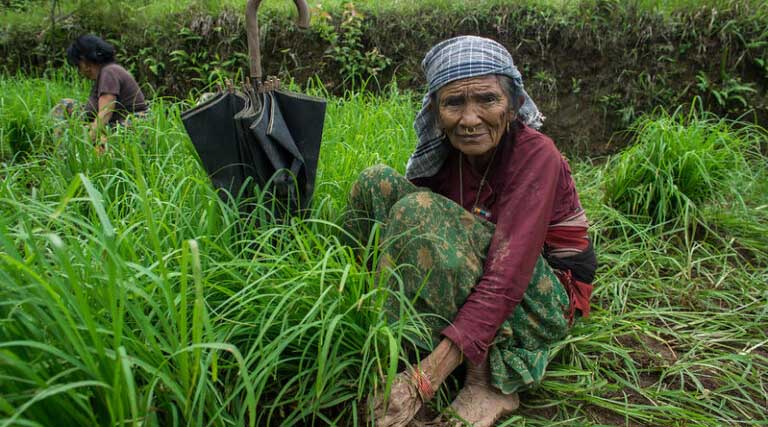
Why Women Are Central To Resilient Food Systems
10 March 2026, Africa: As climate change, economic instability, and biodiversity loss place increasing pressure on global food systems, building resilience has become an urgent priority. But resilience is not only about improved seeds, technologies, or farming practices. It is also about people, especially the women who sustain agricultural systems and rural livelihoods around the world.
Across Africa, Latin America, and Asia, women play a central role in food production, household nutrition, and the preservation of agricultural knowledge. Yet their contributions often go unrecognized, and many still face barriers that limit their access to training, technology, and resources.
At CIMMYT, strengthening resilient food systems means ensuring that women, youth, and marginalized farmers are not only included in agricultural innovation but are actively shaping it.
Africa: Driving inclusive innovation through dialogue and digital tools
In Africa, CIMMYT integrates digital innovation with a strong focus on Gender Equality, Youth, and Social Inclusion (GEYSI) to ensure that women, youth, and marginalized farmers can access tools, training, and agricultural knowledge.
One example is Atubandike, an initiative implemented through the Southern Africa Accelerated Innovation Delivery Initiative (AID-I). The name means “let’s have a conversation” in the local Tonga language, reflecting the program’s emphasis on dialogue and community-led solutions.
Through a combination of digital advisory services and in-person discussions, Atubandike creates spaces where farmers can openly discuss challenges, social norms, and barriers affecting women and youth in agriculture.
The initiative has already engaged more than 1,700 farmers across 14 communities in southern Zambia, revealing how stereotypes and structural barriers often limit opportunities for women and young farmers. In many communities, women’s contributions to food production remain undervalued, while youth are often perceived as uninterested in agriculture despite facing real barriers such as limited access to land, financing, and mentorship.
By facilitating open dialogue, the program is helping communities challenge these perceptions and recognize the vital contributions of women and youth to agricultural resilience.
Across the region, digital tools are also expanding access to information and innovation. In Zambia and Malawi alone, more than 2.3 million farmers have accessed voice-based agricultural advisory services, with 43% of users being women and 35% youth.
Through these platforms, farmers receive timely advice on crop management, weather conditions, and climate-smart practices, information that helps them adapt to changing conditions and improve productivity.
In parallel, MASAGRO Innovation Hubs are creating collaborative spaces where farmers, researchers, youth, and local entrepreneurs co-design and test new agricultural technologies. These hubs connect innovations in seed systems, soil health, mechanization, and digital agriculture, ensuring that solutions are practical, inclusive, and adapted to local needs.
Across these initiatives, more than 4,000 farmers, over half of them women, are receiving advisory services, strengthening their capacity to make informed decisions and build more resilient farming systems.
Latin America: Women driving innovation and resilience in agri-food systems
In Latin America, women are playing a transformative role across agricultural systems, as farmers, scientists, technicians, and community leaders. Their participation is essential not only for food production but also for strengthening innovation ecosystems that connect research, markets, and rural communities.
Across Mexico and Central America, CIMMYT works to ensure women are at the forefront of agricultural innovation through participatory research, digital advisory tools, and community-based capacity building. Digital platforms such as AgroTutor and e-Agrology are expanding farmers’ access to agronomic information, enabling more informed decisions on soil health, crop diversification, and climate-smart practices. Women farmers are increasingly using these tools to improve productivity while strengthening the sustainability of their farming systems.
In Colombia, participatory diagnostics focused on the conservation of native maize varieties are integrating a gender perspective to ensure women’s knowledge and priorities shape conservation strategies. To remove barriers that often limit women’s participation in training, initiatives have also introduced child-friendly spaces, enabling mothers to participate fully in learning activities and innovation processes.
Across Guatemala and Honduras, participatory processes are documenting experiences related to gender and social inclusion in agricultural systems. These efforts are helping identify successful models that empower women farmers and strengthen community resilience, creating approaches that can be replicated across other regions.
Mexico also serves as a key hub for agricultural research and innovation. CIMMYT operates 46 agronomic research platforms across 16 states, where farmers, researchers, government agencies, and private-sector partners collaborate to test and adapt technologies under real production conditions. Within these platforms, women participate as producers, technicians, scientists, and leaders, contributing to solutions that strengthen agricultural productivity and sustainability.
In southeastern Mexico, collaboration with the Government of Quintana Roo and local organizations has supported sustainable agricultural practices across more than 10,000 hectares, while testing 10 agricultural innovations adapted to local conditions. Community organizations have strengthened their access to formal markets, and post-harvest solutions have reduced crop losses by up to 35 percent, improving food security and economic stability for rural families.
Participatory seed systems and community seed houses are also helping reinforce productive autonomy by reducing dependence on external inputs. Alongside these efforts, financial inclusion and organizational strengthening have played a critical role. Fifteen producer organizations involving around 250 members have strengthened their capacity, doubling initial program targets, while women’s participation has reached 30 percent, with women and youth increasingly leading social economy initiatives in their communities.
These initiatives demonstrate that when women are supported as innovators, entrepreneurs, and decision-makers, agricultural systems become more resilient. Their leadership strengthens local economies, improves food security, and ensures that agricultural innovation reflects the realities and priorities of the communities it is meant to serve.
Asia: Empowering women farmers and scientists to lead agricultural innovation
Across Asia, CIMMYT works to ensure that women benefit equally from agricultural innovation by expanding access to training, mechanization, and leadership opportunities. From farm-level entrepreneurship to scientific research networks, women are increasingly shaping the future of agriculture across the region.
In Pakistan, more than 26,000 women farmers have been trained in improved agricultural practices, strengthening their ability to adopt climate-smart technologies, improve productivity, and support household food security. In Nepal, women represent more than 40% of the 42,000 farmers and enterprises reached through CIMMYT programs, with women accounting for more than half of the participants in soil fertility training programs. These initiatives ensure that women farmers have access to knowledge and tools that help them adapt to climate challenges and improve the sustainability of their farming systems.
Beyond training, mechanization is also creating new opportunities for women to participate in agricultural service markets. In Bangladesh, initiatives such as the Cereal Systems Initiative for South Asia – Mechanization Extension Activity (CSISA-MEA) are supporting women to become machinery service providers and local agricultural entrepreneurs.
One example is Promila Rani Mondol, a farmer and service provider from Baliakandi in Rajbari district. Through training and technical support from the CSISA-MEA project, Promila learned to operate agricultural machinery such as power tiller–operated seeders and rice transplanters. With access to equipment, training, and financial support—including a government subsidy and a low-interest loan—she built a successful agricultural service business.
During the Aman rice season alone, Promila provided mechanized rice transplantation services across 20 hectares of farmland, benefiting around 150 farmers. Today, her annual income has increased significantly, strengthening her family’s financial stability while demonstrating the economic potential of women’s participation in agricultural mechanization.
Promila’s leadership has also helped shift perceptions within her community. By mentoring other women and demonstrating that agricultural technologies are not limited to men, she has inspired at least 15 women in her community to start farming and seedling-raising services, with several now operating rice transplanter machines themselves.
Together, these efforts demonstrate that when women gain access to knowledge, technologies, and leadership opportunities, they drive innovation not only on farms but across the entire agricultural system. By investing in women farmers, entrepreneurs, and scientists, agricultural programs in Asia are helping build more inclusive and resilient food systems for the future.
Also Read: From Rust Threat to Wheat Expansion in Ethiopia
Global Agriculture is an independent international media platform covering agri-business, policy, technology, and sustainability. For editorial collaborations, thought leadership, and strategic communications, write to pr@global-agriculture.com