Seaweed Polysaccharides: India’s Sustainable Answer to Plastic Pollution
Guest Author: Shubhajit Dhara and Dr Mayurika Goel – The Energy and Resources Institute (TERI)
28 April 2026, New Delhi: The annual plastic waste output from India reaches 3.5 million tonnes which mostly ends up in landfills and ocean waters. The environmental and health impact of conventional petroleum-based plastics continues to expand because of their single-use packaging and their ability to produce microplastics which contaminate both food sources and ocean ecosystems.
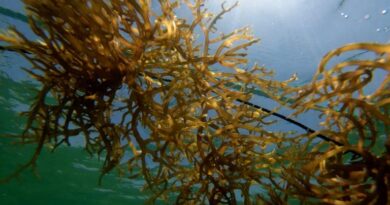
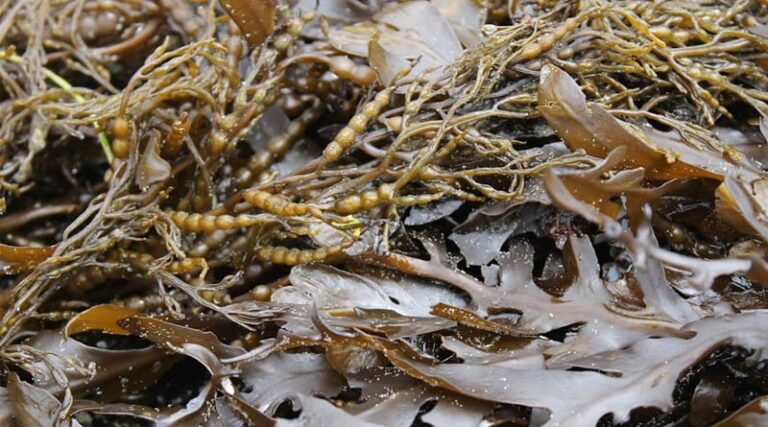
The solution to India’s plastic emergency could exist along its 7,500 km coastline because seaweed shows potential as a marine resource alternative. Seaweed contains natural polysaccharides which can be used to create sustainable biodegradable materials that developers can use to make films and packaging products which replace traditional petroleum-based plastics.
Why Seaweed Polysaccharides Matter
Seaweeds contain natural polysaccharides which consist of galactose units that link through (1→3) and (1→4) glycosidic bonds and 3,6-anhydrogalactose units and linear uronic acid units that link through (1→4) glycosidic bonds and galactose and fucose units that link through (1→3) and (1→4) glycosidic bonds. The materials can be transformed into thin flexible transparent films which possess biodegradable properties and come from renewable sources and are considered safe. Seaweed stands as an optimal packaging material because it requires no freshwater or fertilizers or pesticides to grow at a fast rate.
Seaweed polysaccharide-based packaging could be developed as sustainable alternative to petroleum plastics through advancements in extraction methods, extrusion and composite film technology development. The product can be designed as active packaging through which natural antimicrobials and antioxidants are incorporated to extend shelf-life.
India’s Blue Economy Vision
The Exclusive Economic Zone of India covers 2 million square kilometers which provides extensive opportunities for seaweed farming operations. The current production levels fall short of the 9.7 million tonnes which the ecosystem can sustain each year. The government started to view seaweed as a vital economic sector of the Blue Economy because it supports climate adaptation and generates employment for coastal communities and drives industrial progress.
The Pradhan Mantri Matsya Sampada Yojana (PMMSY) supports seaweed farming and processing through its targeted programs. Research institutions with national importance have shown how to expand farming operations through scalable systems which operate in Gujarat, Tamil Nadu, Maharashtra, Karnataka and Andaman Islands. The policy statements indicate that seaweed farming operations will generate continuous financial benefits to millions of coastal households, while simultaneously decreasing their dependence on declining marine fish populations.
Seaweed Bioplastics and the Packaging Revolution
Globally, packaging contributes approximately 40% of total plastic waste. Seaweed films present an actual solution which helps decrease the current environmental impact. These materials naturally decompose into non-toxic components while enhancing the shelf-life of products and, are suitable for composting or human consumption when designed as edible films.
The Sustainable Agriculture Programme at The Energy and Resources Institute (TERI) works on seaweed polysaccharide-based bioplastics for advanced active packaging solutions. The research field of seaweed-based packaging in India remains restricted because seaweed extracts are primarily being used in agricultural and health sectors. Multiple seaweed-based industries have started their operations in this specific field. This initiative shows how Indian scientific studies have progressed from conducting small-scale tests to developing operational solutions which benefit both business operations and market customers.
Building the Value Chain
The NITI Aayog strategy aims to strength the seaweed value chain through the establishment of cooperatives, entrepreneurs, processors, and technology innovators. The strategy also recommends for investment in the development of large-scale seaweed growing areas, post-harvest processing hubs and polymer extraction industries, in addition to bioplastics start-up companies, all of which will assist in the growth of a coordinated sector that will create diverse sources of income, decrease reliance on imports and promote the production of value-added products that include everything from biopharmaceuticals to bioplastics to nutraceuticals.
The Technology Information Forecasting and Assessment Council (TIFAC) report further details the contributions seaweed can make toward food security, pharmaceuticals, and bioplastics and identifies technologies that will enhance value through added value creation and also helps define the seaweed industry as being the basis for the future bio-economy in India.
Challenges Ahead
There are many challenges to scaling seaweed bioplastics. Production of seaweed bioplastics is much lower than their ecological potential. Drying and grading processes continue to vary widely due to the gaps in available infrastructure and high cost of biorefinery investments. Standardize regulatory framework for biodegradable packaging are still under development, which provides uncertainty for new companies attempting to commercialize their products. For seaweed bioplastics to be commercially accepted, they must also be technically optimized in relation to their mechanical strength and moisture resistance.
The Road Ahead
Seaweed polysaccharide-based bioplastics are more than just a new type of bioplastic, they also exemplify India’s “Blue Economy” vision to connect marine ecology, climate adaptation and livelihoods through circular manufacturing. With strong national policy support, a strong research environment and increasing private sector engagement, India has very good potential in the development of active packaging solutions.
A world in which commonly used packaging material and disposable utensils are made with seaweed polysaccharides instead of petroleum-based plastics is feasible and realistic. The continued growth of the seaweed industry has the potential to support India’s transition towards an environmentally sustainable economy and demonstrate that viable solution to global crisis can originate from the ocean.
Also Read: Biotalys Achieves First U.S. State Registration for EVOCA in Florida
Global Agriculture is an independent international media platform covering agri-business, policy, technology, and sustainability. For editorial collaborations, thought leadership, and strategic communications, write to pr@global-agriculture.com