Why Sulphur is Becoming Agriculture’s Most Strategic Raw Material
Guest Author: Manoj Varshney, Managing Director & CEO, IFFCO-MC Crop Science
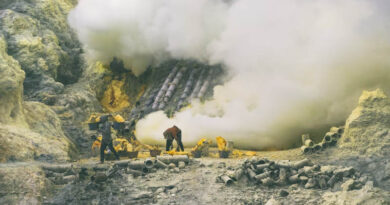
16 June 2026, New Delhi: For decades, Sulphur was regarded simply as a by-product of petroleum refining and natural gas processing. It was abundant, inexpensive and rarely attracted attention outside the fertilizer and chemical industries. Today, that perception has changed dramatically.
Global supply disruptions, geopolitical uncertainties, refinery outages and changing trade patterns have transformed Sulphur into one of the world’s most strategically important agricultural raw materials. Raw material prices have increased nearly three to four times over historical levels, while finished product prices have increased by only about two to two-and-a-half times, creating enormous pressure across the crop protection industry. Yet, most discussions continue to focus only on Sulphur’s role in phosphatic fertilizers.
That is only a part of the story. Sulphur is perhaps the only agricultural raw material that simultaneously supports plant nutrition, fertilizer manufacturing, direct crop protection and the manufacture of modern agrochemicals. Its importance extends far beyond fertilizers.
The Four Pillars of Sulphur in Agriculture
1. Sulphur as an Essential Plant Nutrient
Sulphur is now recognised as the fourth major plant nutrient after Nitrogen, Phosphorus and Potassium.
It plays a vital role in protein synthesis, amino acid formation, chlorophyll development, oil formation, nitrogen-use efficiency and overall crop quality.
As Sulphur deficiencies become increasingly common in intensively cultivated soils, ensuring adequate Sulphur nutrition is becoming essential for sustaining agricultural productivity.
2. Sulphur in Fertilizer Manufacturing
Sulphur remains indispensable for manufacturing sulfuric acid, the foundation for phosphoric acid and phosphatic fertilizers.
In India, however, the Nutrient Based Subsidy (NBS) mechanism cushions much of the immediate impact on farmers. Although rising Sulphur prices increase production costs, subsidy requirements and working capital for manufacturers, the direct impact on fertilizer affordability is relatively moderated.The crop protection industry, however, operates under very different market dynamics.
3. Sulphur as a Direct Fungicide
Long before the development of synthetic fungicides, elemental Sulphur was protecting crops against fungal diseases.
Even today, Sulphur remains one of the world’s oldest, safest and most widely used fungicides.
Products such as Sulphur 80 WDG, Sulphur Suspension Concentrates (SC), Dusting Sulphur and Micronized Sulphur continue to play an indispensable role in managing powdery mildew, scab, mites and several fungal diseases across fruits, vegetables and plantation crops.
Their continued relevance lies in their:
- Multi-site mode of action, Excellent resistance management properties, Cost effectiveness
- Suitability for organic agriculture
As Sulphur prices increase, the manufacturing cost of these products rises almost proportionately, directly increasing the cost of disease management for farmers.
4. The Hidden Role of Sulphur in Modern Agrochemistry
Perhaps the least understood role of Sulphur lies within the chemistry of modern crop protection products. Scientific literature estimates that more than 30% of today’s registered agrochemicals contain at least one Sulphur atom, highlighting the fundamental importance of Sulphur chemistry in crop protection.
Sulphur is not merely a raw material- it is an essential chemical building block.
Sulfuric acid, produced from elemental Sulphur, is one of the world’s most widely used industrial chemicals and is extensively employed during the manufacture of numerous agrochemical intermediates and active ingredients through acidification, Sulphonation, purification and other critical processing steps.
Another important Sulphur derivative is Carbon Disulphide (CS₂), which serves as a key intermediate in manufacturing dithiocarbamate fungicides, including widely used products such as Mancozeb, Thiram, Ziram, Propineb and Metiram.
Beyond these, Sulphur chemistry contributes to several important pesticide families, including sulfonylurea herbicides, Di-thiocarbamate fungicides, thiazole and thiadiazole fungicides, as well as certain insecticides and acaricides.
In simple terms, Sulphur not only protects crops directly—it also helps manufacture a significant proportion of the crop protection products farmers rely upon every season.
This is a perspective that deserves far greater attention.
Why the Crop Protection Industry is More Vulnerable
Unlike fertilizers, crop protection products have no subsidy mechanism to absorb raw material inflation.
Every significant increase in Sulphur prices therefore creates direct pressure on manufacturing economics.
Today, manufacturers are simultaneously facing:
- Sulphur raw material prices nearly 3-4 times historical levels
- Finished product prices increasing by only 2-2.5 times
- Significant margin compression
- Higher working capital requirements
- Increasing uncertainty regarding raw material availability
The challenge extends beyond pricing. It is becoming a supply chain issue.
The Manufacturing Dilemma
One obvious question often arises: if Sulphur prices are so attractive, why isn’t production increasing more rapidly?
The answer lies in balancing three competing risks.
The first is availability risk. Procuring Sulphur itself has become increasingly uncertain due to global supply disruptions.
The second is margin risk. Raw material prices have risen much faster than manufacturers can recover through finished product pricing.
The third is inventory risk. Building inventory today secures production continuity, but any sharp correction in Sulphur prices could result in substantial inventory losses. Consequently, manufacturers are often forced to balance supply security against financial risk, making inventory planning more complex than ever before.
Why Farmers Should Care
Ultimately, every disruption in sulphur availability reaches the farm. Higher sulphur prices can translate into:
- Increased cost of sulphur nutrition products
- Higher prices for sulphur fungicides
- Increased manufacturing costs for several widely used fungicides and combination products
- Higher overall expenditure on fungal disease management
This is particularly important in horticultural crops where multiple fungicide applications are essential to protect yield, quality and marketability.
The concern is therefore not merely about the price of sulphur. It is about ensuring that farmers continue to have timely access to affordable crop protection solutions.
Supply Resilience
The discussion around sulphur should move beyond commodity prices and fertilizer economics. Sulphur is a strategic agricultural resource.
Strengthening long-term supply resilience requires collaboration across the entire value chain through:
- Diversified sourcing strategies
- Long-term supplier partnerships
- Greater domestic value addition
- Better visibility across critical raw material supply chains
- Stronger planning for strategic agricultural inputs
These measures will help ensure uninterrupted availability of both crop nutrients and crop protection products.
Not Another Industrial Chemical
Food security is often discussed in terms of seeds, fertilizers and irrigation. Perhaps it is time to broaden that conversation. Affordable crop protection is equally important.
Few raw materials influence agriculture as extensively as sulphur. It nourishes crops. It enables fertilizer production. It protects crops directly as a fungicide. And it forms part of the chemistry behind a significant proportion of modern agrochemicals.
As global agriculture becomes increasingly interconnected, sulphur deserves recognition not merely as another industrial chemical, but as one of agriculture’s most strategic resources. Because safeguarding sulphur is ultimately about safeguarding crop productivity, farmer profitability and global food security.
Also Read: UPL Recognized as Top Innovator in AgriBusiness at Clarivate South Asia Innovation Awards 2026
Global Agriculture is an independent international media platform covering agri-business, policy, technology, and sustainability. For editorial collaborations, thought leadership, and strategic communications, write to pr@global-agriculture.com