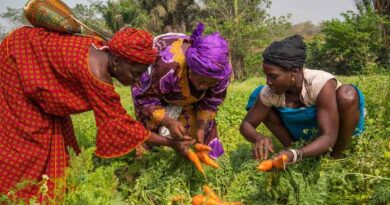
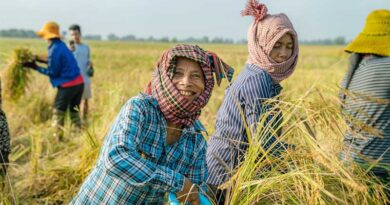
10 March 2026, New Delhi: Women play a crucial role in sustaining agricultural production and rural livelihoods, yet their contributions often remain under-recognised and undervalued. Highlighting this reality, Ashima Bajaj Seth, Chief Digital & Information Officer at Godrej Agrovet Limited, emphasised the need for systemic change to address the structural barriers faced by women farmers.
Ashima Bajaj Seth, Chief Digital & Information Officer at Godrej Agrovet Limited
“Women farmers are the driving force behind India’s agri-food systems, sustaining communities with their resilience, skill and deep agricultural knowledge. Yet despite their pivotal work, their work often remains undervalued, constrained by limited land ownership, unequal access to finance and markets, time poverty due to unpaid care work, and persistent social norms that keep them out of formal decision-making spaces. As a result, women are concentrated in the most labour-intensive parts of the value chain while being underrepresented wherever titles, credit, technology, and leadership roles determine who holds real power,” Seth said.
She noted that the issue becomes even more significant in the context of International Women’s Day and the global recognition being given to women in agriculture.
“As we celebrate International Women’s Day, this reality becomes even more important to acknowledge. The United Nations decision to mark 2026 as the International Year of the Woman Farmer is therefore both timely and transformative. It recognises that closing gender gaps in agriculture is not just a question of fairness, but a prerequisite for food security, climate resilience, and rural prosperity. To make this year meaningful, we must move beyond symbolic celebration and focus on systematically dismantling the barriers women farmers face,” she added.
According to Seth, companies and value-chain actors have an important role to play in advancing gender inclusion within agriculture.
“First, companies and value-chain actors need to embed gender inclusion into their core strategy by setting representation goals for women in field, technical, and leadership roles; investing in safe, gender-responsive infrastructure for fieldwork; and redesigning hiring and promotion processes to remove conscious and unconscious bias,” she said.
She further emphasised the importance of collaboration across sectors to improve women’s access to resources and opportunities.
“Second, industry must collaborate with governments, financial institutions, and civil society to expand women’s access to land, tailored credit, insurance, and producer organisations, so they can negotiate better prices and share in value creation rather than remaining at the margins,” Seth noted.
Highlighting the importance of skills and technology access, she stressed the need for targeted investments in women’s capacity building.
“Third, there is an urgent need to invest in skilling and mentorship pathways that equip women with both technical and leadership capabilities, and to deliberately design agri-tech, machinery, and digital services that work for women’s realities,” she said.
Seth concluded by stating that the International Year of the Woman Farmer could serve as a turning point for recognising women as key leaders in agriculture.
“If we get this right, the International Year of the Woman Farmer can be an inflection point where women are recognised not just as participants in agriculture, but as leaders and co-architects of its transformation shaping how we invest, innovate, and build more resilient, inclusive food systems for the future.”
Global Agriculture is an independent international media platform covering agri-business, policy, technology, and sustainability. For editorial collaborations, thought leadership, and strategic communications, write to pr@global-agriculture.com