Closing the Financial Gap for Women Farmers Could Transform Global Agriculture: CIMMYT’s Maureen Miruka
Interview by Nimish Gangrade, Editor, Global Agriculture
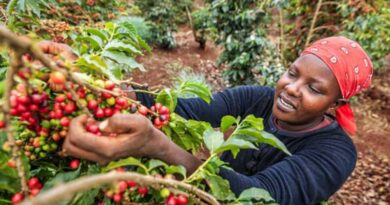
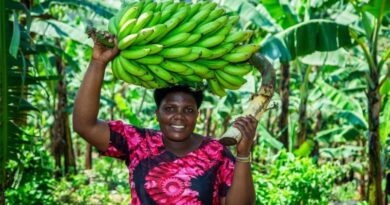
12 March 2026, New Delhi: Women play a central yet often under-recognised role in global agriculture. Across Asia and Africa, they contribute to nearly half of the agricultural workforce and possess deep knowledge of seeds, soils, and local farming systems. Yet despite their critical role in food production and climate resilience, women farmers continue to face systemic barriers to land ownership, financial services, agricultural technologies, and market access.

In this conversation with Global Agriculture, Dr. Maureen Miruka, Director of Gender Equity, Youth and Social Inclusion at the International Maize and Wheat Improvement Center (CIMMYT), explains why empowering women farmers is essential for climate-resilient agriculture, how structural barriers continue to limit their participation, and what governments and research institutions must do to close the gender gap in agri-food systems.
Q1. Women form a significant share of the agricultural workforce across Asia and Africa, yet they often have limited access to resources and technology. How critical is the role of women farmers in building climate-resilient agriculture?
Women play a very significant role in agriculture and in building resilience to climate change and other shocks that affect farming communities. In many regions of Asia and Africa, around 50% of the agricultural workforce consists of women, and in some parts of agricultural value chains where their work is not fully documented, their participation could be as high as 75%.
Women possess deep knowledge about farming systems. They understand seeds, weather patterns, soil conditions, and the history of the land they cultivate. In many rural communities, women are the custodians of agricultural knowledge that is essential for adopting and adapting technologies to cope with climate change.
However, despite their knowledge and contributions, women do not have the same access as men to information, agricultural inputs, financial services, assets, and technologies. This is largely due to traditional gender norms and institutional barriers that limit their participation in decision-making and access to resources.
According to widely cited estimates from the Food and Agriculture Organization, if women had the same access to agricultural resources as men, farm productivity could increase by 20–30 percent, potentially helping feed around 150 million additional people globally. These figures highlight how empowering women farmers is not just a social goal but also an economic and food security imperative.
Q2. Many agricultural innovations reach the field but often fail to reach women farmers. What structural barriers prevent women from benefiting from these innovations?
Several structural barriers prevent women from accessing agricultural innovations.
One of the most fundamental barriers is access to land. In many countries, women cannot easily own or inherit land. Without land titles, they often cannot access credit, join cooperatives, or benefit from government schemes. For example, cooperatives may require a land title deed for membership or financial services, but the title is often registered in the husband’s name.
Beyond land, women also face limited access to financial services, markets, and mobility. In some regions, social norms restrict women from traveling to markets or participating in commercial activities. Even when women participate in production, they are often excluded from higher-value activities in the value chain such as processing, marketing, or entrepreneurship.
Another issue is the gender wage gap in agriculture. Studies from countries such as India and Bangladesh show that women are frequently paid less than men for similar work. Ironically, in some agricultural operations like seed selection or planting, women’s skills are highly valued because their work often results in better quality outputs, yet their compensation remains lower.
These systemic inequalities—rooted in social norms, policies, and institutional structures—limit women’s ability to benefit from agricultural innovation and economic opportunities.
Q3. In India, women now represent a large share of students in agricultural education. Yet fewer women are visible in agricultural research careers. What global lessons can help improve gender equality in agricultural research?
This is an interesting trend we see globally. In some countries, women make up more than 50% of university students, but less than 25% pursue STEM-related fields, including agricultural science.
Again, social norms play a role. Often, women are encouraged to pursue fields considered more socially acceptable or “softer,” while STEM disciplines may not receive the same encouragement from families or institutions.
One effective approach is to integrate gender perspectives into university curricula. When students understand the role of gender equality and gender-transformative approaches in agriculture, poverty reduction, and climate resilience, they are better prepared to address these issues in their professional work.
At CIMMYT, we collaborate with universities to embed gender issues into agricultural education. We also run training programs such as the CIMMYT Academy and international training initiatives that bring participants from different countries to research stations, including in Mexico.
Over the past five years, we have taken deliberate steps to ensure gender balance in these programs. For example, when national partners nominate participants for training, we ask them to send equal numbers of men and women. Such affirmative actions help ensure that women gain access to opportunities, mentorship, and global networks.
Q4. Looking at global agricultural challenges, where do you believe women can play a leading role?
Women should not be confined to specific roles in agriculture. They should be present across all parts of the agri-food system—from production and extension services to finance, research, entrepreneurship, and leadership.
Women should be directors of research institutions, leaders in policy discussions, and innovators in agricultural technology. Their role should not be limited to field-level production.
One example comes from CIMMYT’s work in Senegal, where young women were recruited as village agents. Previously, extension programs were reaching only about 23% of women farmers. After hiring female village agents, outreach to women increased to more than 50%.
This demonstrates that female extension workers often reach women farmers more effectively. However, this also requires supportive systems—such as fair pay, safe working conditions, and changes in social norms that allow women to travel and work within communities.
Q5. If governments were to adopt one key policy intervention globally to strengthen women’s participation in agriculture, what would you recommend?
One of the most impactful policy interventions would be improving women’s access to financial services.
Women entrepreneurs in agriculture often face barriers when applying for credit or financing agricultural businesses. Removing these barriers and creating financial systems that support women farmers and agri-entrepreneurs could significantly strengthen their participation in the agricultural economy.
However, financial access must also be accompanied by changes in social norms and decision-making structures. Even when loans are taken in a woman’s name, decision-making power may still lie with male family members. Policies must ensure that women themselves retain control over financial resources and business decisions.
Improving access to land, capital, and financial services together would significantly transform women’s role in agriculture.
Q6. What role should research organizations play in improving gender equity in agriculture?
Research organizations have a critical role in generating data, evidence, and practical models that help policymakers understand why gender equality matters for agricultural development.
One key area of research is identifying ways to create dignified and meaningful employment opportunities for women in agriculture. Women already contribute significantly to the sector, but much of their work remains unpaid or undervalued.
Research can also help identify opportunities within value chains where women can lead. For example, women often have deep knowledge about seeds, soils, and local farming systems. Seed production and seed systems could therefore become an important area of entrepreneurship for women and young female professionals.
At the same time, technological advancements must be designed carefully. In some cases, mechanization has unintentionally widened gender gaps because machines were introduced without addressing social norms around who operates them. When that happens, men often take over tasks that women previously performed.
Therefore, agricultural innovation must combine biophysical research with social science insights to ensure that technologies benefit both men and women equally.
About Dr. Maureen Miruka:
Dr. Maureen Miruka is currently the Director, Gender Equality, Youth and Social Inclusion at CIMMYT. Previously, the Senior Director of Program Quality and Partnerships at CARE USA. She is a leader and change maker on gender equality and women’s rights in food systems. Maureen is was also the lead author of CARE’s flagship gender transformative approach, the Farmer Field and Business School.
Also Read: From Rust Threat to Wheat Expansion in Ethiopia
Global Agriculture is an independent international media platform covering agri-business, policy, technology, and sustainability. For editorial collaborations, thought leadership, and strategic communications, write to pr@global-agriculture.com