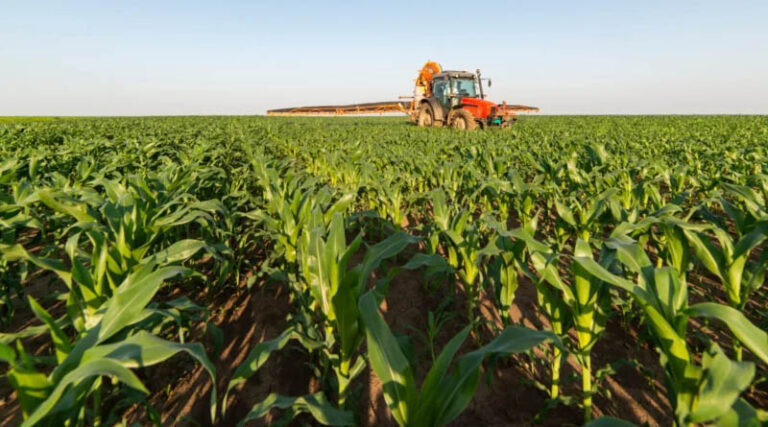
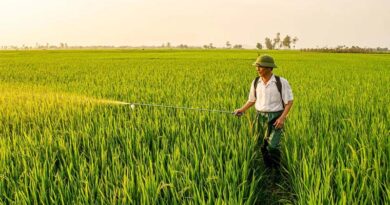
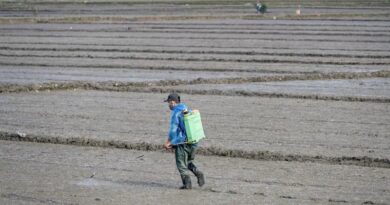
17 November 2026, US: Today a broad coalition launched a campaign to Take Down Pesticides, calling for an agricultural shift away from petroleum-derived pesticides and towards proven organic and agroecological alternatives. Organizations urged state and national governments to ban paraquat, a toxic weedkiller linked with Parkinson’s disease. They stressed that no single pesticide ban is sufficient to address the urgent public health crisis caused by unchecked pesticide use.
Momentum around ending reliance on pesticides is growing. In the U.S., states are starting to take back power to protect their residents from pesticides, with more than 13 states having introduced legislation to ban paraquat, a pesticide already banned in over 70 countries and linked to Parkinson’s disease, thyroid cancer, and neurological harm to children. Internationally, efforts to curtail use of Highly Hazardous Pesticides such as atrazine, chlorpyrifos, paraquat, and more are moving forward at the United Nations Food and Agriculture Organization, the Climate Conference of Parties, and in individual countries around the world.
Farmworkers, farmers and rural communities at the frontlines of pesticide exposure are developing debilitating conditions like Parkinson’s disease, cancer, and children’s developmental harm at growing rates. People across the U.S. are demanding to know why pesticides banned in scores of other countries are allowed to be used in their communities, and why new pesticides, including PFAS-containing pesticides, are being approved at alarming rates despite a lack of evidence on their safety.
Organic and agroecological practices of weed and pest control can be scaled up and widely adopted if we have the political will to invest in them. We call on the public to continue to demand affordable food free from pesticides. We call on the U.S. Congress to resist agrochemical lobbying and prioritize people’s health over corporate profits. We call on state and local policymakers to prohibit the use of EPA-approved pesticides on public lands. And we call on farmers to stand up to agrochemical companies and demand federal, state and local support for transitioning to organic and agroecological growing practices.
A growing number of long-term studies comparing organic and pesticide-intensive farm systems show that pesticide-free farm systems can be just as productive and profitable, while safeguarding farmer, farmworker, and wildlife health. Organic and agroecological farm systems can also perform better in times of drought, and produce healthier soils.
“For decades, the Center for Food Safety has championed the rights of farmworkers, consumers, endangered species, and the planet by challenging government policies permitting the overuse of toxic pesticides,” said Reagan Ferris, Legislative and Policy Coordinator at the Center for Food Safety. “Pesticides are a poisonous false promise that harm people, contaminate our food, and irreparably pollute the water, soil, and air. A new agriculture for the 21st century is not only possible, but essential, to ensure a regenerative, healthful food system.”
“Through our work, we meet people and hear stories of farmers and farmworkers who have been harmed by pesticides. People who sprayed pesticides for years and later developed cancer, Parkinson’s, or other chronic conditions, people who were exposed while pregnant and whose children suffered developmental and neurological harm, and people who live near farms and experienced pesticide drift and are now afraid of what the future holds. Unfortunately these are not rare exceptions; these are regular occurrences in a system designed to take advantage of our most vulnerable communities. Our food system has let science, regulation, and compassion fall behind corporate profit. It’s time to foster a food system built on justice, transparency, and resiliency,” said Cristobal Lagunas, Organizing Lead, Pesticide Action & Agroecology Network
“Pesticides are not combating insects and pests,” says Hormis Bedolla, Initiative Coordinator for Pesticides and Environmental Justice, Alianza Nacional de Campesinas. “They are poisoning and killing us. The idea of creating perfect fruit is not worth our health nor our lives.”
“Our membership always explains to us how pesticide exposure harms their lives,” explains Mily Trevino-Sauceda, Executive Director, Alianza Nacional de Campesinas. “They speak of issues with their reproductive health and medical conditions affecting their children, sometimes resulting in premature births. Farmworker women (campesinas) are among the most vulnerable workers in the United States of America, and the continued use of toxic, dangerous chemicals remains a primary abuse of power that puts the well-being of agricultural workers at risk. We cannot continue like this. We need change now, before more lives are lost.”
“Virtually all paraquat imported to the U.S. comes from Chinese companies, even though paraquat is banned in China. Why are we using pesticides that the rest of the world has deemed too dangerous?” said Deidre Nelms, Communications and Research Director of Coming Clean. “We should be investing in pesticide-free farm systems that make soil healthier, are more resistant to drought, and that keep farmers and farmworkers safe.”
“We deserve to trust the safety of food on our plates and grown in our communities. We don’t need paraquat to grow food in North Carolina, and families and workers on the frontlines deserve to be protected from harmful spray and drift,” said Kendall Wimberly, Policy Director, Toxic Free North Carolina. “Toxic Free NC has been fighting pesticide pollution since 1986. We stand with communities in the call to end exposure to toxic chemicals, promote healthier alternatives, and call for systemic solutions for generations to come.”
“The evidence linking paraquat exposure to Parkinson’s disease is overwhelming. Nurses are committed to reducing environmental harms and we urge for the elimination of paraquat and other harmful pesticides to protect future generations from devastating health effects. Our patients and communities deserve nothing less than adequate health protections,” said Katie Huffling, DNP, RN, CNM, FAAN, Executive Director, Alliance of Nurses for Healthy Environments.
The Take Down Pesticides campaign will spread awareness about the harms of pesticides to farmworkers, rural communities, and children, while elevating success stories of farmers in the U.S. and across the world who have eliminated the use of synthetic chemicals.
Global Agriculture is an independent international media platform covering agri-business, policy, technology, and sustainability. For editorial collaborations, thought leadership, and strategic communications, write to pr@global-agriculture.com