29 May 2026, New Delhi: India has achieved a new milestone in food grain production, with total output for 2025-26 estimated at 376.56 million tonnes, according to the Ministry of Agriculture and Farmers Welfare. The announcement was made by Union Agriculture and Farmers Welfare Minister Shivraj Singh Chouhan during the National Kharif Campaign 2026 Conclave held at the NASC Complex, Pusa, New Delhi, where the Centre and states began detailed discussions on preparations for the upcoming Kharif season.
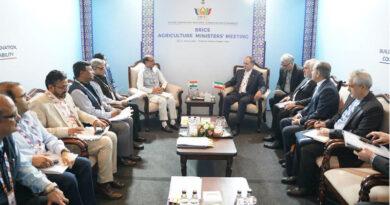
Addressing a press conference on May 28, Chouhan said the government’s priority remains ensuring national food security, improving farmers’ livelihoods and making nutritious food available to consumers. He said the two-day conclave has brought together agriculture ministers, scientists, senior officials, farmer producer organisation (FPO) representatives and policymakers to review preparedness for the Kharif season and strengthen coordination between the Centre and states.
Food Grain Production Reaches Record Level
The Agriculture Minister said India’s estimated food grain production for 2025-26 has reached 376.56 million tonnes, an increase of about 18.8 million tonnes over the previous year.
According to the estimates shared during the conclave, rice production is expected to reach 154.02 million tonnes, while wheat production is estimated at 120.66 million tonnes. Maize output is projected at 55.09 million tonnes. Chouhan said these figures represent the highest production levels recorded for these crops.
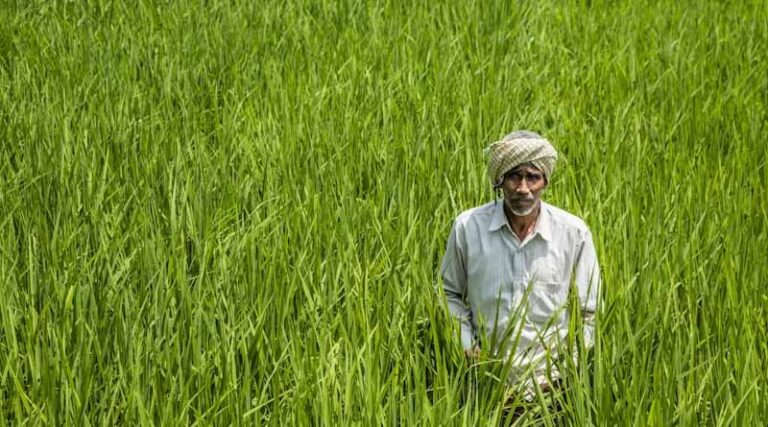
The minister attributed the increase in production to farmers’ efforts, government programmes, agricultural research and the adoption of improved seed varieties.
Oilseeds Output Also Hits New High
Alongside food grains, oilseed production is also expected to reach a record level. The government estimates total oilseed output at 43.06 million tonnes during 2025-26.
Groundnut production is projected at 13.07 million tonnes, while rapeseed-mustard output is estimated at 13.77 million tonnes. Chouhan said pulse production has also increased and expressed confidence that further gains could be achieved in the coming years through focused interventions.
The higher production levels come as India continues efforts to improve self-sufficiency in edible oils and strengthen domestic supplies of pulses.
National Kharif Campaign Focuses on Crop Planning
The National Kharif Campaign 2026 Conclave is being organised on May 28 and 29 with participation from agriculture departments across states and Union Territories, along with representatives from the Indian Council of Agricultural Research (ICAR).
Chouhan described the gathering as a meeting of “Team Agriculture”, bringing together the Centre, state governments, scientists and farmer organisations to review preparations for both Kharif and Rabi seasons.
The discussions include seed availability, delivery of agricultural schemes, crop planning and implementation of government missions. The minister said virtual consultations had already been held with states before the conclave, enabling participants to arrive with state-specific plans and concerns.
He noted that the conclave has been expanded from a one-day event to a two-day programme to allow more detailed discussions on state-level challenges and solutions.
Regional Approach to Agricultural Planning
Highlighting the diversity of India’s farming systems, Chouhan said the government has also begun organising regional agricultural conferences.
Three regional meetings have already been held in Jaipur, Lucknow and Bhubaneswar, while additional conferences are planned for the North-East and southern regions.
According to the minister, farming practices and climatic conditions vary considerably across states, making regional consultations important for addressing local challenges. He said the government is also exploring the possibility of organising conferences based on agro-climatic zones identified by ICAR to improve the effectiveness of agricultural planning.
Focus on Pulses, Oilseeds and Horticulture
The minister said dedicated missions for pulses and oilseeds are being implemented, with discussions at the conclave covering seed replacement rates, demonstrations, processing infrastructure and production enhancement strategies.
Horticulture development and the Cotton Mission are also part of the agenda. Chouhan noted that horticulture remains an important growth area for Indian agriculture and offers opportunities for diversification and income generation.
Addressing Climate and Sustainability Challenges
Climate variability remains a major concern for the agriculture sector, according to the minister. He pointed to changing rainfall patterns, rising temperatures and weather-related risks that are affecting farm operations across regions.
The conclave is examining measures to improve agricultural resilience, including natural farming practices, soil health management and balanced fertiliser use.
Chouhan said the government is encouraging balanced nutrient application and wider use of Soil Health Cards to help farmers make informed decisions on fertiliser use.
Strengthening Farmer Support Systems
Discussions during the conclave are also focusing on integrated farming systems aimed at improving incomes for small and marginal farmers.
The minister said access to agricultural credit remains uneven across states and highlighted the importance of strengthening institutional finance through instruments such as the Kisan Credit Card (KCC).
Other topics under review include the Agriculture Infrastructure Fund, PM-AASHA, digital agriculture initiatives, Farmer ID implementation and strengthening of Farmer Producer Organisations.
According to the ministry, state-wise deliberations during the conclave will be followed by presentations before state agriculture ministers, leading to the preparation of a joint Kharif roadmap for the Centre and states.
The minister also said the proposed “Khet Bachao Abhiyan” would be discussed extensively as part of efforts to achieve agricultural production targets and strengthen farm resilience.
Global Agriculture is an independent international media platform covering agri-business, policy, technology, and sustainability. For editorial collaborations, thought leadership, and strategic communications, write to pr@global-agriculture.com