23 April 2026, Mexico: Rising agricultural input costs are reshaping how food is produced. While the effects are not always immediately visible, they ultimately ripple across the entire agrifood chain. Beyond the pressure on producers, this situation exposes a structural vulnerability: the dependence of agricultural systems on complex, concentrated, and fragile global supply chains.
Within that system, certain strategic trade corridors concentrate disproportionate risk, a localized disruption can trigger impacts at a global scale. Key routes like the Strait of Hormuz, through which a significant share of global energy and fertilizer trade flows, act as true bottlenecks of the global agrifood system. When these corridors come under pressure, the impact is not limited to energy markets: it transfers to fertilizer costs, shapes planting decisions, and ultimately affects food availability. In a context where more than half of international agricultural trade depends on these critical routes, even partial disruptions can amplify volatility and push prices up globally.
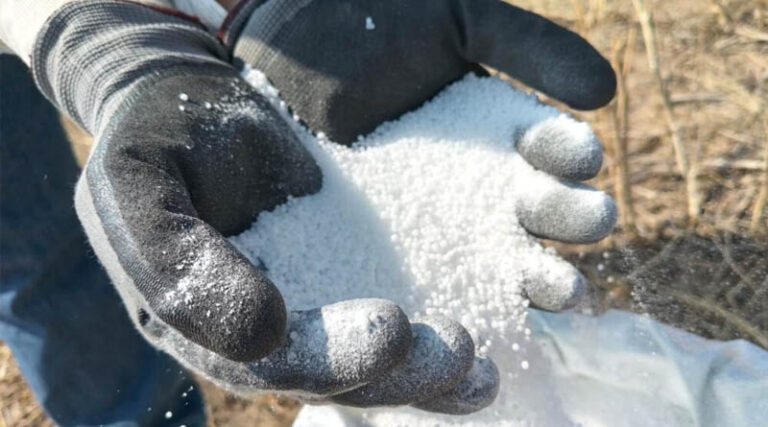
Today, much of the nitrogen that sustains agricultural production depends on international trade, making millions of producers vulnerable to external disruptions. Up to 1.8 billion people depend on fertilizers exposed to supply interruptions, either through direct imports or their link to the natural gas required to produce them. In this context, decisions made far from the field end up directly influencing what gets planted, how much fertilizer gets applied, and how much food reaches the market.
In Mexico, where maize is a dietary staple, this pressure is amplified. Production costs rise, dependence on imported fertilizers limits the capacity to respond, and factors like drought deepen uncertainty. Yet in the face of this scenario, the response is not simply about weathering the moment, it is about transforming the production system through science.
That transformation can begin in the short term. In regions like Sonora and Sinaloa, the use of species such as Sesbania and Canavalia, capable of fixing atmospheric nitrogen and incorporating it into the soil, demonstrates that viable alternatives exist for enriching soil fertility and reducing pressure on synthetic fertilizers. These options, adaptable to different contexts, are part of a broader set of solutions available to producers.
Evidence generated by CIMMYT points in a clear direction: integrating legumes is not a secondary practice but a central strategy for agricultural resilience. Their capacity to fix atmospheric nitrogen improves soil fertility, reduces production costs, and decreases dependence on external inputs, while strengthening the stability of production systems in the face of climate variability.
In practice, this translates into concrete decisions. When a legume is added to a crop rotation, the following crop may require less fertilizer, because the soil already contains more available nitrogen. This is complemented by the use of compost, manure, and crop residues, which contribute to building a gradual nutrient reserve. While these sources do not fully replace chemical fertilizers, they function as a buffer against price increases or supply disruptions.
Over the longer term, this approach converges with conservation agriculture, where the continuous incorporation of organic matter improves soil quality, increases its capacity to supply nutrients, and strengthens its resilience. The soil stops being a passive support and becomes a strategic asset for sustaining productivity. Conservation agriculture, with its minimum tillage component, which reduces the use of machinery like tractors, also carries the additional benefit of significantly cutting fossil fuel use, helping producers absorb price increases driven by the current crisis.
In parallel, science is advancing on new frontiers. One of the most promising is Biological Nitrification Inhibition (BNI), an innovation on which CIMMYT is working alongside an international research network. This technology harnesses the natural capacity of certain plants to regulate the nitrogen cycle in the soil, reducing losses and improving fertilizer efficiency. While still being validated across different contexts, its potential is clear: to move toward agricultural systems less dependent on external inputs and more sustainable.
Another strategy for more sustainable fertilizer use involves continuously improved new varieties, which generally show greater efficiency in nutrient and water use compared to older varieties, as well as resistance or tolerance to pests and diseases. Institutions such as INIFAP and the seed industry, in collaboration with CIMMYT and other research centers, release new varieties each year that are more efficient and adapted to biotic and abiotic stresses.
The use of technologies that form part of Agriculture 4.0, such as sensors, soil sampling, remote sensing, and artificial intelligence for decision-making, as well as variable-rate input application, are key elements of a more precise agriculture. The goal is to apply the right dose, at the right time and place, optimizing input use to achieve more sustainable systems with high and stable yields and a lower impact on the environment and climate. CIMMYT is evaluating several of these technologies to broaden access to tools aimed at small and medium-sized producers, enabling them to face input crises like the current one.
Adopting these solutions requires cooperation frameworks that connect science with the field and with real production conditions. Through innovation networks, field validations, and alliances between governments, international organizations, and the private sector, these practices are beginning to scale and integrate into production systems, helping farming communities adapt to a changing environment.
In a deeply interconnected agricultural system, resilience is built by strengthening local capacities backed by scientific evidence. In that process, one conclusion is becoming increasingly clear: investment in this science cannot stop. Not only because it reduces costs or improves yields, but because it defines the capacity of agricultural systems to sustain themselves in an increasingly uncertain environment. Ultimately, the future of food security will not depend solely on global markets, but on the capacity of farming communities to adapt, regenerate their soils, and sustain their livelihoods.
That capacity depends on understanding how production works in each context: its soils, its climatic conditions, and its economic realities. In an environment of uncertainty, food security is not defined in markets, it is defined by the capacity of systems and farming communities to adapt and keep producing.
Global Agriculture is an independent international media platform covering agri-business, policy, technology, and sustainability. For editorial collaborations, thought leadership, and strategic communications, write to pr@global-agriculture.com