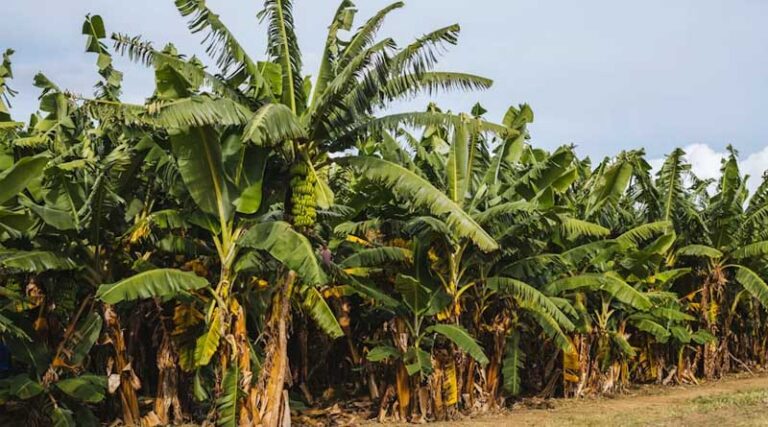
25 September 2026, Bahia, Brazil: Researchers at Embrapa Mandioca e Fruticultura, the cassava and fruit crops research unit of Brazil’s national agricultural research agency Embrapa, based in Cruz das Almas, Bahia, have confirmed that a gene called MusaDMR6 helps banana plants succumb to Fusarium wilt, a finding that establishes the gene as a candidate target for breeding or gene editing future disease resistant banana varieties. The study, led by corresponding author Claudia Fortes Ferreira along with Marcio Leandro da Silveira Fonseca, Edson Perito Amorim and colleagues, was published online August 29, 2026 in the journal Molecular Biology Reports.
Fusarium wilt, also known as Panama disease, is caused by the soil borne fungus Fusarium oxysporum f. sp. cubense, commonly abbreviated Foc. The disease blocks a plant’s water conducting tissue and has no effective chemical treatment once a field is infected, which is why breeding resistant varieties, or in the longer term editing susceptibility genes out of existing popular cultivars, is considered the most realistic long term control strategy. A more aggressive fungal strain called Tropical Race 4 has been spreading across banana growing regions in Asia, Africa and, more recently, Latin America, threatening both export oriented Cavendish plantations and the many local cooking and dessert banana varieties smallholder farmers depend on.
What the researchers found
The Embrapa team worked with the banana cultivar Prata-Ana, inoculating plants with a subtropical strain of the Fusarium fungus and then tracking how the DMR6 gene behaved over time using a laboratory technique called RT-qPCR, which measures how actively a specific gene is being switched on inside plant tissue. DMR6 is known in other crops, including tomato, as a “susceptibility gene,” meaning that instead of helping a plant fight infection, it acts as a brake on the plant’s own immune signalling, specifically a defense pathway that relies on a plant hormone called salicylic acid. In several other crops, scientists have used gene editing tools such as CRISPR to disable, or “knock out,” DMR6 and found the resulting plants become more resistant to disease because the immune brake is removed.
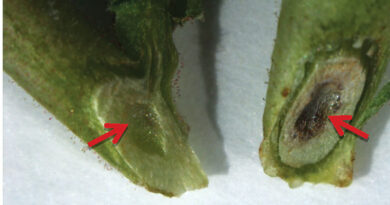
In the infected banana plants, the researchers found DMR6 activity initially dropped in the first 24 to 48 hours after infection before rising sharply, with a 6.5 fold increase in gene activity recorded at 72 hours after inoculation compared with uninfected control plants. Alongside the gene activity measurements, the team used staining techniques to observe the plant’s physical defense responses, including the buildup of callose, a carbohydrate plants deposit to seal off infected cells, and phenolic compounds, chemicals associated with plant defense. By 90 days after inoculation, the infected plants showed a disease severity index of 80 percent, confirming that Prata-Ana remains highly vulnerable to the pathogen under the trial conditions despite mounting some defense response. Together, the gene expression pattern and the disease outcome support the case that DMR6 is actively suppressing the plant’s immune response during infection, rather than simply reacting to it.
It is worth noting what this study does not yet show. The Embrapa team characterized and validated DMR6 as a target; they did not edit or delete the gene in banana plants in this study, so no resistant banana line has been produced yet. That next step, most likely using CRISPR gene editing tools to knock out or modify DMR6 directly in banana, would need to follow before growers could see a resistant variety derived from this specific finding, and any such edited plant would still need to go through further trials and Brazil’s regulatory process before commercial release.
Global Agriculture is an independent international media platform covering agri-business, policy, technology, and sustainability. For editorial collaborations, thought leadership, and strategic communications, write to pr@global-agriculture.com