From Tradition To Transformation: How Satbariya Became Nepal’s Hybrid Seed Hub
29 June 2026, Nepal: In the fertile plains of western Nepal, nestled within Lamahi Municipality of Dang District, lies Satbariya, a farming village where agriculture is more than an occupation, it is a way of life.
For generations, farmers here followed familiar cropping patterns: rice followed by mustard, lentil, or wheat; maize grown primarily for grain during the spring season; and a strong reliance on traditional farming practices. Most households practiced subsistence agriculture, producing food for their families while selling only a small surplus. Like many rural communities across Nepal, maize farmers depended heavily on farm-saved and low-quality seed, as well as knowledge passed down through generations.
Yet beneath this traditional landscape lay an untapped opportunity.
Despite favorable climatic conditions and significant potential for seed production, farmers lacked the technical knowledge and market connections needed to participate in Nepal’s emerging hybrid seed industry. At the same time, the country was spending millions of dollars annually on imported hybrid maize seeds to meet the growing demand for high-yielding and stress-resilient varieties.
Live Newsroom
Today, Satbariya tells a different story, one of courage, learning, and transformation.
Nepal’s Growing Need for Hybrid Seed
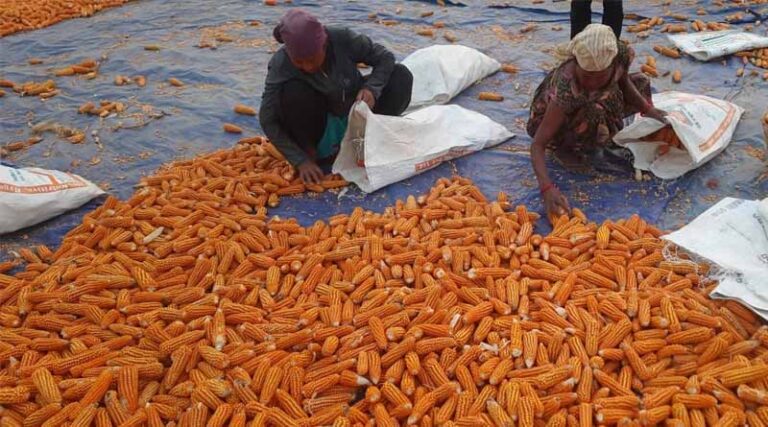
Maize is Nepal’s second most important cereal crop after rice and plays a critical role in food security, livestock feed, and rural livelihoods. Experts estimate that Nepal’s annual maize seed requirement could reach around 20,000 metric tons if all farmers regularly replaced seed and adopted improved varieties.
While hybrid maize has demonstrated significant yield advantages, the hybrid seed market currently covers only about 15 percent of Nepal’s maize-growing area. More importantly, this entire segment depends almost on imported seed.
Recognizing the strategic importance of reducing this dependency, the Government of Nepal, through its National Seed Vision, established targets for local hybrid maize seed development and production. In response, the National Maize Research Program (NMRP) of the Nepal Agricultural Research Council (NARC), the International Maize and Wheat Improvement Center (CIMMYT), the National Agriculture Modernization Program (NAMP), and local private seed companies joined forces to strengthen domestic hybrid seed production.
Their vision was simple yet ambitious: empower local farmers and stakeholders to produce quality hybrid seed within Nepal. Satbariya became one of the places where that vision would take root.
The First Leap of Faith
The journey began modestly.
Members of the Satbariya Agriculture Cooperative decided to venture into hybrid maize seed production for the first time, despite many doubts and uncertainties. The concept was entirely different from their traditional practice of growing open-pollinated maize for grain.
Hybrid seed production demanded precision, discipline, and new knowledge. Farmers had to learn planting arrangements, synchronize flowering between male and female parental lines, remove tassels from female plants at the right time, and maintain strict quality standards throughout the season.
Supported by technical experts, farmers attended training sessions, participated in field demonstrations, and carefully followed recommended practices. Their first harvest yielded only 600 kilograms of hybrid seed.
By commercial standards, it was a small beginning. For Satbariya, however, it represented something much bigger. It proved that hybrid seed production was possible.
“When we started hybrid seed production, we questioned why separate male and female lines had to be planted. Detasseling and many of the management practices were completely new to us. That is why our first harvest, six years ago, was not very satisfactory,” recalls Deumani Chaudhary, Chairperson of the cooperative.
“However, we were not discouraged. We continued learning and improving every year,” he adds, acknowledging the support the cooperative received from various stakeholders throughout the journey.
Learning, Season After Season
Success did not happen overnight.
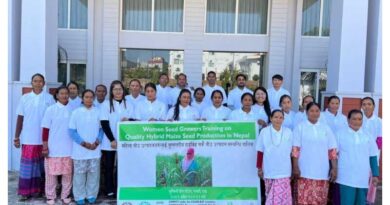
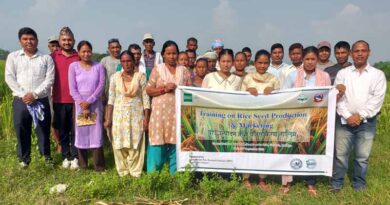
Building a sustainable hybrid seed enterprise required continuous investment in people. NMRP, NAMP, CIMMYT, and private seed companies worked closely with farmers to strengthen their technical capacity through a combination of classroom-based learning and practical field experience.
Farmers learned every stage of the process—from planting design and synchronization of parental lines to detasseling, rouging, pest management, irrigation, weed control, field inspection, and post-harvest handling.
Refresher training programs followed in subsequent seasons, helping farmers address emerging challenges and continuously improve seed quality. As knowledge grew, so did confidence.
Farmers who once doubted technology gradually became local experts. Experienced growers began mentoring newcomers, and learning spread beyond formal training sessions into everyday conversations in fields and village gatherings.
The cooperative was slowly becoming more than a producer, it was becoming a center of knowledge.
The Market Assurance That Changed Everything
Technical skills alone are not enough to transform agriculture. Farmers also need confidence that their investment will generate returns.
One of the most important breakthroughs came through the establishment of buy-back arrangements with seed companies. These agreements guaranteed farmers a reliable market for the seed they produced.
The assurance reduced financial risk and encouraged greater participation. Farmers no longer worry about finding buyers after harvest. Instead, they could focus on producing quality seeds and maximizing productivity.
“This is my sixth year in hybrid seed production, and the income is nearly three times higher than what I earned from the seasonal crops we used to grow,” says Indra Pari Choudhary, one of the pioneering women farmers involved in the production of RH10, a heat-stress-tolerant hybrid developed by CIMMYT and released in Nepal through NMRP.
“The technical knowledge I gained has enabled me to train fellow women farmers, especially newcomers, on how to maximize seed yield and increase profitability. I am proud to see hundreds of farmers in our village growing hybrid maize from seed that we produce here,” she adds.
As returns from hybrid seed production began exceeding those from traditional grain cultivation, interest spread rapidly throughout the community. More farmers joined, more land was allocated, and the cooperative continued to grow.
By 2026, hybrid maize seed production in Satbariya involved around 50 farming households and was expected to produce more than 60 tons of quality hybrid maize seed. What began as a small experiment had evolved into one of Nepal’s largest cooperative-based hybrid maize seed production initiatives.
The numbers tell a story of growth. But the real story lies in the people behind those numbers.
It is the story of farmers who embraced change despite uncertainty. It is the story of families willing to learn new skills and adopt unfamiliar practices. And it is the story of a community discovering new opportunities through collaboration and innovation.
A learning and innovation hub for Nepal
Today, Satbariya Agriculture Cooperative is widely recognized as a leading center for hybrid maize seed production and innovation in Nepal.
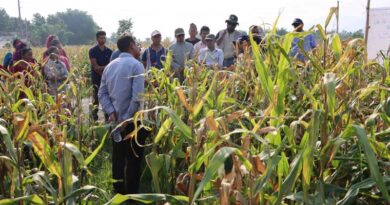
Visitors regularly arrive from other cooperatives, government agencies, development organizations, and research institutions to learn from their experience. Farmers proudly showcase their fields, share lessons learned, and demonstrate the techniques and innovations that transformed their community.
What was once a village learning from others has become a village teaching others.
Its success demonstrates how local institutions, when supported by research, training, and market linkages, can become powerful drivers of agricultural development.
Beyond its production achievements, the cooperative has become a vibrant platform for knowledge exchange, farmer-to-farmer learning, and the promotion of Nepal’s emerging domestic hybrid seed industry.
“Our focus now is to further expand the area under hybrid maize seed production and increase seed output so that we can contribute to Nepal’s journey toward self-sufficiency in hybrid maize seed,” says Chaudhary, Chairperson of the cooperative, reflecting on the group’s broader vision for the future.
With growing technical expertise, strong market linkages, and a commitment to collective action, the cooperative is well positioned to play a leading role in strengthening Nepal’s hybrid seed sector in the years to come.
Looking ahead
Satbariya’s journey demonstrates that agricultural transformation begins with people.
It begins when farmers gain access to knowledge, when institutions work together toward a common goal, and when markets reward innovation and quality.
As Nepal seeks to reduce its dependence on imported hybrid seed and strengthen national seed self-reliance, the experience of Satbariya offers a powerful example of what is possible.
From a modest harvest of 600 kilograms to a thriving cooperative producing more than 60 tons of hybrid maize seed, the village’s progress reflects more than agricultural success.
It reflects the determination of farmers who chose to learn, adapt, and grow.
And in doing so, they are helping build a stronger, more resilient, and more self-reliant seed system for Nepal.
Also Read: EU Mandates Digital Labels for Plant Protection Products from 2028
Global Agriculture is an independent international media platform covering agri-business, policy, technology, and sustainability. For editorial collaborations, thought leadership, and strategic communications, write to pr@global-agriculture.com