JIRCAS and IRRI Strengthen Collaboration Toward Low-carbon, Sustainable Rice Production
17 October 2026, Japan: Japan, through Japan International Research Center for Agricultural Sciences (JIRCAS) and the International Rice Research Institute (IRRI) are entering into a new research collaboration agreement to advance low-carbon and sustainable rice production.
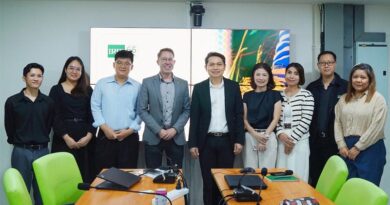
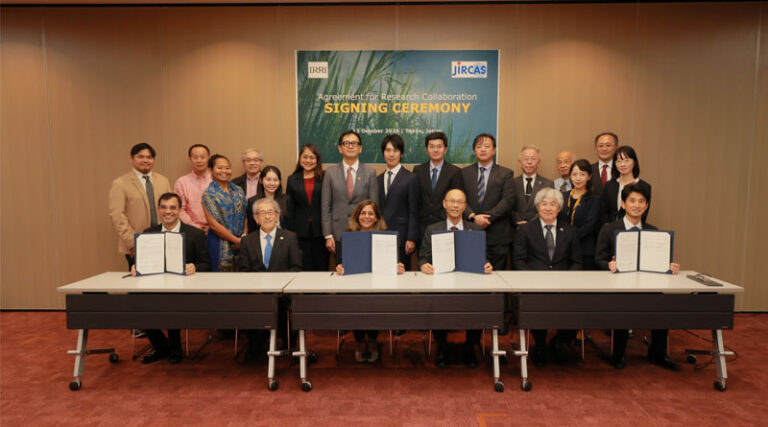
The agreement was signed by Dr. Yvonne Pinto, IRRI Director General, and Dr. Hasegawa Toshihiro, JIRCAS President, during the Japan-IRRI Forum on October 13, 2026 in Tokyo, Japan.
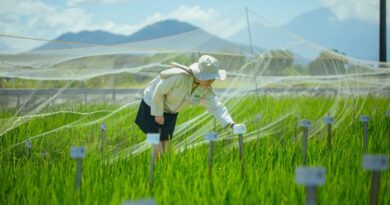
Through this agreement, JIRCAS and IRRI will work together on two initial research workplans. The first will focus on integrated research on low-carbon rice systems through soil, microbiome, and biological nitrogen fixation assessments, exploring how rice-associated microbes and soil processes can contribute to more sustainable and nitrogen-efficient rice production while reducing greenhouse gas emissions. The second will use field observations and modeling approaches to evaluate the impacts of alternate wetting and drying (AWD) irrigation on rice productivity, methane emissions, and water use across Southeast Asia. AWD is a water-saving farming practice that allows rice fields to dry periodically between irrigations.
This renewal is building on their long-standing partnership, providing a basis for the next phase of joint research. At the core of this partnership is a shared commitment in understanding how technologies perform and what enables farmers to use them. By combining expertise in soil science, microbiomes, greenhouse gas assessment, water management, and modeling, JIRCAS and IRRI aim to strengthen the evidence base for low-carbon rice systems and support their adoption across the region.
“IRRI and JIRCAS share a commitment to sustainable rice production and better livelihoods. The research opportunities ahead are exciting, but their value also depends on how they work for farmers. With alternate wetting and drying (AWD), for example, we need to understand who decides when to irrigate and what makes adoption practical. Bringing the science and these realities together is where our partnership can make a difference,” said Dr. Virender Kumar, Research Director – Sustainable Impact through Rice-based Systems, and Principal Scientist- Weed Science/Systems Agronomy.
“JIRCAS and IRRI have built a strong partnership over more than four decades, combining complementary expertise to address evolving challenges in rice production. Through this renewed collaboration, we aim to translate scientific advances into practical solutions for low-carbon and climate-resilient rice systems, contributing to farmers’ livelihoods and food security across Asia and beyond,” said Dr. Hasegawa Toshihiro, President of JIRCAS.
By advancing research on low-carbon production practices and strengthening understanding of their adoption and impact, the partnership seeks to contribute to food security, environmental sustainability, and improved livelihoods across rice-growing communities in Asia.
Also Read: USDA Reports Record Soybean Yield, Bigger Corn Crop in October Forecast
Global Agriculture is an independent international media platform covering agri-business, policy, technology, and sustainability. For editorial collaborations, thought leadership, and strategic communications, write to pr@global-agriculture.com