Prioritizing Farmers: Alliance and IRRI Collaborate To Capacitate Partners On Human-centered Design For More Effective Digital Agroclimatic Advisories
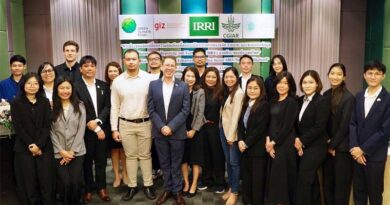
16 June 2026, Philippines: Developing digital tools grounded in farmer realities requires a shift in design centered on its end-users. To support this, the Alliance of Bioversity International and CIAT (Alliance), in collaboration with the International Rice Research Institute (IRRI) held a four-day technical training to strengthen participants’ understanding of human-centered design (HCD) and explore further improvements to Climate+, a digital advisory system that provides farmers with weather-informed agro-advisories.
Designing data collection, information dissemination, and innovation pathways around user needs and realities not only improves the quality and effectiveness of research outputs. It also ensures that they are relevant, usable, and actionable. Integrating these needs into HCD principles can lead to more responsive solutions and stronger evidence-based decision-making.
Climate+ builds on the Rice Crop Manager Advisory Service (RCMAS), the Agro-climatic Advisory Portal (ACAP), and the climate and weather data from the Philippine Atmospheric, Geophysical and Astronomical Services Administration (PAGASA) to formulate advisories for farmers before and during the rice growing season.
The training provided an opportunity to reflect on Climate+ implementation and identify gaps, pain points, and opportunities to improve its reach and usability for intended users. Through stakeholder mapping, the training also clarified ACAP’s role within Climate+ and its contribution to the ongoing CIS program in the country. ACAP’s potential role in providing information for decision makers at the local government unit level was also discussed and clarified.
A key component of the training was the on-site interviews with farmers and agricultural extension workers (AEWs) in Santa Cruz, Laguna, on how they receive agro-advisory through SMS, social media, and other communication channels and how climate information is delivered to and used by farmers. The interviews provided first-hand information based on the users’ experiences. Participants established connections and rapport through empathy building and user observation to gather as many insights as possible.
Through the interviews, participants were able to understand better users’ climate-related challenges, frustrations, and information accessibility issues, as well as local adaptive strategies and reliable infomation channels. One strength of HCD is that the collected information can be transformed into key insights through theme clustering, allowing patterns and similarities to be identified and user needs to be carefully extracted.
Participants also engaged in brainstorming sessions to generate a wide range of ideas and explore potential solutions. Additionally, the diversity and multidisciplinary backgrounds of the participants greatly enhanced the ideation process, leading to a more comprehensive discussion.
From the collected data, personas for farmers and extension workers were developed as evidence-based representations of the intended users of Climate+. This process led to the creation of robust user profiles that minimize assumptions, reflect real experiences, and clarify actual needs. More importantly, it supported a deeper understanding of empathy for the target users.
Building on the personas, user journeys were mapped to capture complete user experiences from identifying gaps and pain points to recognizing opportunities and desired outcomes. Creating a prototype was the last activity of the training, focused on the development of agro-advisories in the form of SMS as an exercise. Agro-advisories sent through SMS is one of the services/products under Climate+ wherein HCD concepts can be integrated and translated into tangible or usable format that can be tested, iterated, and improved based on user feedback.
The training reinforced the importance of positioning users at the core of the design process, rather than relying solely on technical or system-centered approaches. This perspective can simplify processes, improve communication materials, and make them more responsive to users’ needs. It is also expected to enhance program adoption and impact because it is grounded in realities at the field level.
Insights gained from the training provide opportunities to realign existing approaches with real-word conditions to enhance usability and long-term sustainability of innovation outcomes.
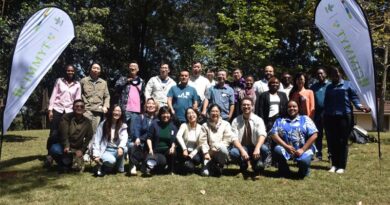
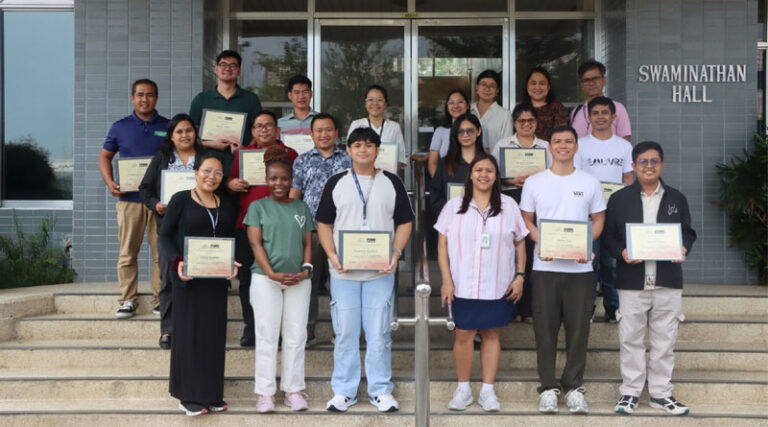
The training was led by Maryfaith Simiyu, HCD specialist from the Alliance and co-facilitated by Benedict Jardinero of IRRI, with participants from IRRI, PAGASA, and agencies under the Department of Agriculture (DA) namely Philippine Rice Research Institute (DA-PhilRice), Agricultural Training Institute (DA-ATI), National Rice Program (DA-NRP), Field Operations Services (DA-FOS), and Regional Field Office V (DA-RFO V) participated in the training. Prior to the in-person training, participants completed an online pre-training course to introduce the key concepts and practices of HCD.
Also Read: Corteva Plans Exit from Spain Manufacturing Site, Raises Restructuring Cost
Global Agriculture is an independent international media platform covering agri-business, policy, technology, and sustainability. For editorial collaborations, thought leadership, and strategic communications, write to pr@global-agriculture.com