29 June 2026, Zambia: Zambia has taken a major step towards strengthening the resilience, productivity, and diversity of smallholder farming systems following the approval of four sustainable intensification technologies developed through seven years of research under the EU-funded Sustainable Intensification of Smallholder Farming Systems in Zambia (SIFAZ) project.
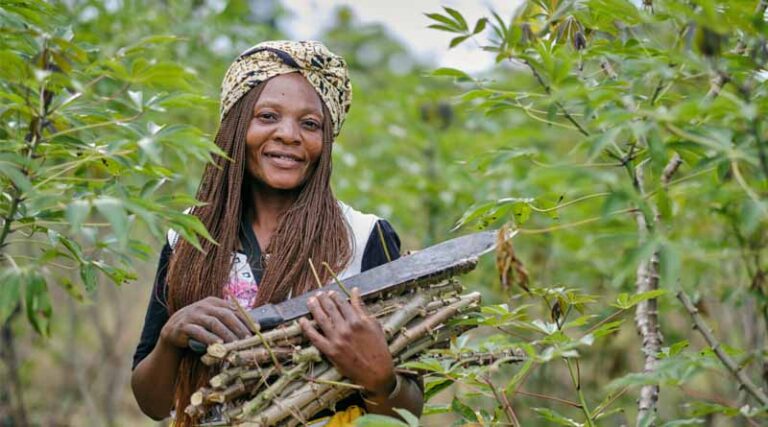
The National Advisory Committee for the Approval/Validation of Candidate Technologies or Agronomic Practices, established under Zambia’s Ministry of Agriculture, approved the release of four technologies in June for use across the country’s different agroecological regions. The approved technologies are cassava intercropping under conservation agriculture, double cropping of beans, doubled-up legume systems, and integrated fodder production in maize farming systems.
The technologies are the result of sustained scientific research, field validation, and collaboration between farmers, researchers, extension officers, and national partners. They respond directly to the realities faced by smallholder farmers, including declining soil fertility, climate variability, limited crop diversity, feed shortages for livestock, and the need for more reliable food and income sources.
Implemented by the Food and Agriculture Organization of the United Nations (FAO), Zambia’s Ministry of Agriculture, and CIMMYT, with funding from the European Union, SIFAZ has worked with farming communities to test and refine practical solutions that can improve maize-based systems while reducing risk for farmers.
For smallholder farmers, the approved technologies offer multiple benefits. Cassava intercropping under conservation agriculture provides an additional food and income source while improving land use efficiency. Double cropping of beans enables farmers to produce more within the same season and diversify household diets. Doubled-up legume systems support soil fertility while increasing access to nutritious crops. Integrated fodder production strengthens mixed farming systems by improving livestock feed availability without displacing staple food production.
“This is a great milestone for science, for partnerships, and most importantly, for the farmers who have been central to this process,” said Christian Thierfelder, CIMMYT Principal Cropping Systems Agronomist. “For seven years, SIFAZ has worked alongside farmers, extension services, national research institutions, FAO, the Ministry of Agriculture, and the European Union to test technologies under real farming conditions. These approvals show what is possible when scientific research is grounded in farmer realities. They also confirm that sustainable intensification is not just a concept, but a practical pathway for improving productivity, nutrition, resilience, and livelihoods in maize-based farming systems.”
The approval marks an important transition from research to wider use. It also demonstrates the value of long-term agricultural research that is participatory, evidence-based, and responsive to national priorities.
By validating technologies that diversify maize-based systems, the Ministry of Agriculture has created an important pathway for scaling solutions that can support millions of small farm households in Zambia. The milestone further strengthens the role of science in informing agricultural policy and practice, showing how research investments can generate practical tools for farmers and contribute to more resilient and nutritious food systems. Through SIFAZ, CIMMYT and partners will continue working with national stakeholders to support awareness, extension, and uptake of the approved technologies, ensuring that the benefits of research reach the farmers and communities who need them most.
Global Agriculture is an independent international media platform covering agri-business, policy, technology, and sustainability. For editorial collaborations, thought leadership, and strategic communications, write to pr@global-agriculture.com